



Profile view of a bearded man wearing a black baseball cap and a dark gray T-shirt against a plain light background.

Best heat pump setting for a North Dakota winter

Step 1 of 3: Equipment

What temperature should I set my heat pump to in winter?

North Dakota winters push a heat pump harder than almost anywhere else, and most homes here lean on gas heat anyway, so it's fair to wonder what the heat pump should even be doing. You want a number to set and leave alone, not something you're adjusting every time the wind picks up.

Set it to 68 and leave it there

Pick a temperature, usually 68, and leave the thermostat alone through the winter. A heat pump recovers heat slowly, so bumping it up five degrees when you walk in the door just makes the system run longer to catch up, not faster. Turning it down overnight or while you're out does the same thing in reverse. In a North Dakota cold snap, a heat pump also loses efficiency fast once the outdoor air drops into single digits or below, which is why most homes here pair it with a gas furnace that takes over automatically. Leaving the setting steady lets that handoff happen the way it's supposed to, without you having to think about which system is actually running.

A smiling woman with dark shoulder-length hair in a cream V-neck sweater sits at a marble counter with a glass of red wine, with a kitchen and softly lit living room behind her.
A woman in a dark green sweater laughs while seated at a marble kitchen island with a glass of red wine, with open shelving, cabinets and a living room visible behind her.
A woman with long dark hair in a cream knit sweater laughs while looking off to the side, seated at a counter with a glass of red wine, in a dimly lit living room with a sofa, lamp, framed pictures and houseplant behind her.
A smiling woman with long dark hair in a beige sweater sits at a marble kitchen counter with a glass of red wine, with a dimly lit living room behind her.

Heat Pump or Furnace: Who Leads

Heat pump carries the load

  • You set one steady temperature, like 68, and leave it there through the cold months.
  • The heat pump runs longer stretches at a lower output instead of short bursts at full power.
  • Below a certain outdoor temperature the heat pump loses ground and can't keep up on its own.
  • If your home has a backup gas furnace, it should take over once the air coming from the vents feels cool rather than warm.
  • Setting it back several degrees overnight makes the heat pump work harder to recover the lost heat the next morning.

Gas furnace carries the load

  • You let the furnace handle the coldest stretches and keep the heat pump for milder days, fall and spring.
  • A gas furnace keeps the same output no matter how far the temperature outside drops.
  • Switching the thermostat between heat pump and furnace modes on the coldest days avoids making the heat pump strain for heat it can't deliver efficiently.
  • Power here is cheap, but a furnace that's sized right for a North Dakota winter will still outpace a heat pump once it's well below freezing outside.
  • A furnace recovers from a setback fast, so turning the temperature down at night costs you less to make up in the morning.
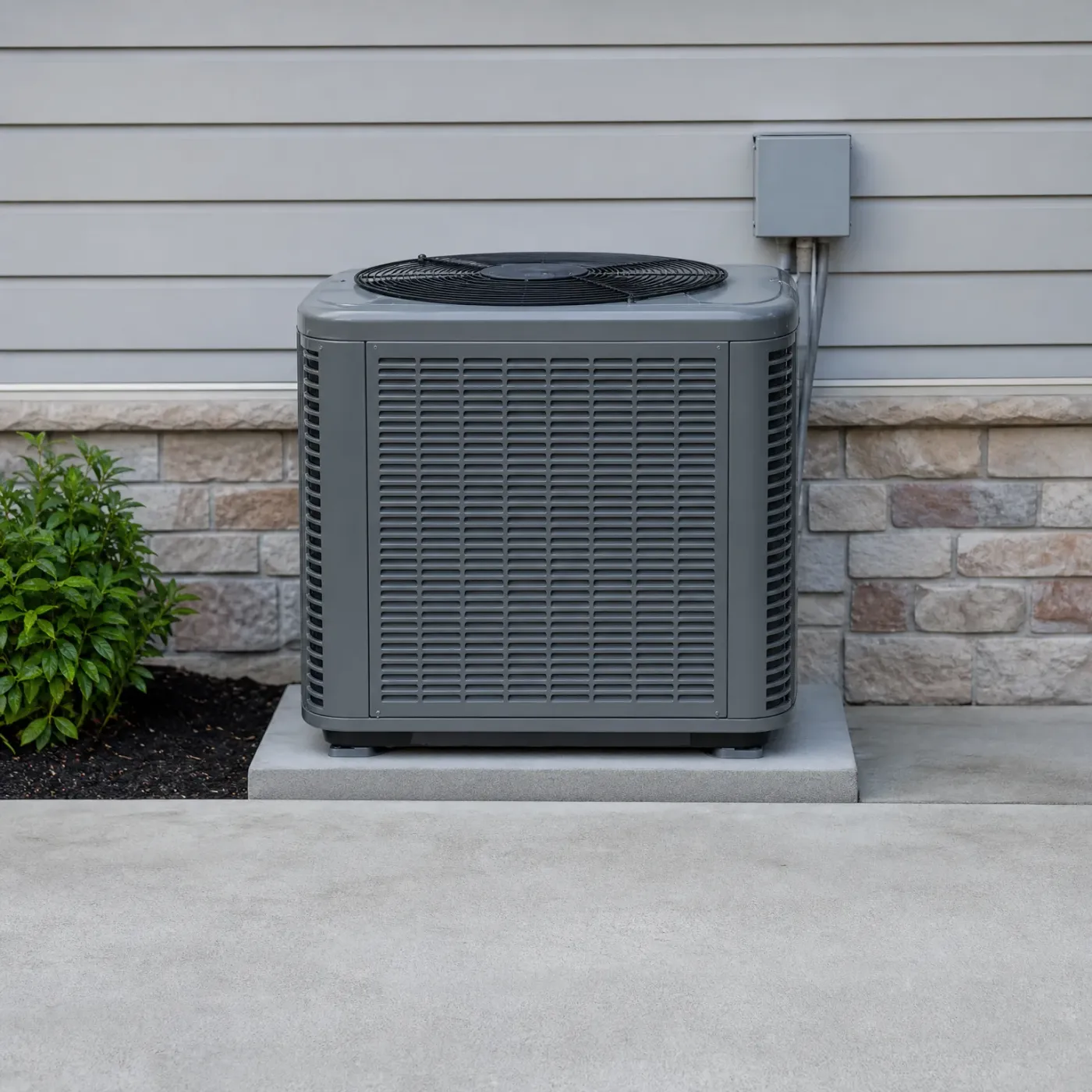
A gray outdoor air conditioner condenser unit on a concrete pad beside a house with horizontal siding and an electrical disconnect box, surrounded by grass.

Why the backup heat kicks in

A heat pump moves heat from outside air into your house. Once that outdoor air drops into the teens or lower, there's less heat out there to move, and the unit alone can't keep up with the setpoint. That's when the furnace takes over. This isn't a malfunction. It's the system working as designed, splitting the job between two sources depending on how cold it actually is outside.

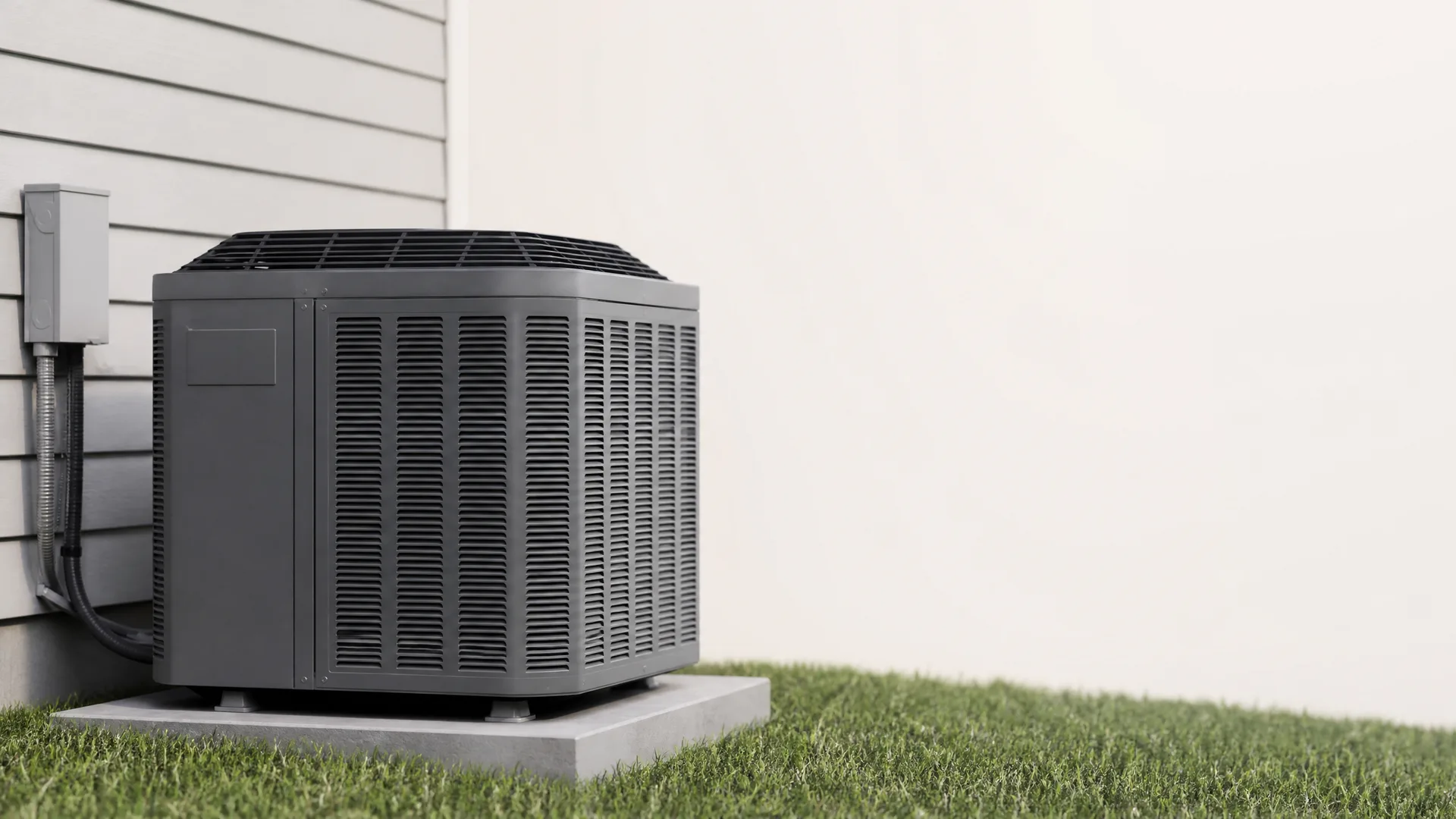
A white outdoor heat pump unit on a concrete pad beside a house with horizontal lap siding, with a plain light wall and grass lawn to the left.

What constant cycling does to parts

Bumping the thermostat up and down forces the heat pump to stop and restart more often, and each start draws a jolt of current through the compressor and contactor. Letting it hold one temperature means fewer starts over a winter. Fewer starts means less wear on the parts that cost the most to replace. A contractor who services these systems every winter can tell you which ones usually go first, because the failures tend to repeat.

Power costs 11.82 cents per kilowatt-hour statewide

At 11.82 cents a kilowatt-hour, running the heat pump harder on a cold snap won't wreck your bill the way it might in states with pricier power. That's part of why gas carries most North Dakota homes through winter, and the heat pump picks up the milder days without much cost either way.

EIA-861 2025 statewide residential average

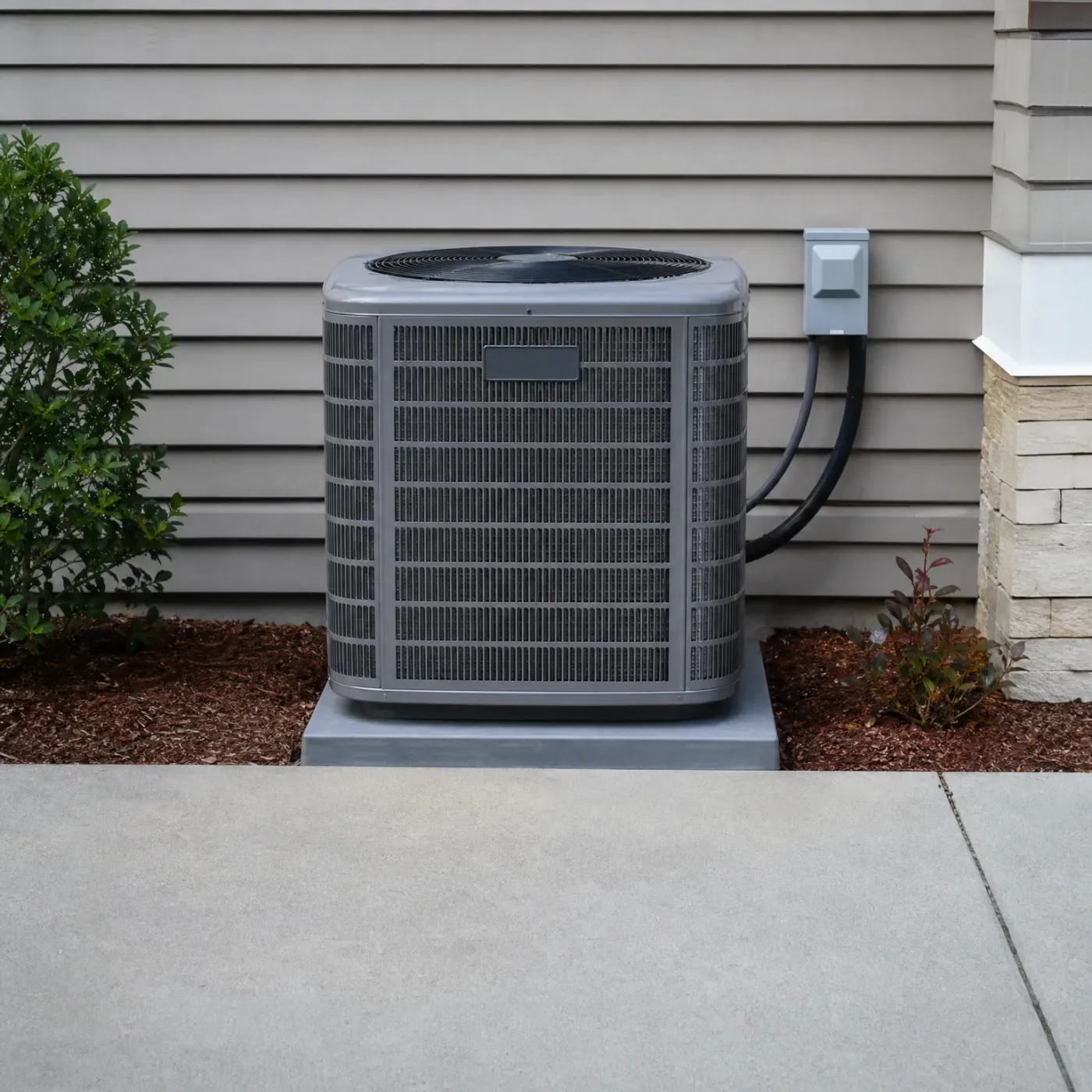
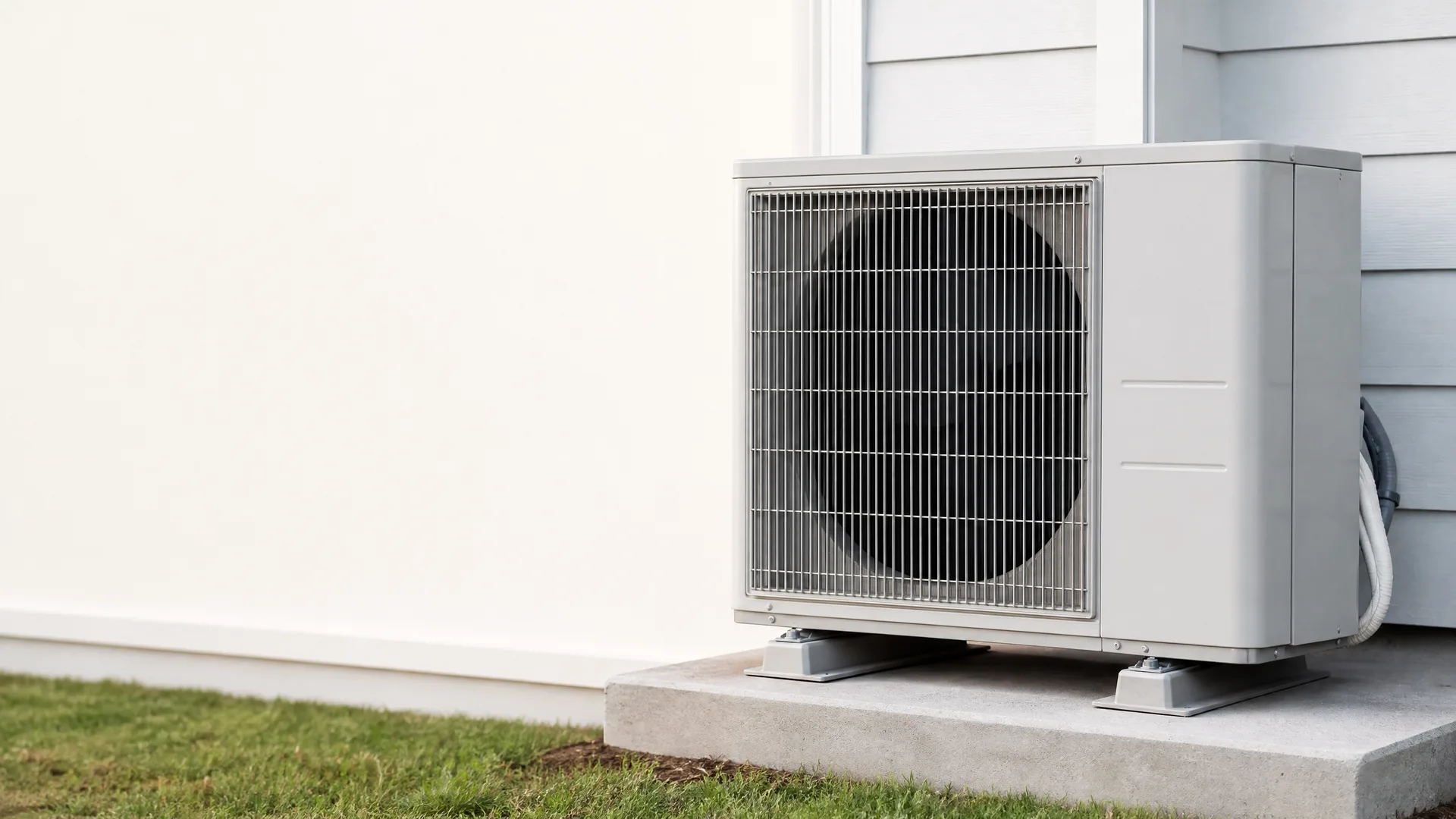
A gray outdoor condenser unit sits on a concrete pad against a house wall with horizontal siding above a stone veneer base, with an electrical disconnect box and conduit on the wall and a leafy shrub in mulch to the left.

Running clean

A heat pump that's been serviced moves outdoor heat into your house the way it's supposed to, even when it's doing most of the work on a mild January day. The coil stays clear, the refrigerant charge is right, and the unit isn't straining to hit your setpoint.
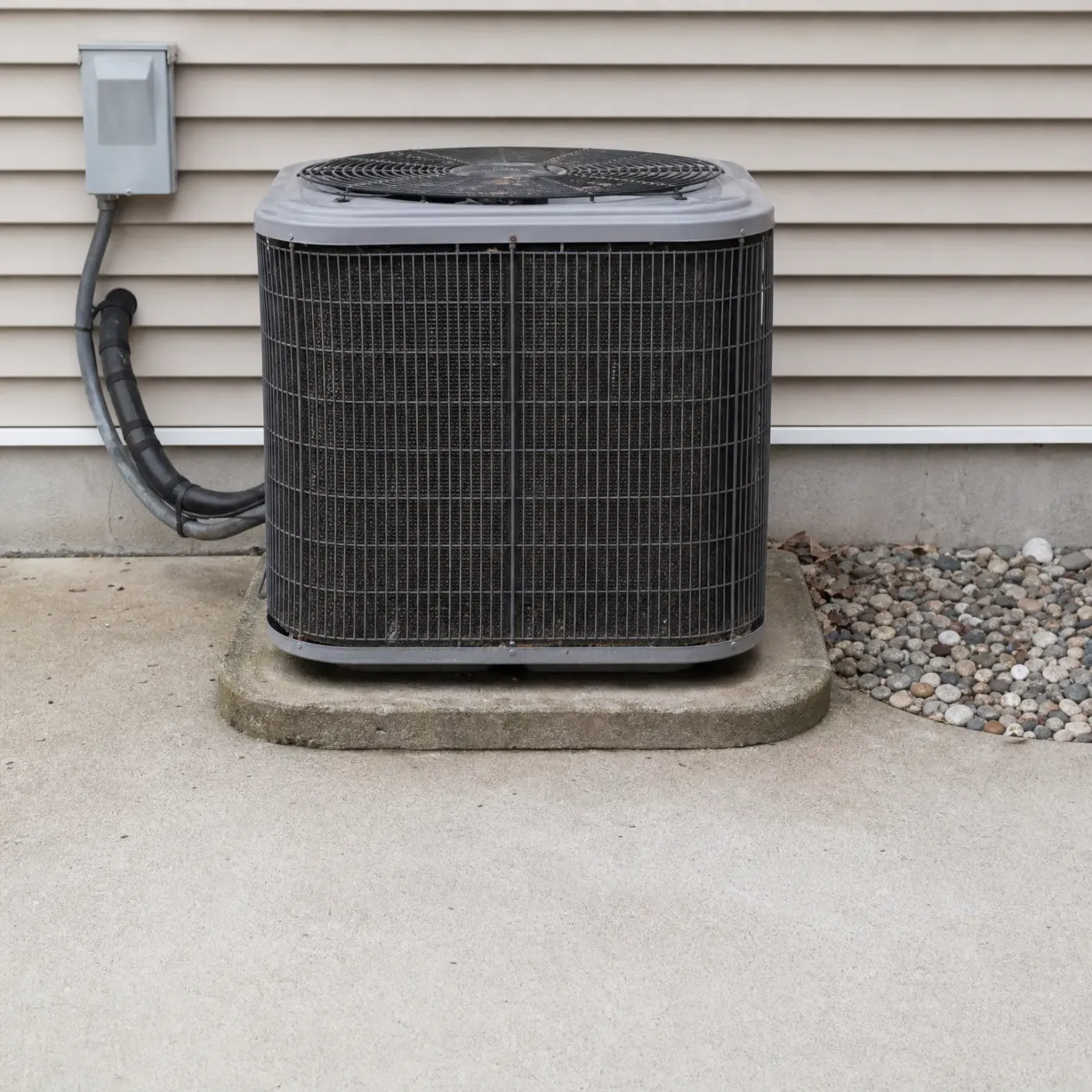

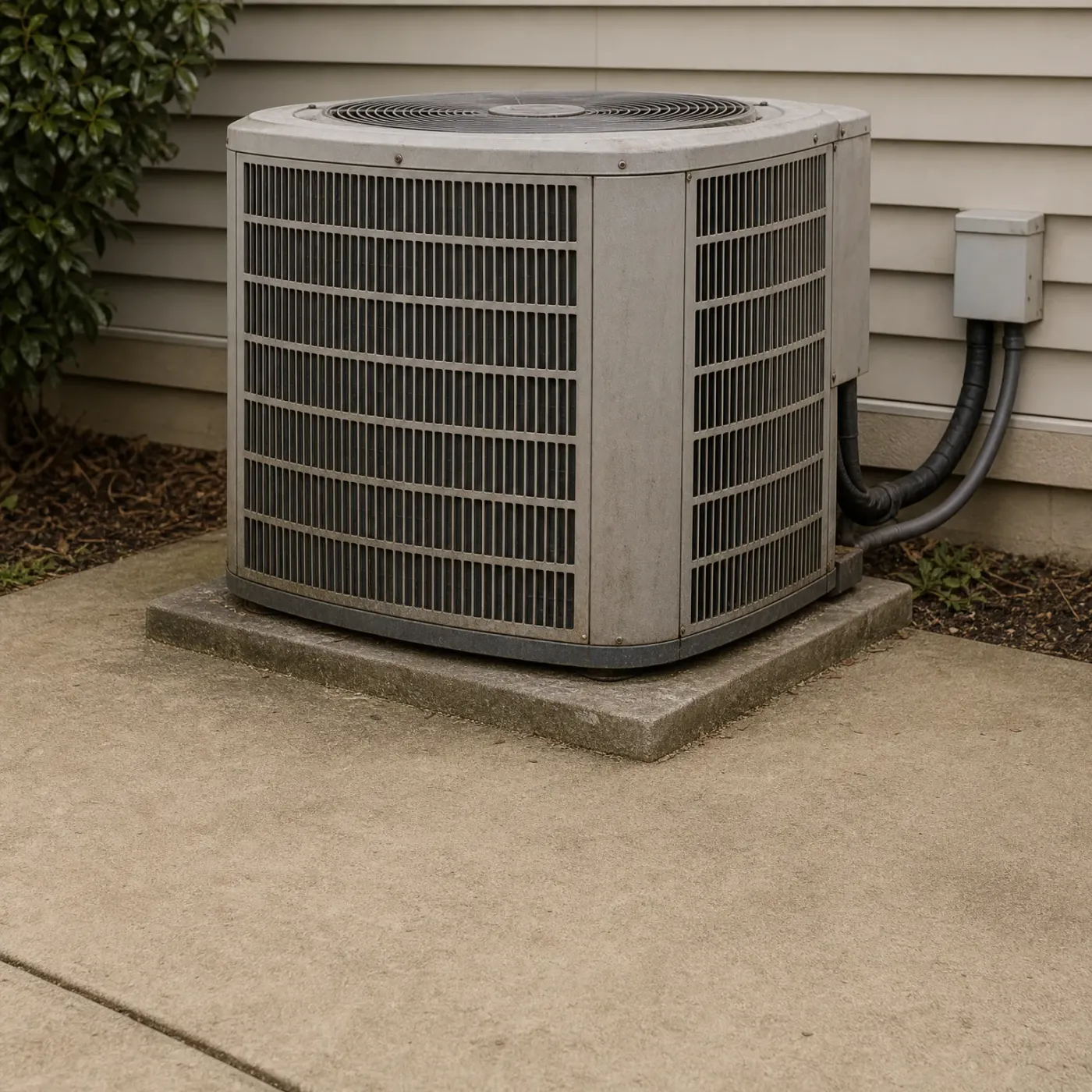
An outdoor air conditioner condenser unit on a concrete pad beside a house with beige vinyl siding, with a gray electrical disconnect box and insulated refrigerant lines on the wall and river rock to the right.

Clogged and struggling

Dirt packed into the coil fins blocks the airflow the unit needs to pull heat from the outside air. It'll run longer and still fall short, kicking the furnace on sooner than it should. A yearly checkup catches that buildup before a cold snap exposes it.

A smiling bearded man in a navy crewneck sweater sits at a dinner table with a glass of red wine, plates and glasses in the foreground, in a dimly lit room with a lamp and framed picture behind him.
A woman in a dark gray sweater reclines on a light sofa with eyes closed and a slight smile, under a textured gray blanket with an open book resting on her lap, with a lit table lamp and plant in the background.
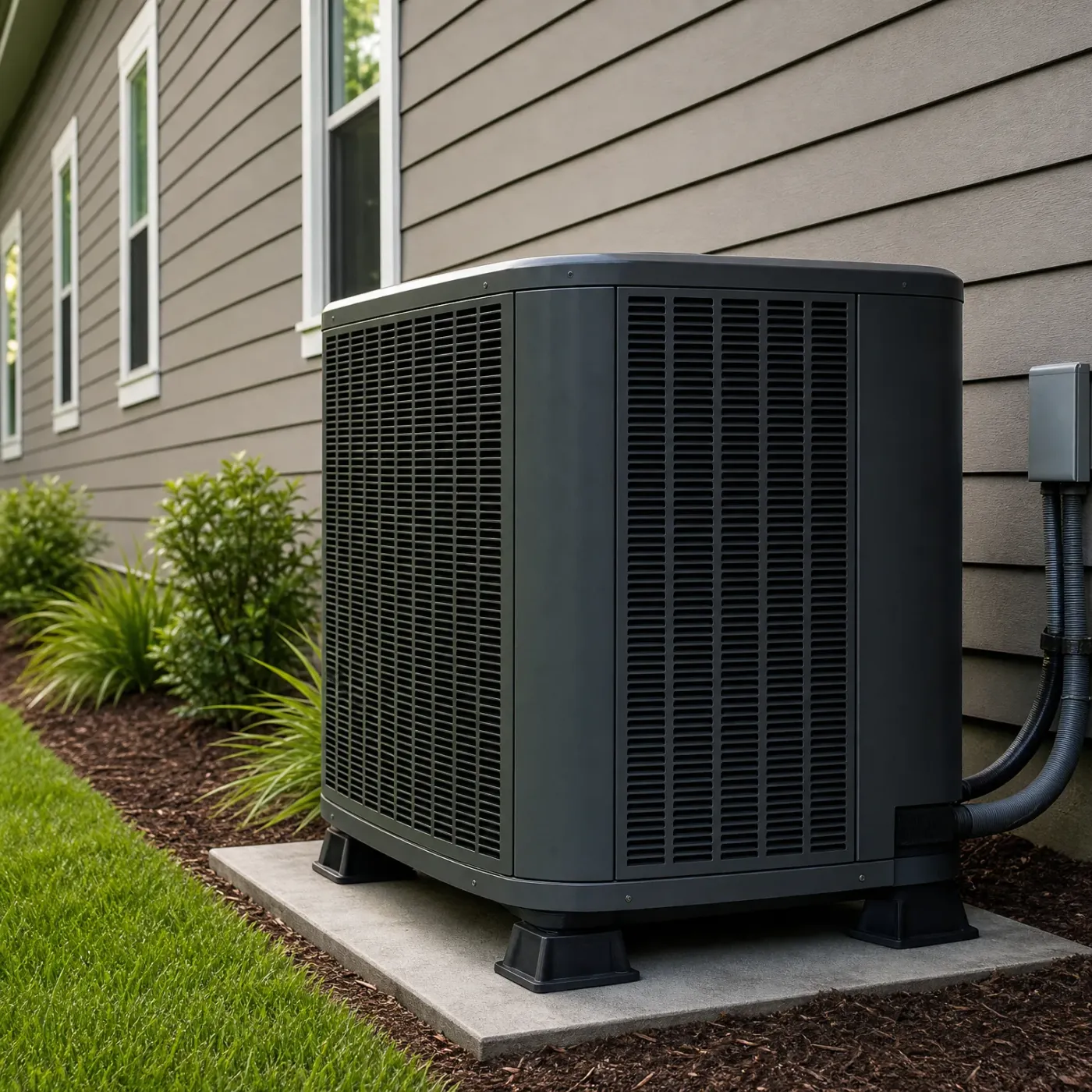
A dark gray outdoor condenser unit on a concrete pad beside a house with horizontal lap siding, with mulch beds, shrubs, and lawn nearby and conduit running to a wall-mounted box.

Skip calling around

Your request stays with one local pro.

Skip searching for a heat pump pro and answer a few questions instead.

Start one form

No charge to send it. You decide if you hire them.

Why does the house feel cold even with it running

You walk past a vent and the air coming out feels barely warm, even though the unit is running. That's often normal for a heat pump on a cold day, but if the furnace never seems to kick in to back it up, or you hear the outdoor unit running constantly without the house ever catching up to the setpoint, something's off. Frost building up on the outdoor coil and staying there is another sign worth noticing. A heat pump that's low on refrigerant or has a coil caked in ice has to work harder for less heat, which shows up on your power bill and can leave the backup furnace covering more of the load than it should, burning more gas than a working system would.

A gray outdoor condenser unit sits on a concrete pad beside a house with horizontal lap siding, with a wall-mounted disconnect box and refrigerant lines, mulched beds and a shrub nearby, and a concrete walkway in the foreground.

Working the way it should

This is a heat pump that's kept up with. The pad is clear, the conduit to the disconnect is intact, and the unit isn't fighting anything to do its job. On a mild day it can carry the house on its own without the furnace stepping in.

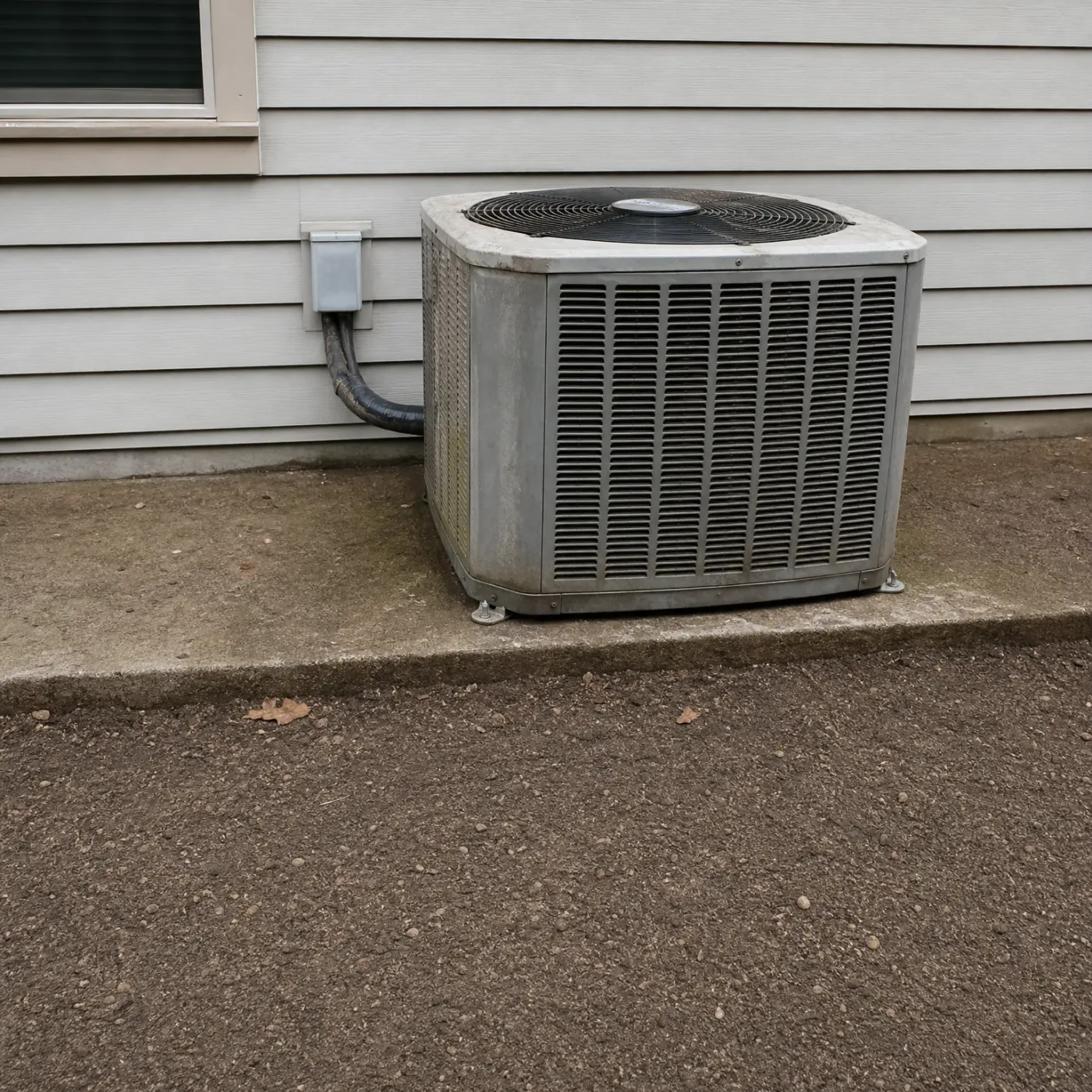
An outdoor air conditioner condenser unit on a concrete pad beside a light gray vinyl-sided house, with an electrical disconnect box and conduit on the wall and bare soil in the foreground.

Struggling through the cold

A unit left to run without a look in years will start losing ground before the real cold even hits. Weak refrigerant charge or a dirty coil means it leans on backup heat sooner and more often, on days it shouldn't need to.

An outdoor condenser unit sits on a concrete pad beside a house with horizontal vinyl siding, with a gray electrical disconnect box and conduit on the wall and a shrub at left.
Before you get your heat pump maintenance
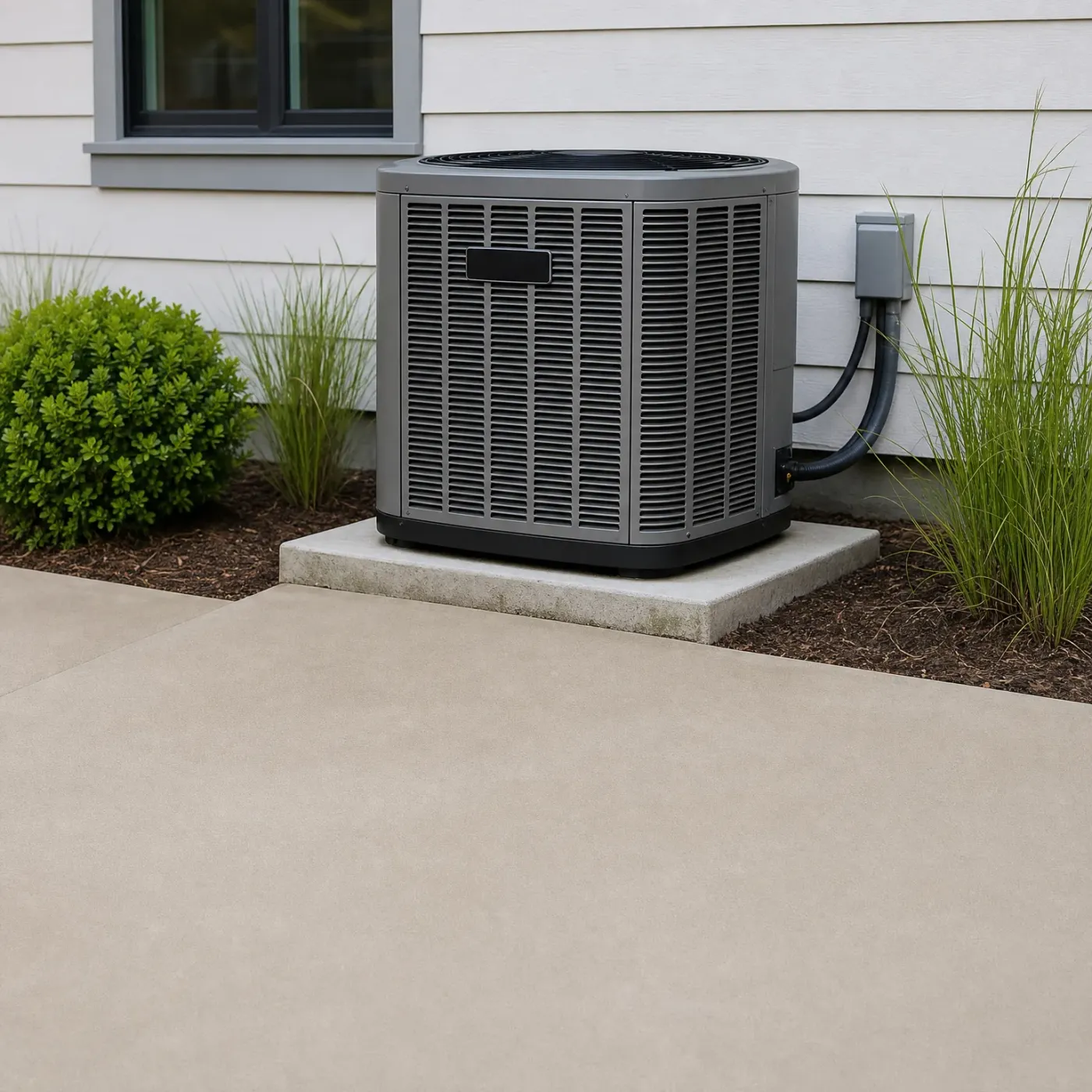
A gray outdoor condenser unit on a concrete pad beside a light-colored horizontal-siding house, with a disconnect box and refrigerant line on the wall, ornamental grasses and a shrub in mulch nearby, and a concrete patio in the foreground.
After you get your heat pump maintenance

Skipping the tune-up

A dirty coil or a low charge makes the heat pump work harder on the days it's supposed to carry, which pushes more of the load onto the furnace sooner than it should.

Skip calling around

Getting it serviced

A local contractor who works on heat pumps all season checks the charge and the coil before the cold sets in, so the unit carries what it's built to carry.

Skip calling around

A steady setpoint, left alone, is still the answer. Your heat pump carries what it can on the milder days, and the furnace backs it up once the temperature drops too far for the unit to keep pace. That split only works cleanly if the heat pump is running the way it should, and a contractor who services these units all winter in North Dakota knows where this equipment tends to struggle first when the cold really sets in, like a coil that's picked up dirt or a charge that's drifted low. You'd be working with one local contractor, not fielding calls from several companies trying to win the job. No more sorting through quotes or explaining the same thing twice to different voices on the phone. Just someone who already knows what a hard winter here does to this equipment, looking at yours.

A covered porch with a wood front door with six upper glass panes, a lantern wall sconce, tapered column on a stone base, potted ferns and flowers, a woven doormat, and wide steps leading to a paver walkway bordered by shrubs and white hydrangeas.
A beige upholstered sofa with a cream cushion and chunky knit throw sits beside a white-framed window, with a leafy potted plant in a stone vase against a tan wall.
Sunlit corner of a room with a linen curtain beside a window, built-in shelves holding ceramic vases, wooden bowls, a potted green plant, stacked books and a woven basket, above a textured rug.
A dark wood three-drawer dresser against a pale wall holds a tall ceramic vase with leafy branches, stacked books and a shallow bowl, with a framed print above, a woven basket on the wood floor at left, and an upholstered sofa with a green pillow in the foreground.
A cream upholstered sofa with a textured ivory cushion and a rust-colored cushion sits beside a window with sheer linen curtains, with a potted leafy plant behind it and a wooden bowl on a wood table in the foreground.

No phone calls to make

Your request goes to one pro, not a list of companies.

Fill out one form

You only hire the pro if you want to.