Tell us about the job
Takes about a minute. No obligation.

A heat pump running a heating season this long puts its compressor, reversing valve, and refrigerant circuit through sustained cycling, and those are the components a contractor checks first when diagnosing a fault here. Homes in Sargent County, ND run heat about nine months a year, from September through May. Capacity drops as outdoor temperatures fall through a North Dakota winter, which means the compressor is working hardest exactly when ambient conditions are worst. A failed reversing valve or a refrigerant charge that has drifted low will not show up on a mild day, but it will show up fast once temperatures drop hard.
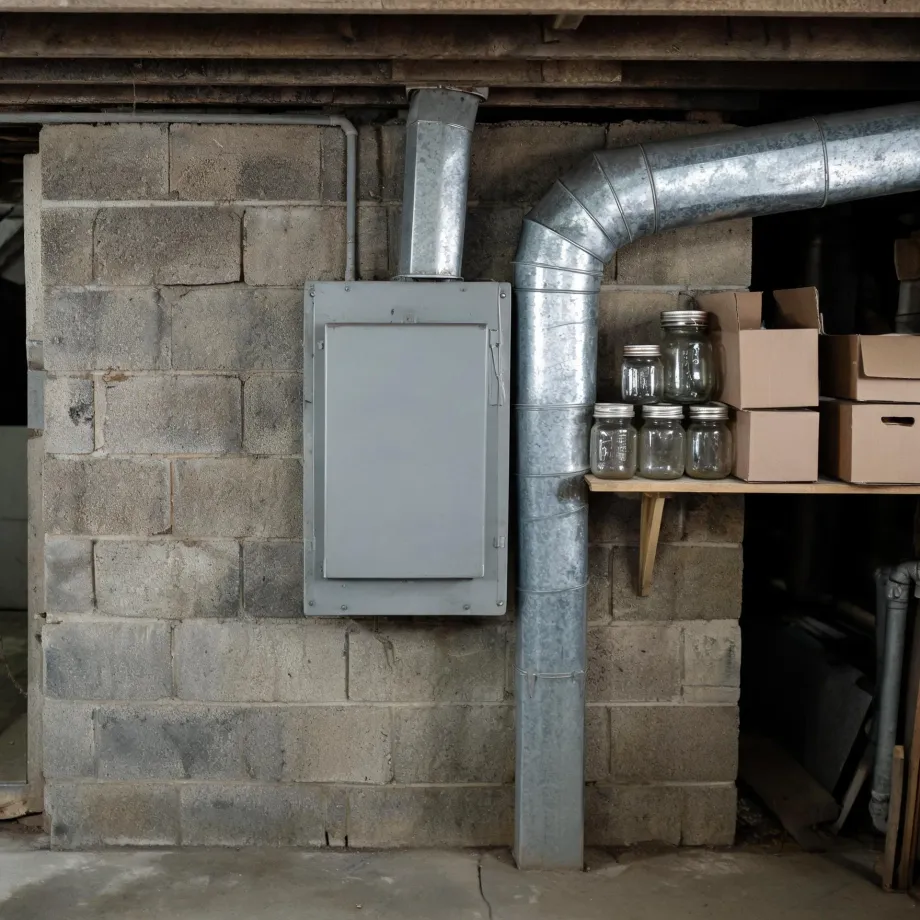
Ductwork in a house this old was sized and routed for whatever system was running when the house went up, and that system was not a heat pump. Half the homes in Sargent County, North Dakota were built in 1975 or earlier (2020-2024 ACS 5-year). When a contractor opens a heat pump in Sargent County and the repair looks simple, the duct system is still a variable. Leaks, undersized runs, or poor returns change what a repaired unit can actually deliver, and a contractor working here checks for those before closing the job.
The Parts of a Heat Pump a Contractor Checks First
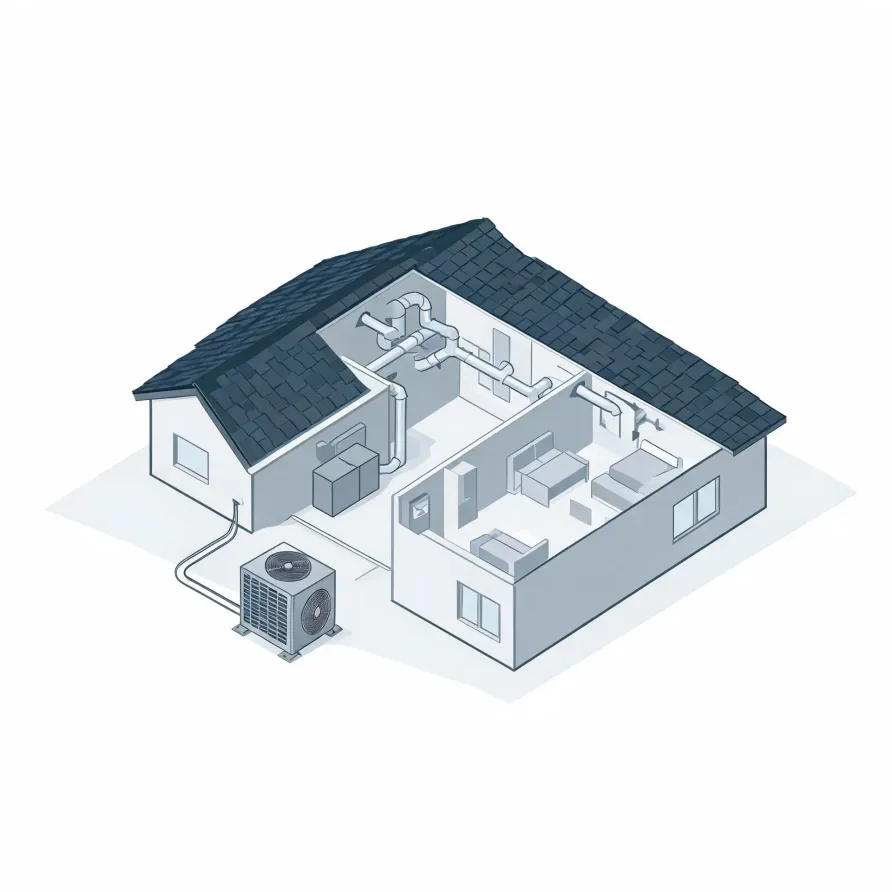
The outdoor unit sits on a pad beside the house and holds the compressor and the outdoor coil. The compressor is usually where a contractor starts: it pressurizes the refrigerant that carries heat in or out of the house, and when it fails the system either stops producing conditioned air entirely or runs without doing much at all. The outdoor coil works alongside it, and a damaged or fouled coil will show up as poor performance in either heating or cooling mode.
Inside the house, the air handler holds the indoor coil and the blower. The indoor coil pulls heat from the air in winter and sheds it in summer, and a refrigerant leak will often show first as ice on this coil or as warm air coming from the vents. The blower pushes conditioned air through the house, and a failing motor or a worn capacitor can cut airflow even when the rest of the system is running fine. The reversing valve, which sits in the refrigerant line and switches the system between heating and cooling, is another piece a contractor checks when the unit runs but delivers the wrong temperature.
The drawing shows the general layout of a heat pump system, and a licensed contractor determines which components apply and what needs attention in your specific home.
Find a contractor in Sargent CountySargent County, by the numbers
114 severe weather events were recorded in Sargent County, North Dakota between 2015 and 2024.
NOAA National Centers for Environmental Information, Storm Events Database, bulk CSV export, events 2015-01-01 through 2024-12-31.Half the homes in Sargent County, North Dakota were built in 1975 or earlier (2020-2024 ACS 5-year).
U.S. Census Bureau, 2020-2024 American Community Survey 5-Year EstimatesSargent County, North Dakota holds 1,996 housing units (2020-2024 ACS 5-year).
U.S. Census Bureau, 2020-2024 American Community Survey 5-Year EstimatesOwners occupy 72.5% of the occupied homes in Sargent County, North Dakota (2020-2024 ACS 5-year).
U.S. Census Bureau, 2020-2024 American Community Survey 5-Year EstimatesCodes & Standards for Heat Pump Repair in Sargent County, North Dakota1 sourced rules & standards
Licensing Rules for HVAC Repair in Sargent County, North Dakota
North Dakota requires a contractor licence once the cost, value or price of a job exceeds four thousand dollars, and an unlicensed contractor may not bring a claim or a lawsuit in a North Dakota court over the work.
Severe Weather Events in Sargent County
Extreme weather puts real stress on heat pump systems, and how hard a unit works over its life depends largely on what the local climate throws at it. Repair needs in Sargent County are shaped by conditions specific to this area, which is why local weather history is relevant to any conversation about equipment performance.
114 severe weather events, 2015–2024. Source: NOAA National Centers for Environmental Information, Storm Events Database.