







How long heat pumps last in North Dakota

A local installer who puts in heat pumps gets your project.

Step 1 of 3: Equipment

How long do heat pumps last in North Dakota?

You're thinking a season or two ahead, trying to plan around when your heat pump might need replacing rather than get caught off guard by a breakdown. North Dakota's winters push a heat pump harder than the warm, dry summers do, and that matters when you're figuring out how many years you have left before it's time to budget for something new.

About 12 to 15 years, often less here

A heat pump in North Dakota tends to land on the shorter end of that range, closer to 12 years than 15. Most homes here heat with gas, so a heat pump usually isn't the only thing standing between you and a cold house, but it still runs through long stretches below freezing where it has to work harder to pull heat from outside air. That strain adds up over the winters faster than it would somewhere milder. Summers here are warm without much humidity, so the cooling side doesn't wear on it the same way. When yours starts running longer cycles or struggling to keep up on the coldest days, that's the sign its years are catching up with it, not a season to ignore.

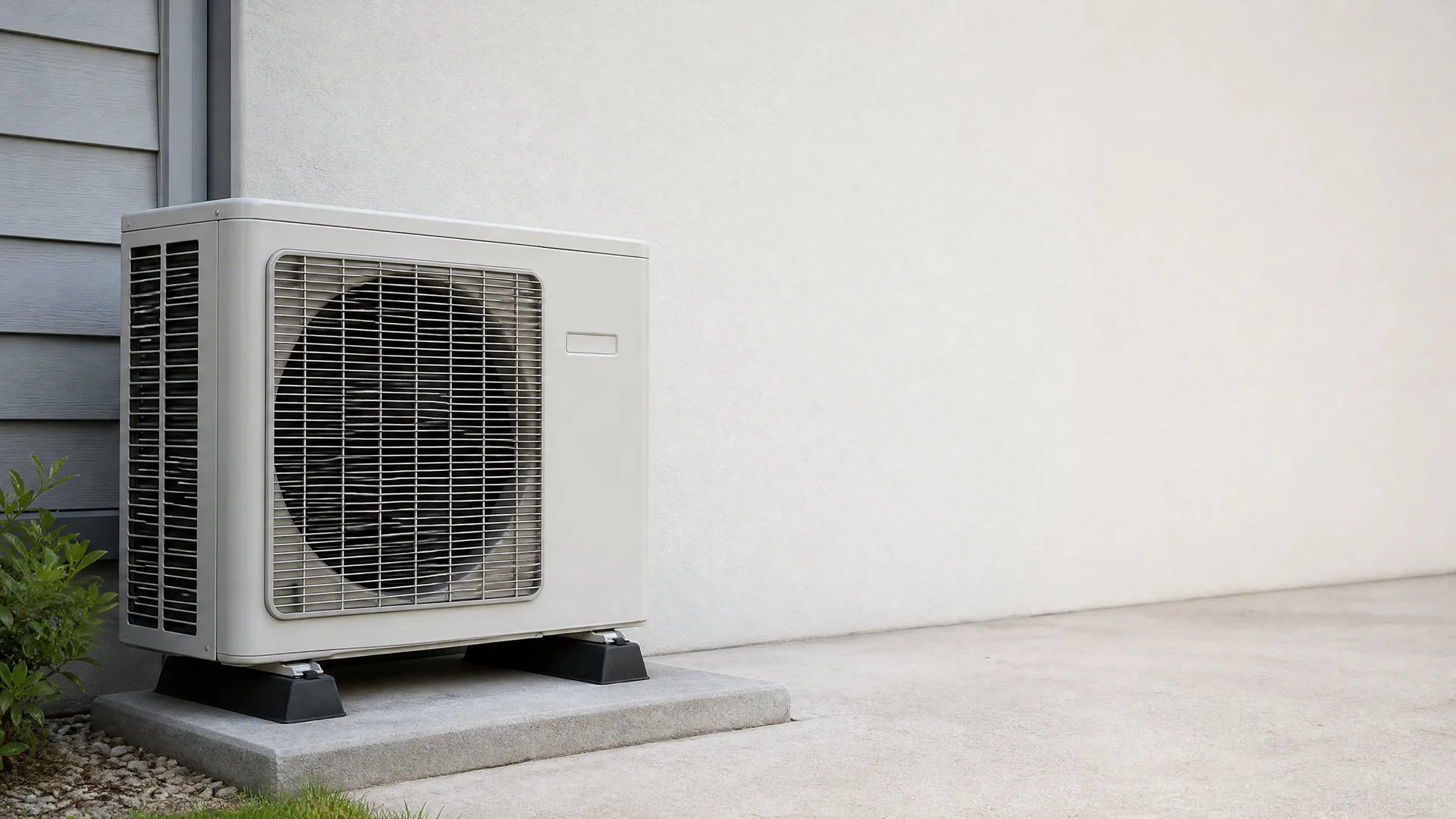
A white outdoor heat pump unit on rubber feet atop a concrete pad beside a light stucco wall, with gray siding and a small shrub at the left edge.

Why cold hits a heat pump hardest

A heat pump moves heat from the outside air into your house, and that gets harder the colder it gets outside. North Dakota winters run well below freezing for weeks at a stretch, and the compressor has to work longer hours to pull warmth out of air that has little to give. Most systems add electric strip heat or rely on a backup furnace to carry the load below a certain outdoor temperature, and that switchover point matters more here than it does somewhere with a mild winter.

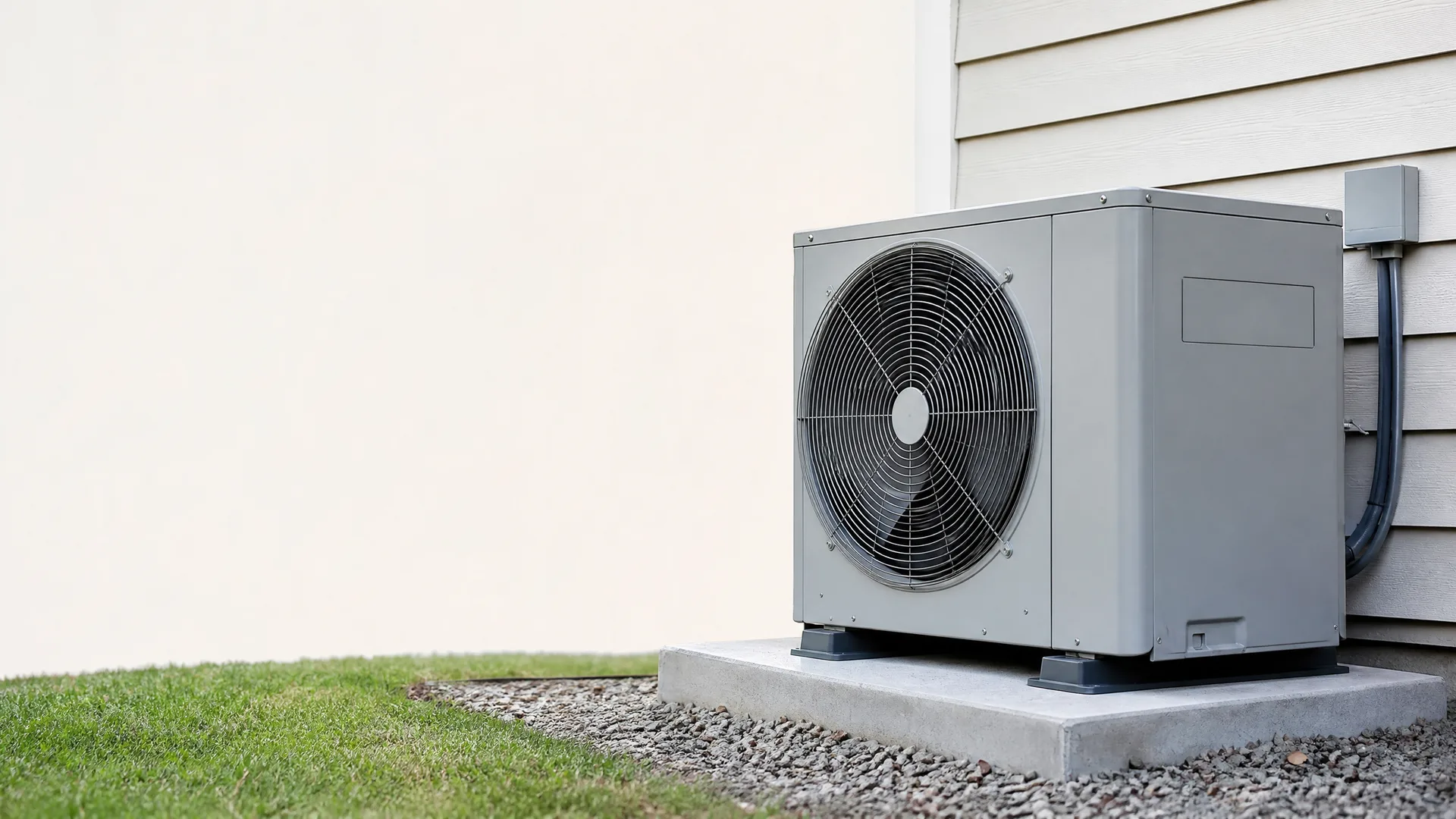
A gray outdoor heat pump unit with a large circular fan grille sits on a concrete pad beside a house with horizontal siding, surrounded by gravel and grass, with a conduit and junction box on the wall.

What that extra strain costs over time

A compressor that runs long hours in sub-zero air wears faster than one that only has to handle mild stretches of the year. Cheap power here means the electric bill from a hard-working heat pump stings less than it would elsewhere, but the wear on the compressor and the outdoor coil still happens regardless of what you pay per kilowatt. Homes here that pair a heat pump with a gas furnace for backup tend to see less strain on the compressor itself, since the furnace takes over once outdoor temperatures drop far enough.

Heat Pump Alone or With Gas Backup

Heat pump alone

  • Below a certain outdoor temperature, the heat pump can't pull enough heat from the air to keep up, and most systems here pair with a gas furnace or electric backup for those stretches.
  • If yours runs without backup, expect the compressor to run near constantly on the coldest days, which adds wear faster than a mild winter would.
  • A heat pump moving heat instead of generating it usually costs less to run than straight electric resistance heat, even with power as cheap as it is in North Dakota.
  • Most homes here already heat with gas, so a heat pump working alone is the less common setup and asks more of the equipment through January and February.
  • Defrost cycles run more often in sustained cold, and each one is a small cycle of wear on the system over a winter.

Heat pump with gas backup

  • The furnace takes over once outdoor temperatures drop past where the heat pump runs efficiently, so the compressor isn't straining through the coldest weeks.
  • This splits the heating load across two systems instead of one, which can mean less total runtime on the heat pump itself over a North Dakota winter.
  • A contractor sets the switchover point, called the balance point, based on your house and equipment rather than a guess.
  • Gas is the common fuel here, so this pairing fits how most North Dakota homes are already set up to heat.
  • Two systems means two things that can need service, so a setup like this depends on both being installed and sized to work together.
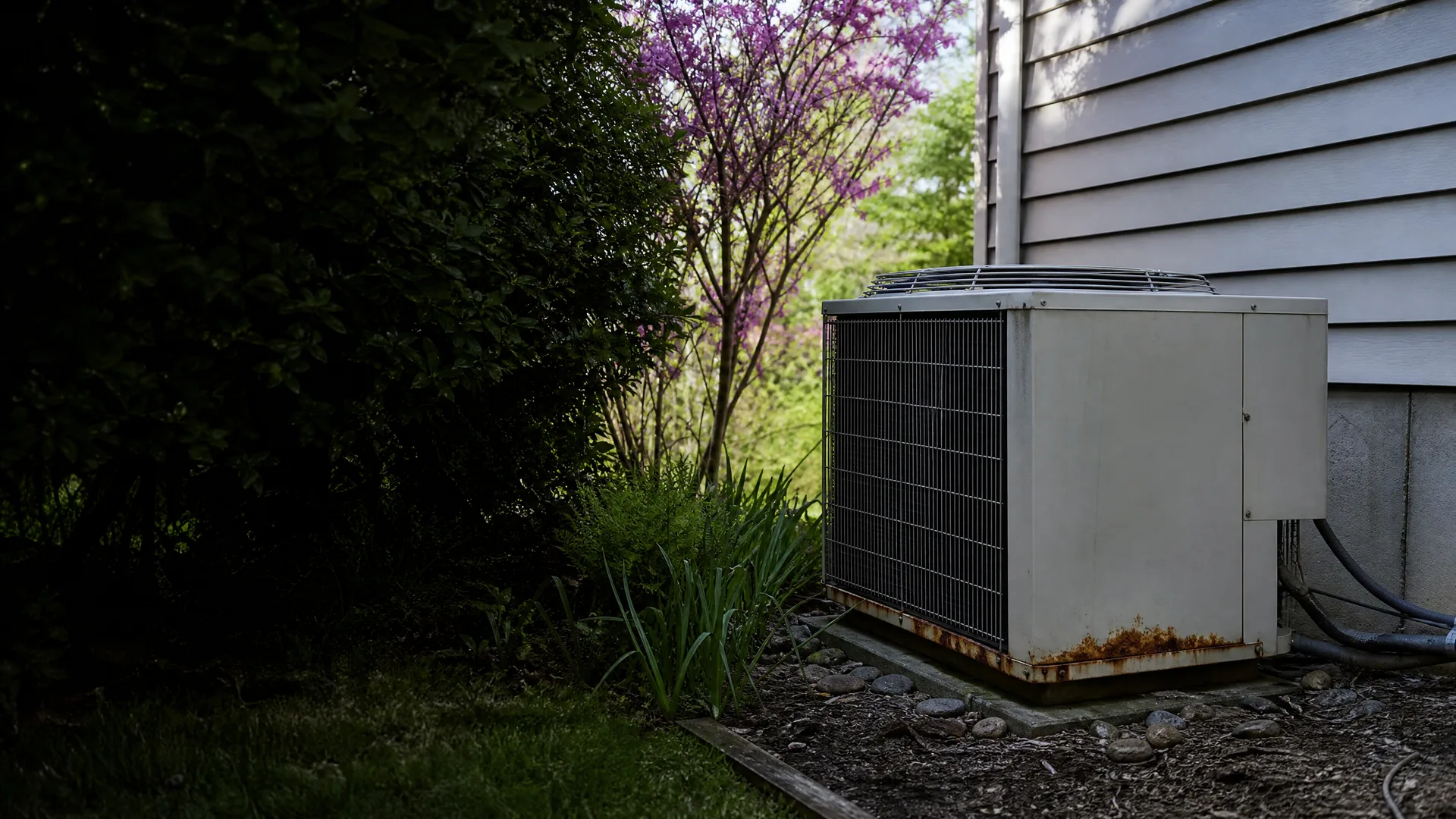
An outdoor air conditioning condenser unit with rust streaks sits on a concrete pad beside a light-colored lap-sided house, surrounded by shrubs, gravel and a flowering tree.

You're out in the side yard checking the garden beds now that the snow's finally gone. The outdoor unit sits where it always has, and this time you actually look at it instead of walking past. Rust has crept along the base, worse than you remembered from last fall. The panel seams show it too. It ran hard all winter, same as every winter, and you're doing the math on how many more of those it has in it. Nothing's wrong with it today. It kicked on fine this morning. But standing here in the sun, you're wondering whether to wait for it to fail or get ahead of it before next winter's the one that breaks it.

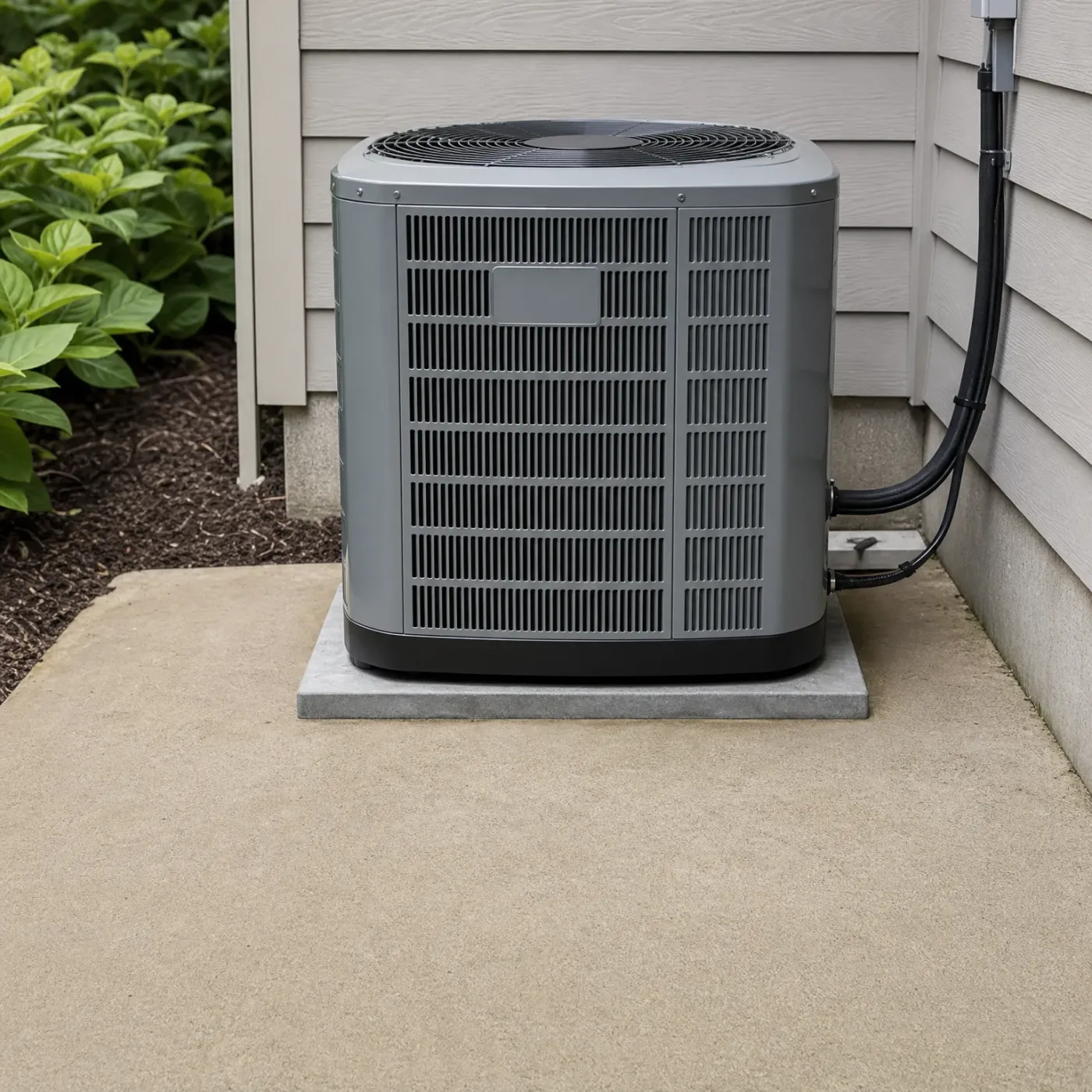
A gray outdoor air conditioner or heat pump unit on a concrete pad beside a house with horizontal lap siding, with conduit and refrigerant lines running up the wall and green shrubs and mulch at left.
A clean unit with clear space around it can pull outside air without straining, even on a January afternoon.
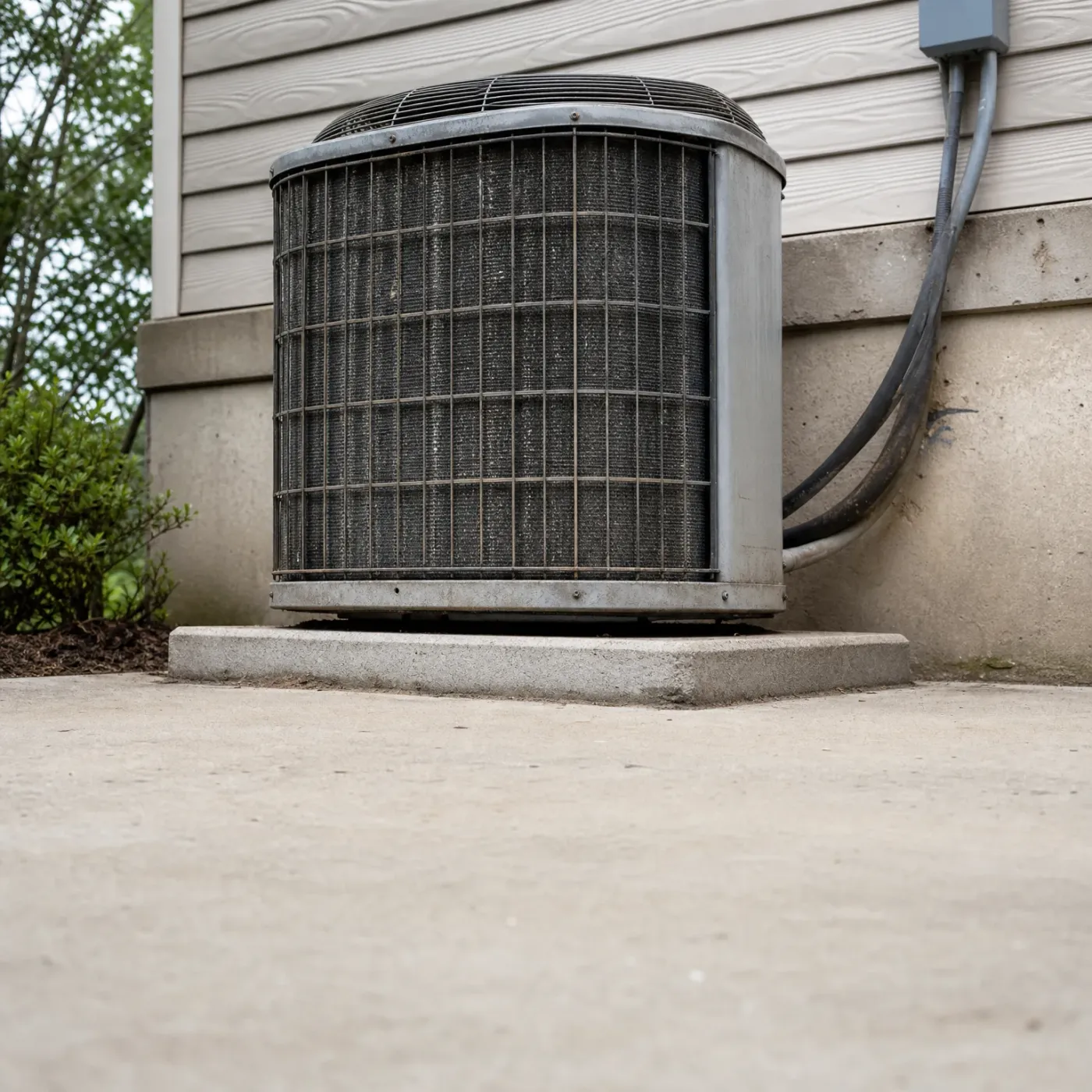
An outdoor air conditioning condenser unit on a concrete pad beside a house with horizontal siding and a concrete foundation, with refrigerant lines running to a wall-mounted disconnect box and shrubs at left.
A grille packed with dust and debris makes the compressor work harder for the same heat, and that wear adds up over a North Dakota winter.

What's Actually Happening Inside the Unit

  • The reversing valve is what lets a heat pump switch between heating and cooling, and it's a common failure point after years of use.
  • Defrost cycles run automatically in winter, briefly reversing the system to melt ice off the outdoor coil before switching back to heating.
  • A heat pump that short cycles, turning on and off every few minutes, is usually losing refrigerant or struggling with a failing compressor.
  • The outdoor coil needs airflow on both sides to move heat efficiently, so anything blocking it forces the compressor to run longer.
  • Auxiliary heat strips kick in during the coldest stretches to supplement the compressor, and a system leaning on them too often is losing ground.
  • Refrigerant charge matters more in a heat pump than a standard AC, since it has to work efficiently in both directions, not just one.

A heat pump works harder in a North Dakota winter than most homeowners realize, and knowing the moving parts helps you catch trouble early. The reversing valve is the piece that lets the system flip between pulling heat in and pushing it out. It's also one of the first things to wear out after enough winters of use, since it's switching position constantly as the system cycles through defrost. That defrost cycle is normal. When frost builds up on the outdoor coil, the system briefly reverses itself to melt it off, then switches back to heating. You might notice steam rising off the outdoor unit on a cold day, and that's this process working as designed, not a malfunction. What's not normal is a system turning on and off every few minutes, called short cycling, which usually points to refrigerant loss or a compressor that's struggling to keep up. The outdoor coil needs clear airflow on both sides to do its job. Snow piled against it or debris packed into the fins forces the compressor to run longer just to move the same amount of heat. On the coldest days, auxiliary heat strips step in to help the compressor along, and a system that leans on those strips constantly is a system losing ground against the cold. Refrigerant charge matters even more here than in a standard air conditioner, since the heat pump has to run efficiently moving heat both directions, not just one.

An older woman with gray hair in a cream knit sweater sits under a blanket on a sofa by a window, looking outside toward yellow-leaved trees, with a lamp, shelves and an armchair in the room behind her.
A gray-haired woman in a chunky knit sweater sits in an armchair with a blanket, looking out a window at yellow autumn foliage, with bookshelves and a potted plant behind her.
A gray-haired woman in a navy sweater sits in an armchair with a knit blanket beside a window, looking out at yellow autumn foliage, with a dining table and houseplant in the room behind her.
A gray-haired woman in a gray cowl-neck sweater sits in an armchair with a blanket, looking out a dark-framed window toward yellow autumn trees.
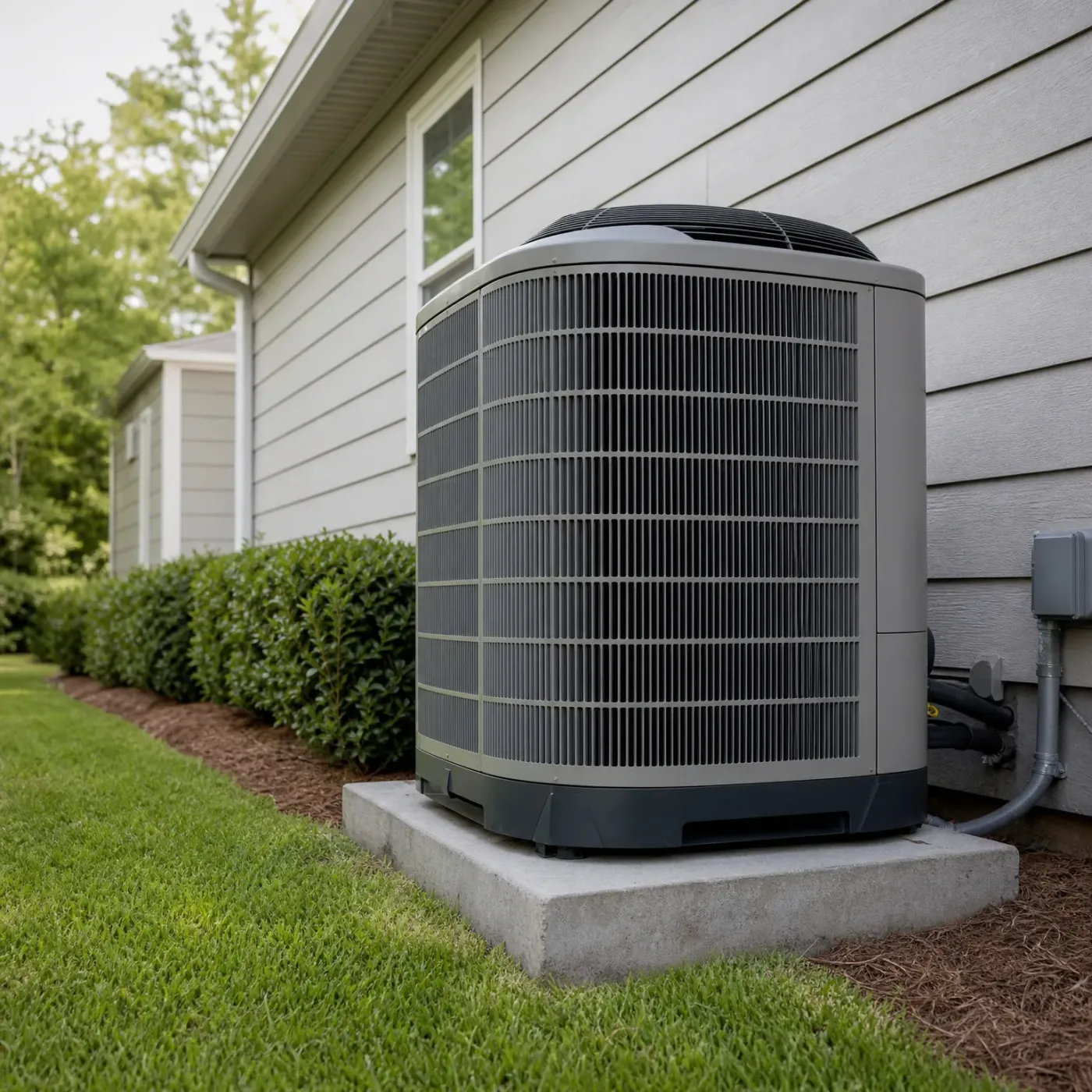
An outdoor condenser unit on a concrete pad beside a light-colored lap-sided house, with a trimmed hedge, mulch bed and mowed lawn nearby and an electrical box and conduit on the wall.

A heat pump pro near you

Your request goes to one pro, not a list of companies.

Get in touch with a local installer about a new heat pump.

Get a local pro

You're not committing to anything by asking.

A woman stands in the open doorway of a white stucco house holding the dark door, facing a man in a black cap and shirt seen from behind in the blurred foreground, with a potted flowering plant beside the entry.

What a worn-out heat pump means for your house

If your heat pump is losing ground, you'll feel it first in the rooms farthest from the thermostat. They run cold while the system struggles to keep up, and most homes here lean on a gas furnace to cover the gap, so the furnace ends up running more than it should to make up for a heat pump that's not pulling its weight. Your power bill stays low either way since electricity here is cheap, but the furnace picking up slack means more gas burned to do a job the heat pump used to handle on its own.

The other thing you'll notice is the unit itself working harder for less. If it's cycling longer than it used to, or the outdoor fan sounds strained, that's wear catching up with it, not a sign to wait it out. A licensed contractor working in North Dakota sees this pattern every winter and knows which parts tend to go first on a system that's logged this many cold seasons. Getting matched with one means a single contractor familiar with your situation reaches out, not a string of calls from companies that don't know your setup.

A living room corner with a beige sofa and cushion, a round wooden coffee table holding a pale ceramic vase of eucalyptus stems and a wooden bowl, and a curtained window with a potted plant above a latticed radiator cover in the background.
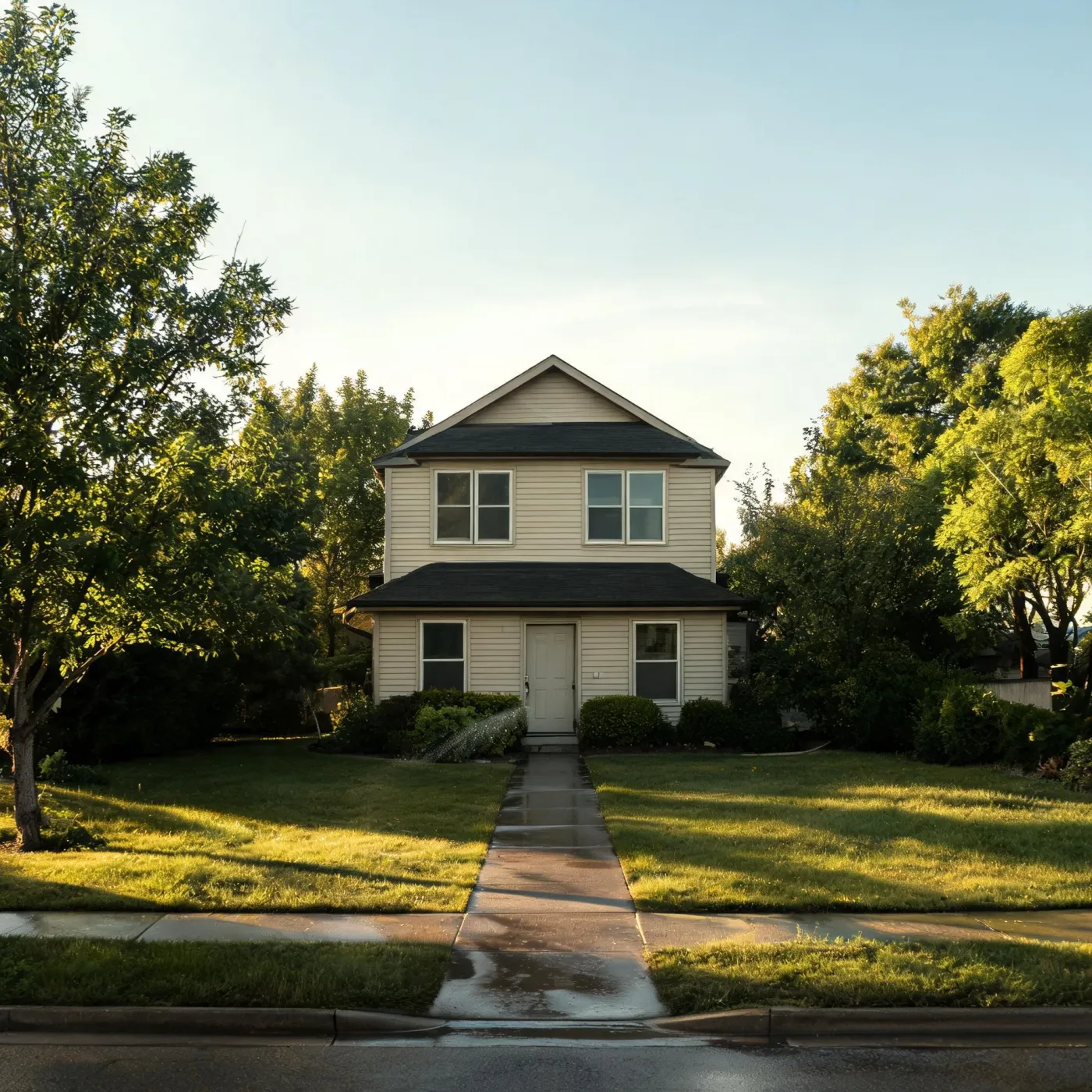
A two-story house with cream horizontal siding, a dark gabled roof, and a white front door, fronted by a lawn, shrubs, and a concrete walkway leading to a sidewalk and street, with large leafy trees on both sides.

Summer here isn't the problem your heat pump worries about. Averaged across June, July and August, the dew point in North Dakota runs about 53°F, which is on the dry side as these things go. That means the outdoor coil isn't fighting heavy, damp air to shed heat, so the compressor isn't working as hard to cool your house as it would somewhere muggier. You'll notice it in how steady the system runs, fewer long stretches at full output, less strain on that compressor during the months it's actually easy on the equipment. The wear that shortens a heat pump's life here comes from winter, not summer. Source: NOAA climate normals.

NASA POWER T2MDEW county cells weighted by homes

A woman in a cream knit sweater sits in an armchair with her eyes closed near a window showing yellow autumn foliage, with a mug on a round wooden side table beside her.
A gray-haired man with a beard in a blue button-placket shirt reclines on a couch with his eyes closed, beside a sunlit window with a green plant.

Keep running it as is

If the heat pump is still carrying its share of the load and the backup heat kicks in when it should, there's no reason to touch it. You lose nothing by waiting, and a unit that's heating and cooling the way it was built to can run another winter or two without trouble. The risk is waiting past the point where it starts struggling, because a heat pump that's losing capacity in a North Dakota winter leans harder on the gas furnace behind it, and you may not notice until a cold snap makes it obvious.
Replace before it fails

A heat pump that's already short on heat during the cold months isn't likely to get better on its own. Replacing it before it quits means you pick the timing instead of a January cold snap picking it for you, and a contractor who services this equipment every season can size the new unit to your house and your backup furnace rather than matching whatever happened to be there before. The tradeoff is spending money on a system that technically still runs, even if it's not running well.

Power costs 11.82 cents per kilowatt-hour statewide

At under 12 cents a kilowatt-hour, running your heat pump's compressor through a North Dakota winter costs less than it would almost anywhere else. That's one less reason to push an aging unit past its limit just to avoid the electric bill of a new one.

EIA-861 2025 statewide residential average

A heat pump in North Dakota earns its keep for a limited number of winters before the compressor and reversing valve have logged more cycles than they can keep up with. By then you'll have seen the signs already covered: the far rooms running cold, the backup heat carrying more of the load, the rust along the base of the outdoor unit. When you decide it's time to replace it, the install matters as much as the equipment, since a heat pump sized or set up wrong will struggle through its first North Dakota winter the same way an old one does in its last. A licensed contractor working near you sees this equipment every season and knows which parts give out first in this climate and what a proper install here actually requires. You'll be matched with one contractor, not a handful competing for your number, so the person who calls you back is the one who'll likely do the work.

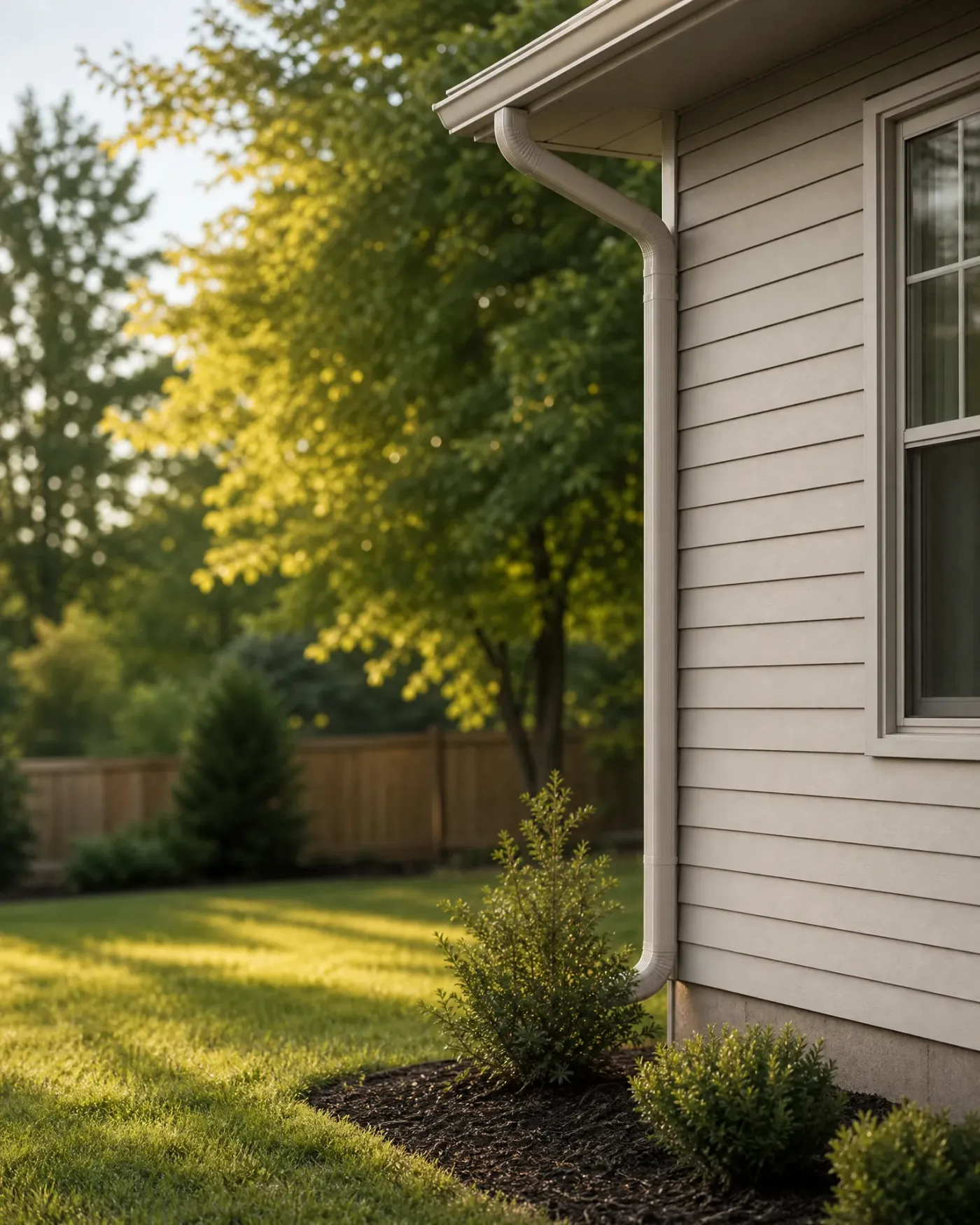
Corner of a house with light horizontal lap siding, a white gutter and downspout, and a window, beside a mulched bed with small shrubs, a lawn, wooden fence and trees in the background.
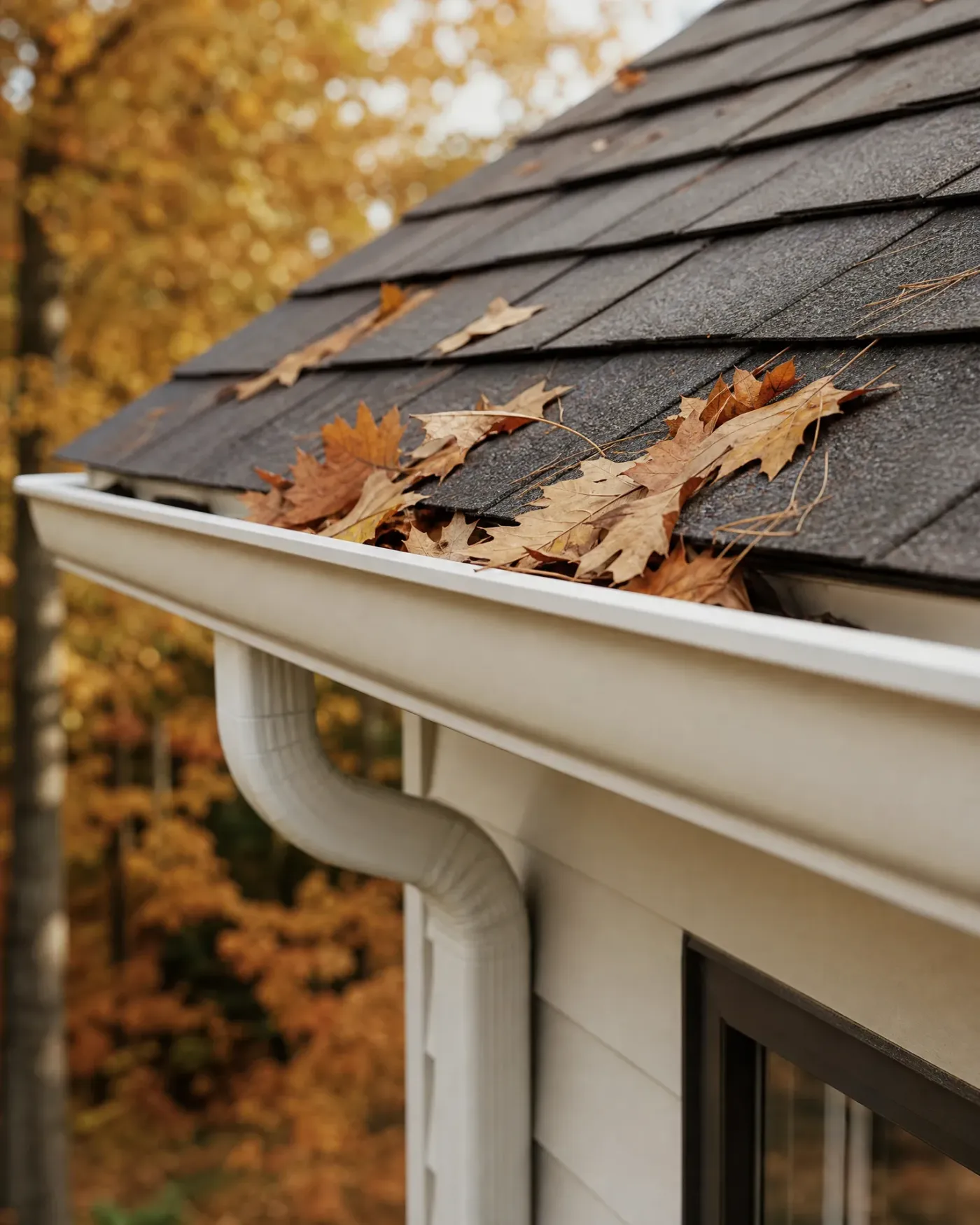
Close-up of a white gutter along an asphalt-shingle roof edge with dry brown leaves collected in it, a downspout and lap siding below, and blurred autumn trees in the background.
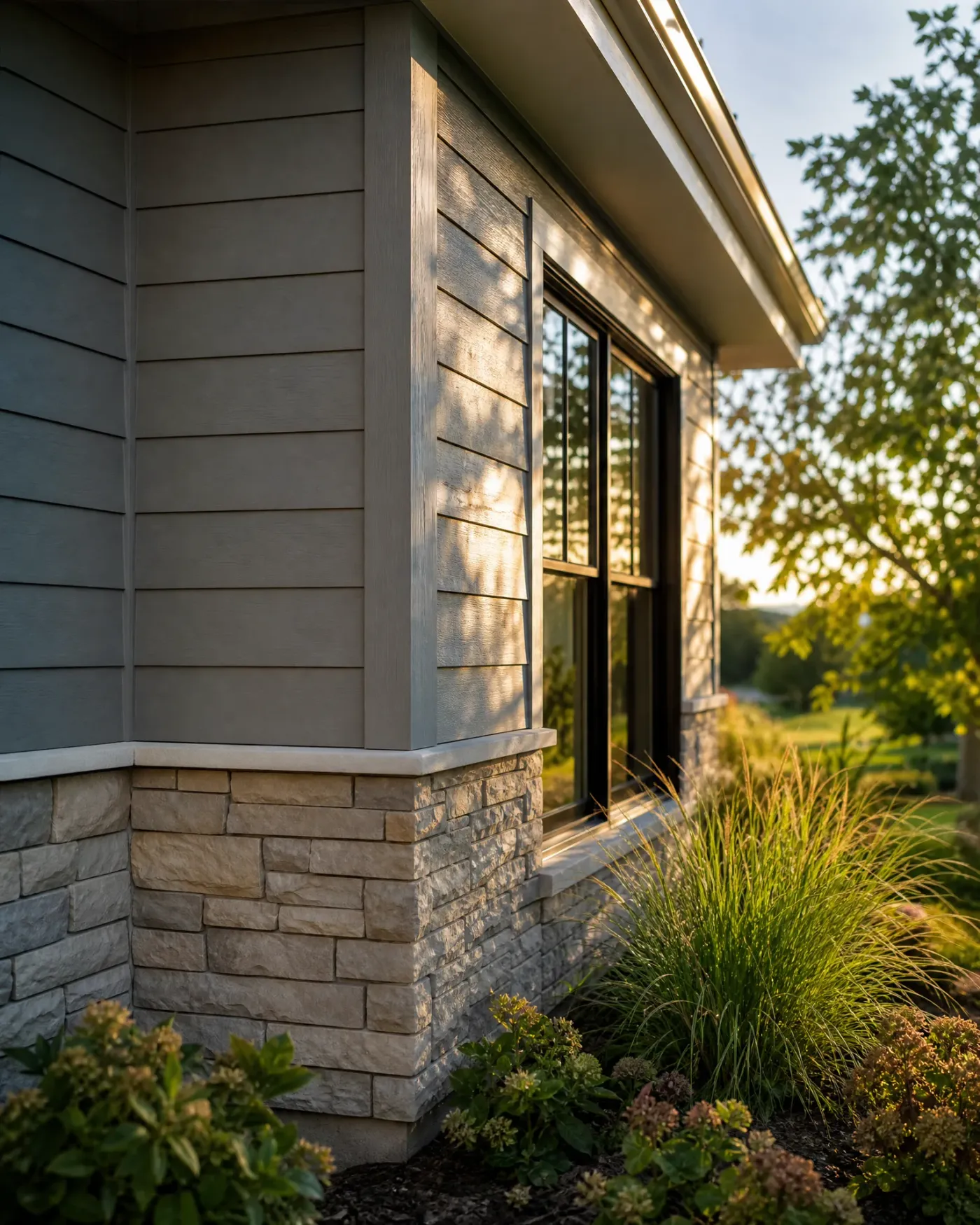
Exterior corner of a house with horizontal lap siding above a stone veneer base and a dark-framed window, with ornamental grasses and shrubs in the foreground and trees in low sunlight behind.
A white horizontal-siding house with a steep gray shingled gable roof, fronted by trimmed shrubs, a brick walkway, and a lawn scattered with fallen autumn leaves.
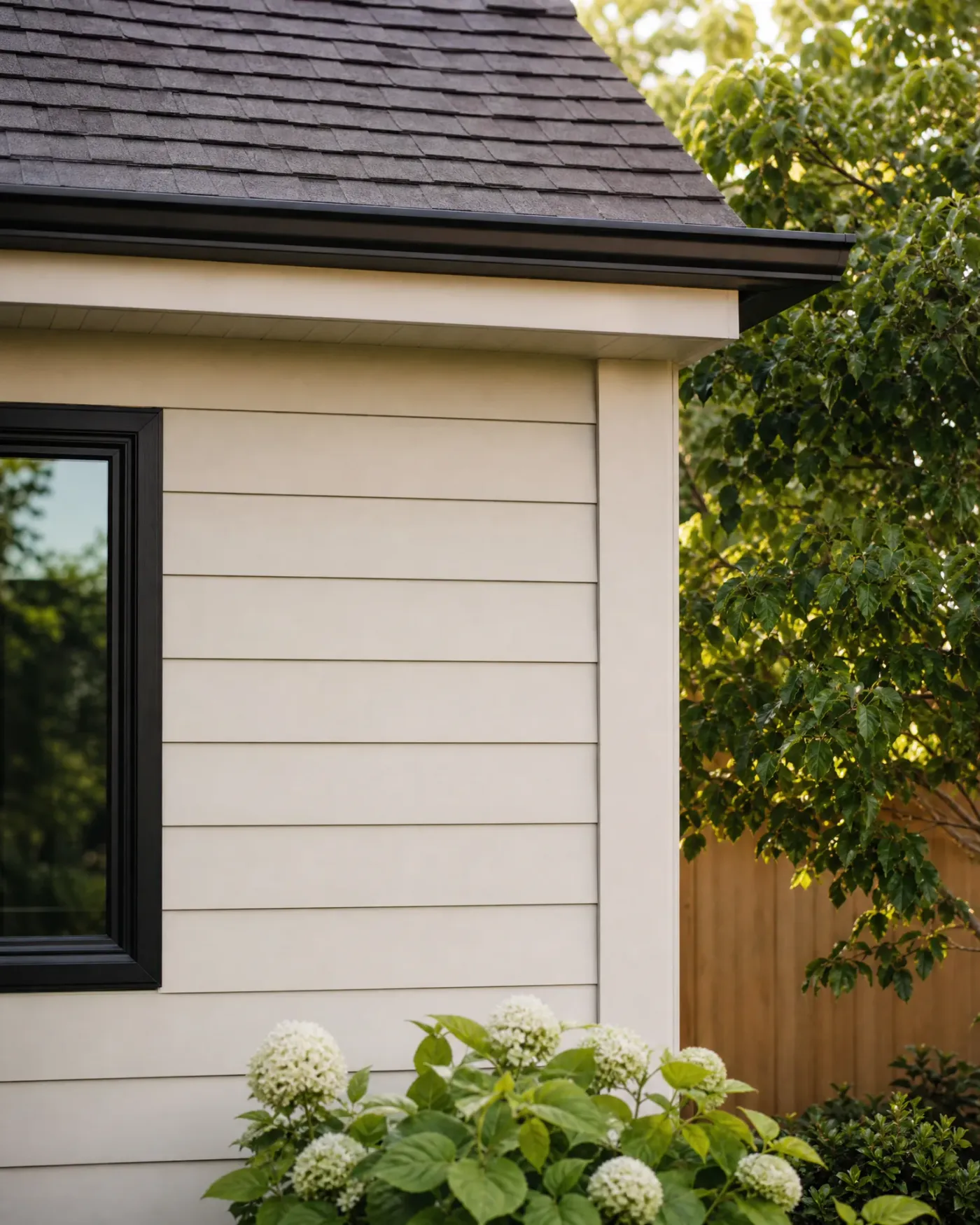
Corner of a house with cream horizontal lap siding, a black-framed window, asphalt shingle roof with dark fascia, white hydrangea blooms and green shrubs below, and a leafy tree and wood fence to the right.

A local pro for your heat pump installation

One installer gets your project, so there's no bidding war over it.

Match me with a pro

It costs nothing to send, and you don't have to hire anyone.