

Is a cold-climate heat pump worth it in North Dakota

After this form, you can stop searching for a heat pump pro.

Let a pro reach out

A cold-climate heat pump can work in North Dakota, but it needs help on the coldest days. These units are built to keep pulling heat from outside air even well below zero, and the good ones still put out real heat down near negative 15 or lower. Below that, output drops off, and most homes here lean on a gas furnace as backup when the temperature really falls. That pairing, heat pump for the milder stretches of winter and most of the summer, furnace for the hard cold, is how it tends to work here. Since gas heat is common and power is cheap in North Dakota, the savings case is different than in places paying more for electricity. The honest answer is that it earns its keep on comfort and on the warm, dry summers, with the furnace carrying the worst of January.

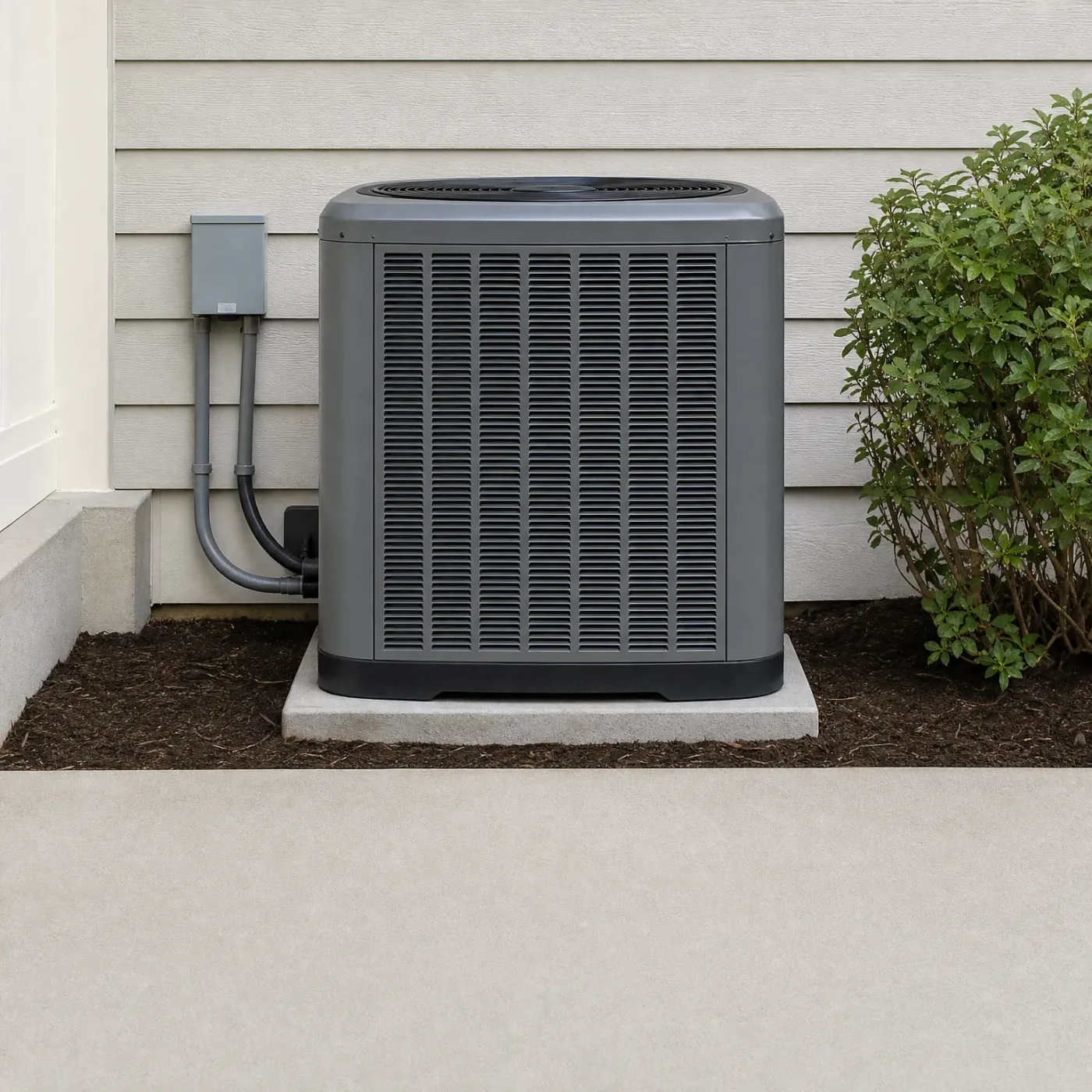
A gray outdoor condenser unit on a concrete pad beside a light-colored lap-sided house, with a wall-mounted disconnect box and conduit, dark mulch, and a green shrub to the right.

Heat Pump Running Right

In most of North Dakota, a cold-climate heat pump keeps your house warm on its own well into the cold months, and it handles your summers without strain since the air here doesn't carry the heavy humidity other places get. The outdoor unit should run quiet and steady, with the fan turning freely and no frost built up on the coil.
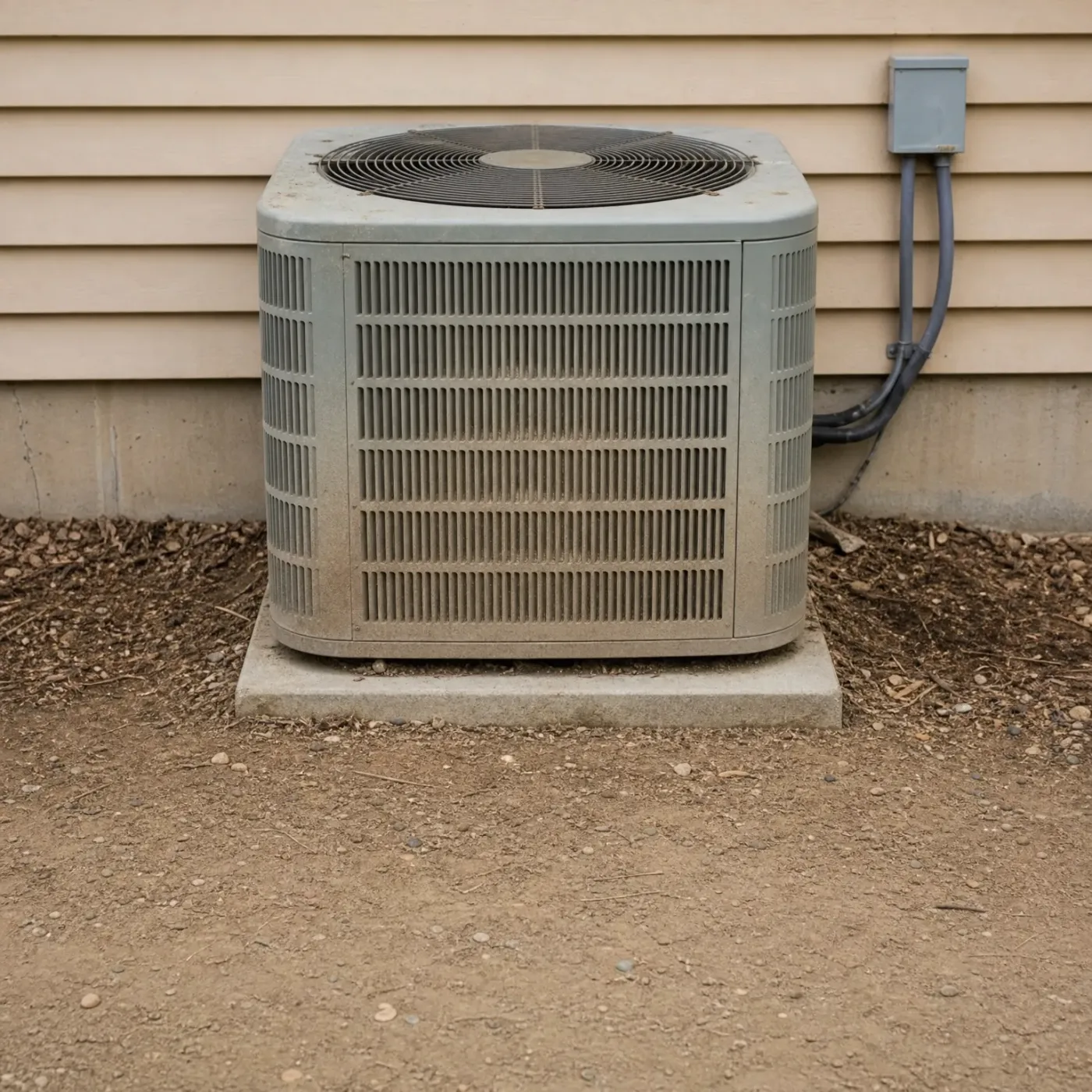
An outdoor air conditioner condenser unit on a concrete pad beside a house with horizontal lap siding, with a gray electrical disconnect box and conduit on the wall and bare dirt and mulch in the foreground.

Heat Pump Losing Ground

When the coil gets caked with dust and grime like this, the unit can't pull heat from the outside air the way it needs to once temperatures drop hard. You'll notice the house struggling to hold its temperature, the backup heat kicking on more than it should, and the outdoor unit running longer to do less.

Is your heat pump keeping up this winter?

You'll notice it first at the register: air that feels cool instead of warm, or the system running long stretches without the house ever quite catching up. Some homeowners hear the outdoor unit humming constantly on the coldest nights, or see frost built up thick on the coils that doesn't clear on its own. If your backup heat isn't kicking in when it should, the house falls behind and stays cold longer than it needs to, especially overnight. Left alone through a hard stretch of cold, that gap can mean pipes losing their margin against freezing in the rooms furthest from your furnace. None of this means the heat pump is broken. It usually means the system and the backup aren't working together the way they should at your coldest temperatures.

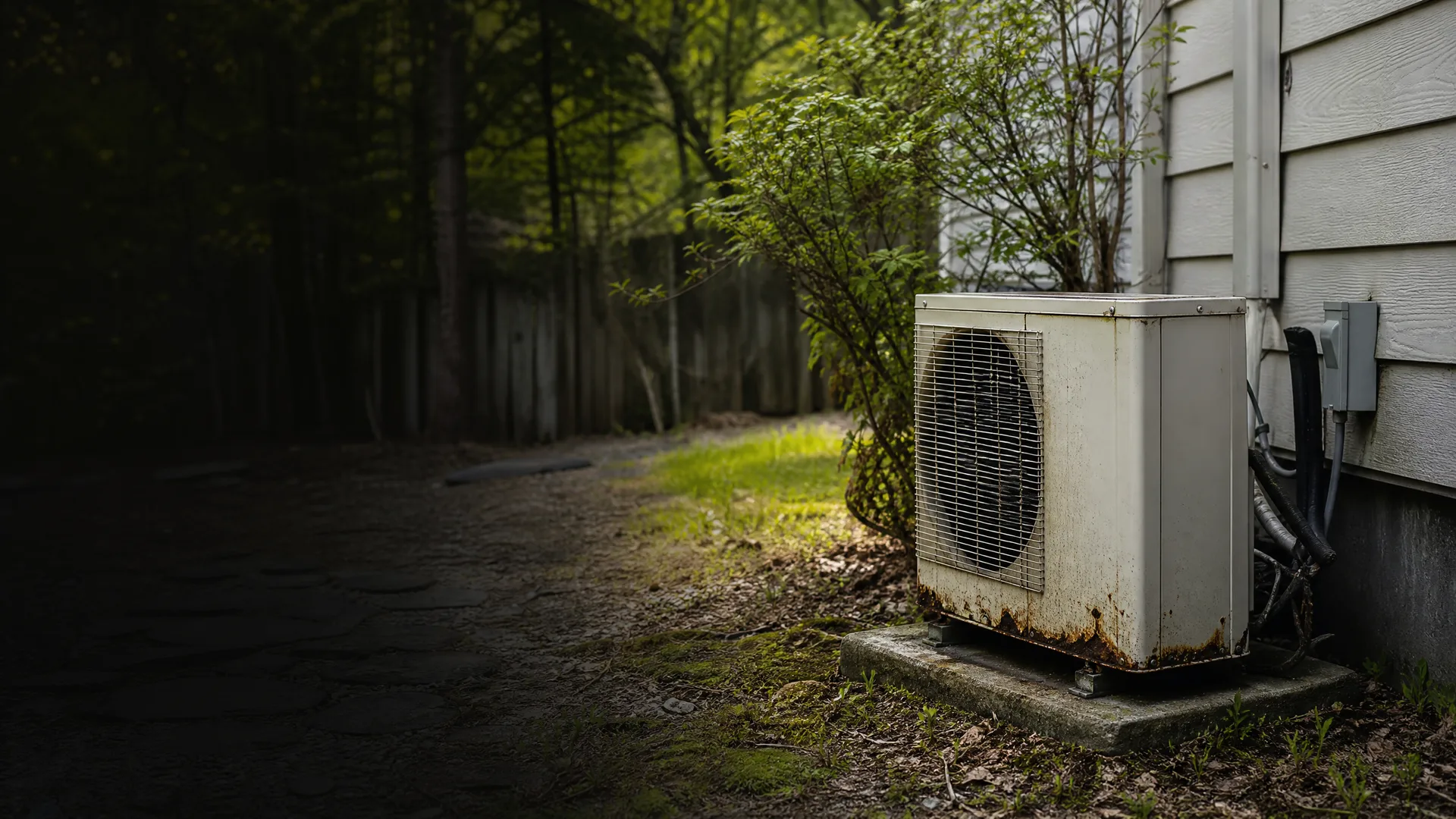
A weathered, rust-streaked outdoor heat pump unit on a concrete pad beside a house with horizontal siding, with shrubs, moss and a dim wooded yard and fence to the left.

You're out in the side yard on one of the first warm days of April, finally getting around to raking up what winter left behind. You walk past the outdoor unit and stop. The base along the bottom is rusted, a line of orange creeping up from the ground where snow sat against it all winter. You crouch down and run a thumb along it. The unit still ran fine through the cold, as far as you could tell, but seeing the rust up close makes you wonder what else the winter did to it that you can't see. You straighten up, brush the rust flakes off your hand, and head back inside thinking you should get someone out to look at it before next winter, not after.

Finding a pro stops being your job

You already have the heat pump, so the question isn't whether the idea works here, it's whether yours is set up right for a North Dakota winter and backed by the gas furnace most homes in this state still rely on when it gets cold enough. That backup has to kick in at the right point, the controls have to hand off cleanly between the two, and that's a setup job, not a guess. Whoever sizes it and wires the switchover needs to know how these systems actually behave once it's well below zero outside, not just how they're rated on paper. Send the request through and it goes to one local contractor who works on this equipment all winter, not a handful of companies competing for the job. You stop chasing quotes and start waiting on one call back, from someone who already knows what tends to go wrong here when the temperature drops.

How the backup switchover works

A cold-climate heat pump paired with a gas furnace runs through a dual-fuel setup. The thermostat or an outdoor sensor watches the temperature, and once it drops past the point the heat pump was set to handle, the system hands off to the furnace automatically. You don't flip a switch or change a setting. If that handoff point was never set, or was left at a default from installation, the furnace might kick in too early and run more than it needs to, or too late and leave the heat pump straining on air that's too cold to pull much heat from.

What a mismatched system costs you

Every heat pump has a rated output that drops as the outdoor temperature drops, and that curve is specific to the model, not a general rule. A unit sized right for your house will match the furnace's output at the point where the switchover happens, so there's no gap in heat while one system hands off to the other. A unit sized wrong, or a switchover point set without checking that curve, means the house can lose ground on the coldest nights even with both systems working. A local contractor who installs these in North Dakota winters checks that curve against your furnace's capacity rather than guessing at it.

Power costs 11.82 cents per kilowatt-hour statewide

At that rate, the heat pump is doing the cheap part of the job. It's the part your gas furnace carries on the coldest nights that still shows up on the gas side of the bill.

EIA-861 2025 statewide residential average

Where That Leaves You

  • A cold-climate heat pump holds its own in North Dakota most of the year and backs off only once temperatures drop well below zero.
  • The gas furnace isn't a backup sitting idle, it's the part of the system built to carry the hardest nights.
  • Cheap power here means the heat pump's electric cost stays low on the days it's doing the work alone.
  • A dual-fuel setup only pays off if the switchover point and the furnace behind it are both set up right for this climate.
  • Summers ask little of the system, so the real test of the install is how it's wired for January, not July.
  • Whether it's worth it comes down to how the unit in your yard is actually set, not whether the technology works here.

A cold-climate heat pump isn't a gamble in North Dakota. It does the job most days of the year, and it does it on cheap power, which is about as good a combination as this climate allows. Summers were never going to test it much here, without the heavy humidity other states deal with. The real question was always winter, and winter is where the gas furnace earns its place, not as something bolted on for show but as the part of the system built to take over when the air outside gets too thin to pull much heat from. Whether that handoff actually works depends on where the switchover point is set and whether the furnace behind it can carry the load it's handed. That's a setup question, not a technology question. The equipment in your yard can be right for this state and still be running wrong if that point was never dialed in for what January here actually does to it. So the answer isn't really about whether cold-climate heat pumps belong in North Dakota. They do. It's about whether yours was set up with that in mind, or just installed and left to figure out the cold on its own. That's the part worth having someone check.

A woman in a knitted shawl sits in a living room with a fireplace, shelves, a sofa with cushions, and a lamp by a bright window, looking off to the side.
A woman with long brown wavy hair in a green shirt over a white top stands in a living room with built-in white shelves, a ceiling fan, a potted plant and a sliding glass door.
A woman with shoulder-length gray-streaked hair in a light gray knit sweater stands smiling and looking off to the side in a living room with a sofa, houseplant, framed picture, and sunlit sliding glass door.
A woman with shoulder-length curly gray hair wearing a gray knit sweater stands near a window with a sheer curtain, looking to the side, with a blurred interior room behind her.

Heat Pump Installation

Let someone else find the pro

Only one pro gets your request, so you hear from one company.

A black-framed smartphone standing upright against a plain light gray background, its screen filled with solid green.
Step 1 of 3: Equipment