Profile view of a bearded man wearing a dark baseball cap and a dark gray T-shirt against a plain off-white background.

What size heat pump a North Dakota home needs

Step 1 of 3: Equipment

What size heat pump do I need for my house in North Dakota?

North Dakota winters are the real test for a heat pump, and sizing one here isn't the same as sizing one for a milder state. You want enough capacity to keep the house warm when it's well below zero outside, without paying for more unit than you'll ever use on the mild days.

It depends on a load calculation, not square footage alone

A contractor sizes your heat pump with a Manual J load calculation, which looks at your home's square footage, insulation, windows and how much cold air gets in, not just the size of the house. North Dakota winters push the outdoor temperature far below what a heat pump handles efficiently on its own, so sizing also depends on whether the system pairs with a gas furnace for backup, which most homes here already have. A unit sized only for summer cooling will fall short in January. A unit sized for the coldest days without a backup furnace runs oversized and wasteful most of the year, since summers here don't demand much from it at all.

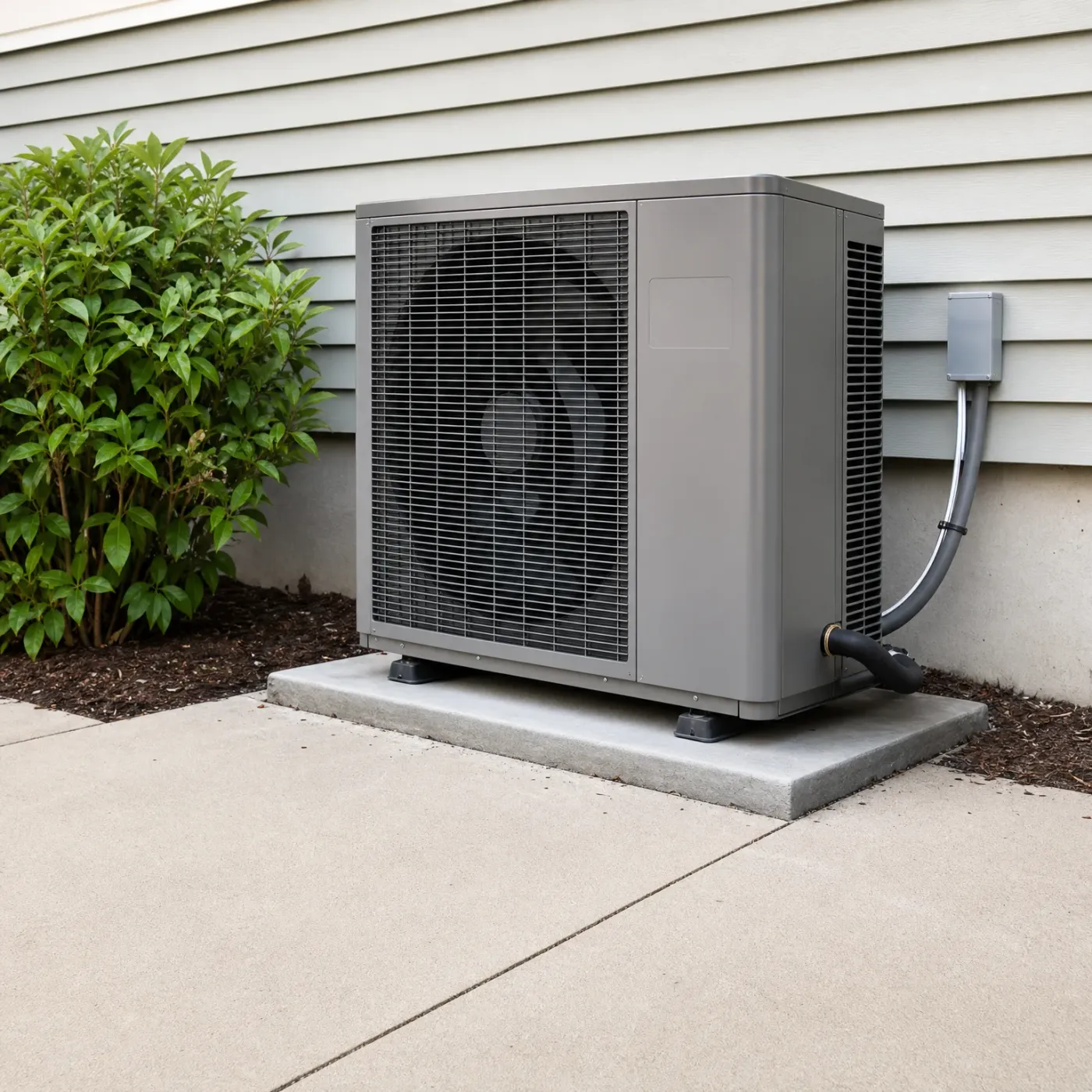
A gray outdoor heat pump unit on a concrete pad beside a house with horizontal lap siding, with a conduit running to a wall-mounted disconnect box and a green shrub to the left.

Sized Right

A heat pump that matches your house runs steady through a cold snap without strain. The coil stays clean, the pad stays clear, and the unit cycles the way it's supposed to. That's what correct sizing buys you here, where it has to carry the load on the coldest nights.
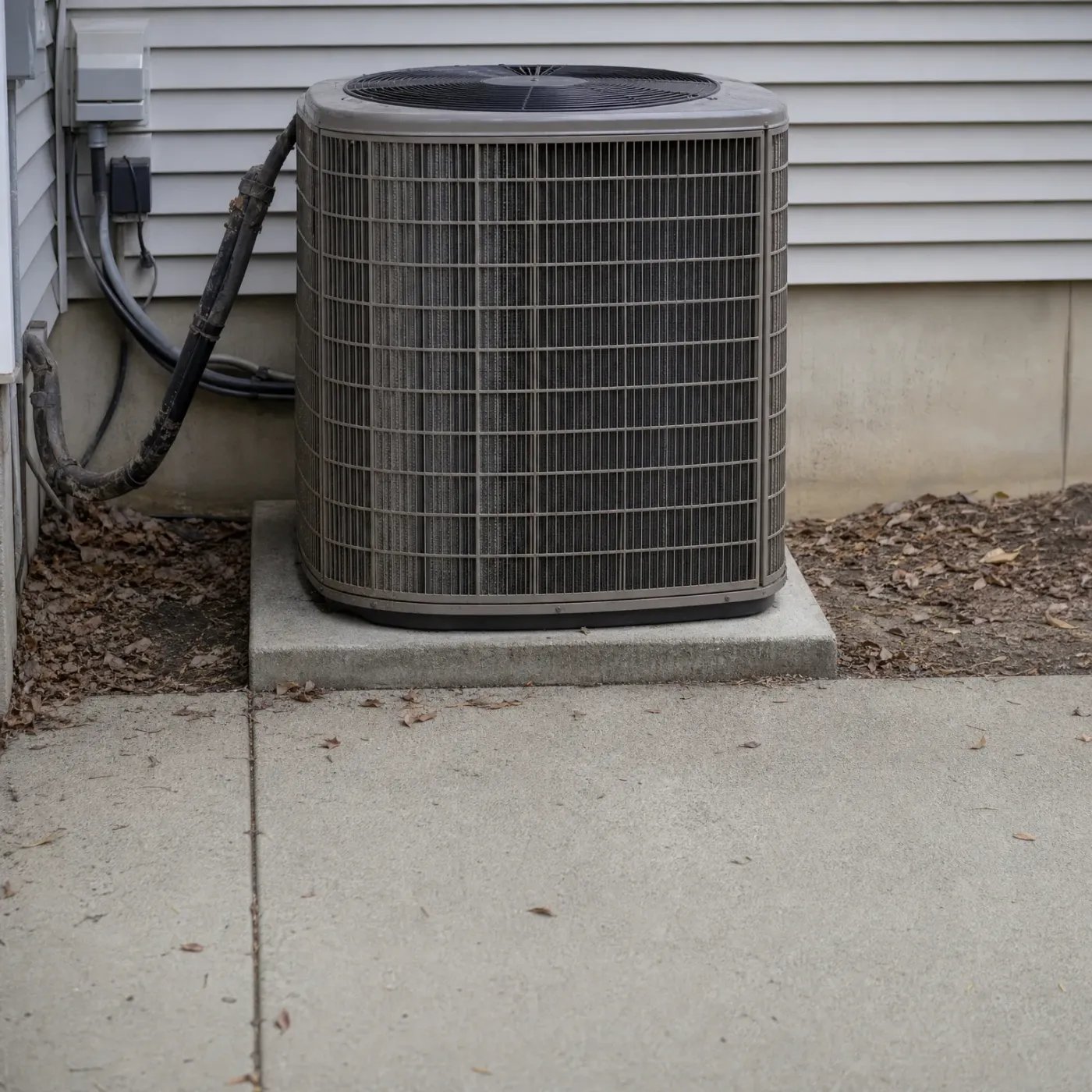
An outdoor air conditioner condenser unit on a concrete pad beside a house with horizontal vinyl siding, with refrigerant lines and an electrical disconnect box on the wall and dry leaves on the ground.

Sized Wrong

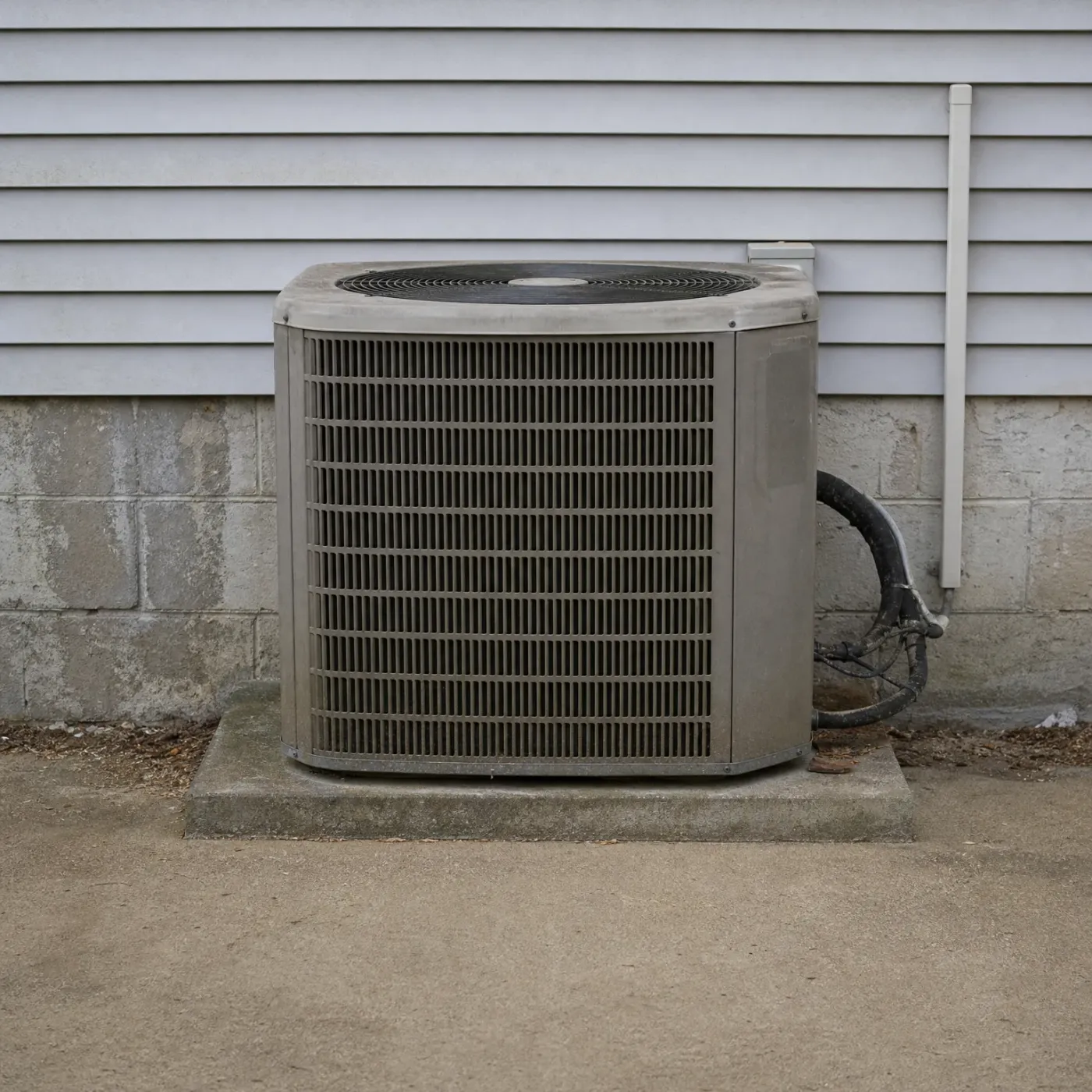
Too big or too small, and the signs show up outdoors first. Coils cake with grime because the unit's running longer or shorter cycles than it should. Leaves pile against the base instead of getting blown clear. A heat pump fighting the wrong load wears like this faster than one sized to the house.

Heat Pump Alone or With a Furnace

Heat Pump Alone

  • Below a certain outdoor temperature the heat pump loses capacity and can't keep up on the coldest nights.
  • Running it alone through a North Dakota winter means longer cycles and more wear on the compressor.
  • Since power here is cheap, the electricity to run it hard on cold days doesn't hit the bill as hard as it would elsewhere.
  • No gas line, no furnace to maintain, no second system taking up space.
  • On milder days, which North Dakota still gets plenty of, a heat pump alone handles the house with no help needed.
  • If the unit is sized for summer cooling only, winter is where the gap shows up first.

Heat Pump Plus Furnace

  • Most homes here already heat with gas, so a furnace is likely already in place to pair with the heat pump.
  • The furnace takes over once outdoor temperatures drop past where the heat pump can still pull heat efficiently.
  • This pairing, called dual fuel, lets the heat pump handle the shoulder months and the furnace handle the hard cold.
  • Two systems means two things that can need service instead of one.
  • The heat pump still does the cooling job all summer, where the dry air here means less strain on the coil anyway.
  • Switching between the two should happen automatically once it's set up right, without you adjusting anything.
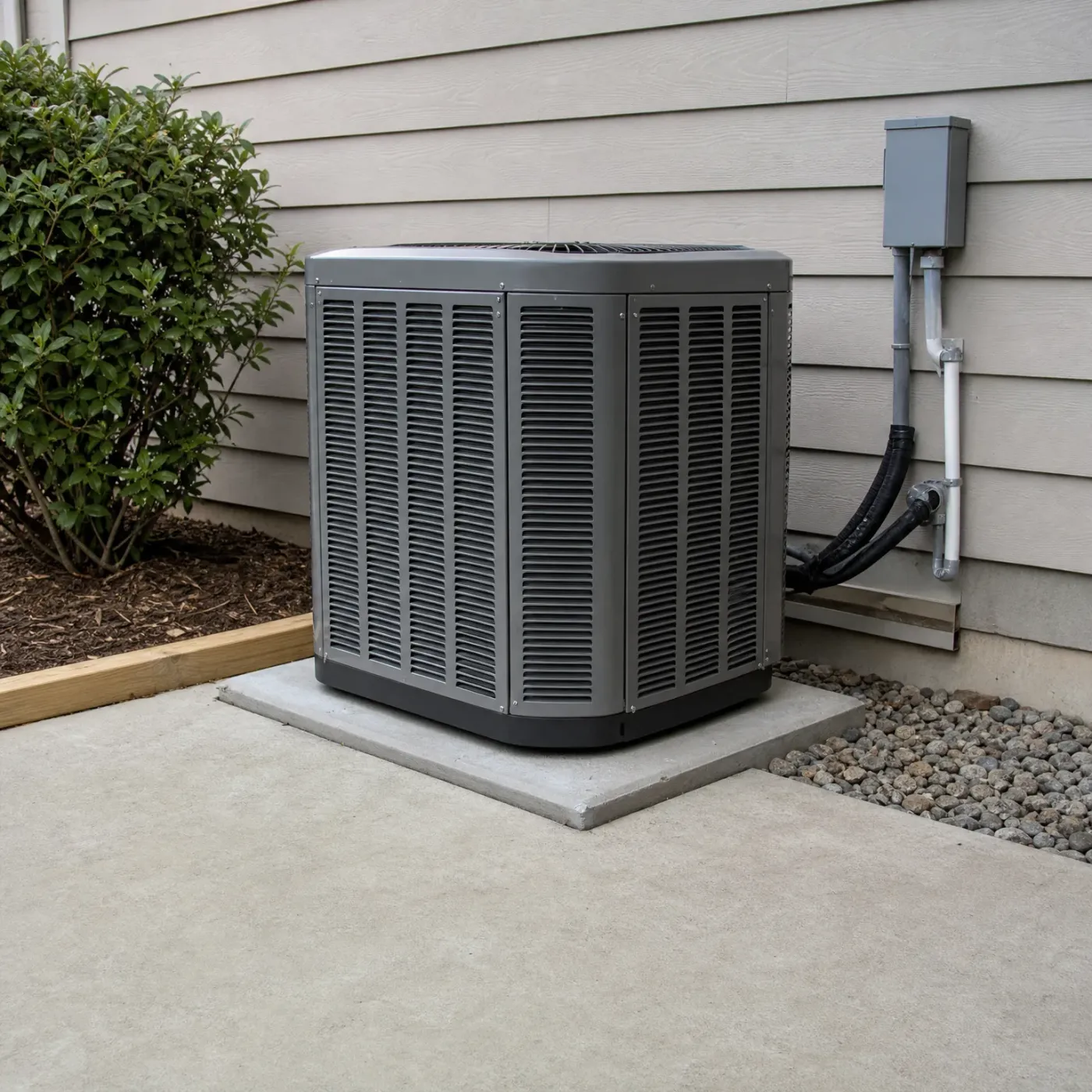
A gray outdoor condenser unit on a concrete pad beside a house with horizontal lap siding, with a wall-mounted disconnect box, conduit and insulated refrigerant lines, a shrub at left and gravel at right.

Right-Sized and Running Clean

This is a heat pump sized to the house. The lines run straight up the wall to the disconnect, the pad is clear, and the unit isn't fighting to keep up. On a unit like this, you'd expect steady cycles instead of it running nonstop trying to catch up.

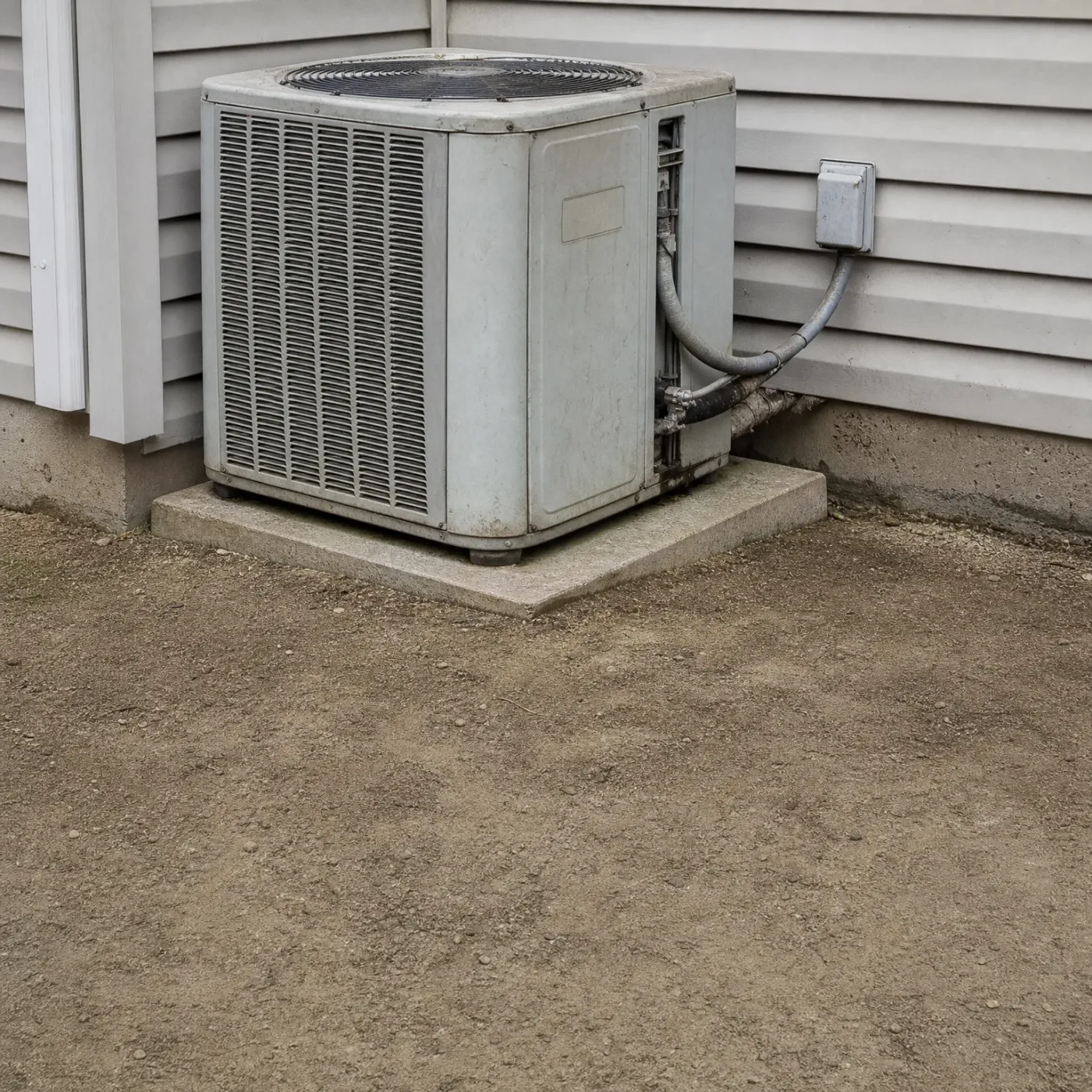
An outdoor condenser unit on a concrete pad beside a horizontal-sided house, with insulated refrigerant lines running to a wall-mounted box, surrounded by bare dirt.

Undersized and Showing It

This unit is older and it shows. Weathering like this on a heat pump that's also too small for the house means it's worked harder for longer. An undersized unit in a North Dakota winter never gets a break, and that catches up with the equipment.

An outdoor air conditioner condenser unit on a concrete pad beside a house with horizontal siding above a concrete block foundation, with insulated refrigerant lines and a vertical white pipe on the wall.
Before you get your heat pump installation
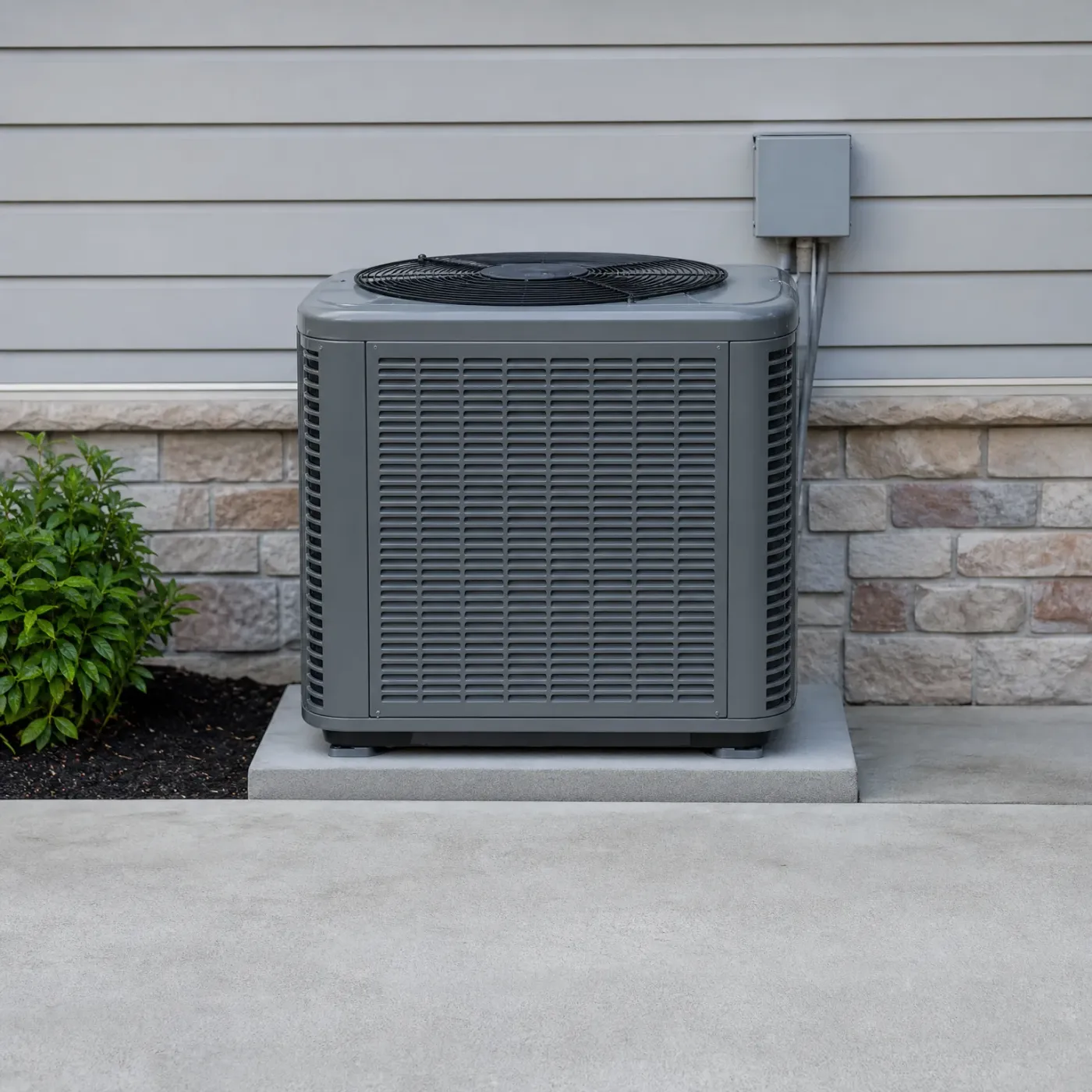
A gray outdoor condenser unit sits on a concrete pad against a house wall with horizontal siding above a stone veneer base, with an electrical disconnect box and conduit on the wall and a leafy shrub in mulch to the left.
After you get your heat pump installation

Below about 5°F

Most heat pumps start losing real capacity once it gets this cold, which is why North Dakota installs lean on a backup heat source for the hardest nights.

Skip calling around

Manual J, not square footage

A contractor sizes the unit from your house's actual heat loss, your windows and insulation, not a rule of thumb pulled from the floor plan.

Skip calling around
A smiling bearded man in a dark green hooded jacket and blue t-shirt sits on a couch in a living room with shelves, a potted plant, and a bowl of popcorn on a wooden table.
A smiling man in a green long-sleeved shirt sits on a beige sofa in a living room, with a bowl of popcorn in the foreground, a large potted plant and shelving behind him.
A smiling man in a dark blue T-shirt sits on a couch in a dimly lit living room with a bowl of popcorn and a remote on a wooden table, a lit floor lamp and bookshelves behind him, and windows showing greenery.
A smiling bearded man in a dark green long-sleeved shirt sits on a leather couch in a living room, with a bowl of popcorn and a remote control on a wooden table in the foreground.
  1. A contractor measures your house room by room, not just its square footage.

  2. That Manual J load calculation sets the exact heating and cooling demand.

  3. The contractor checks your ductwork size and layout against the new unit.

  4. They size the outdoor unit to match that calculated load, not a guess.

A woman in a dark knit turtleneck sweater reclines on a couch under a cream knit blanket, looking down at an open book, with a lit table lamp and framed pictures behind her.
A smiling middle-aged man in a dark green sweater sits at a candlelit table with wine glasses and a plate of greens in a dimly lit interior.

Done looking for a heat pump pro

Skip collecting and comparing quotes for the new heat pump.

No fee to send it, and nothing to sign.

An undersized heat pump in a North Dakota winter runs almost constantly once temperatures drop well below zero, and it still won't hold the house at your thermostat setting on the coldest nights.

An oversized one short cycles instead, shutting off before it finishes a heating run, which leaves rooms uneven and puts extra wear on the compressor over the years you own it.

Power costs 11.82 cents per kilowatt-hour statewide

At that rate, running a heat pump through a North Dakota winter costs less than most people expect, since the backup heat it leans on below 5°F is what drives the bill up, not the compressor itself. A unit sized right keeps that backup use down to the nights that actually need it.

EIA-861 2025 statewide residential average

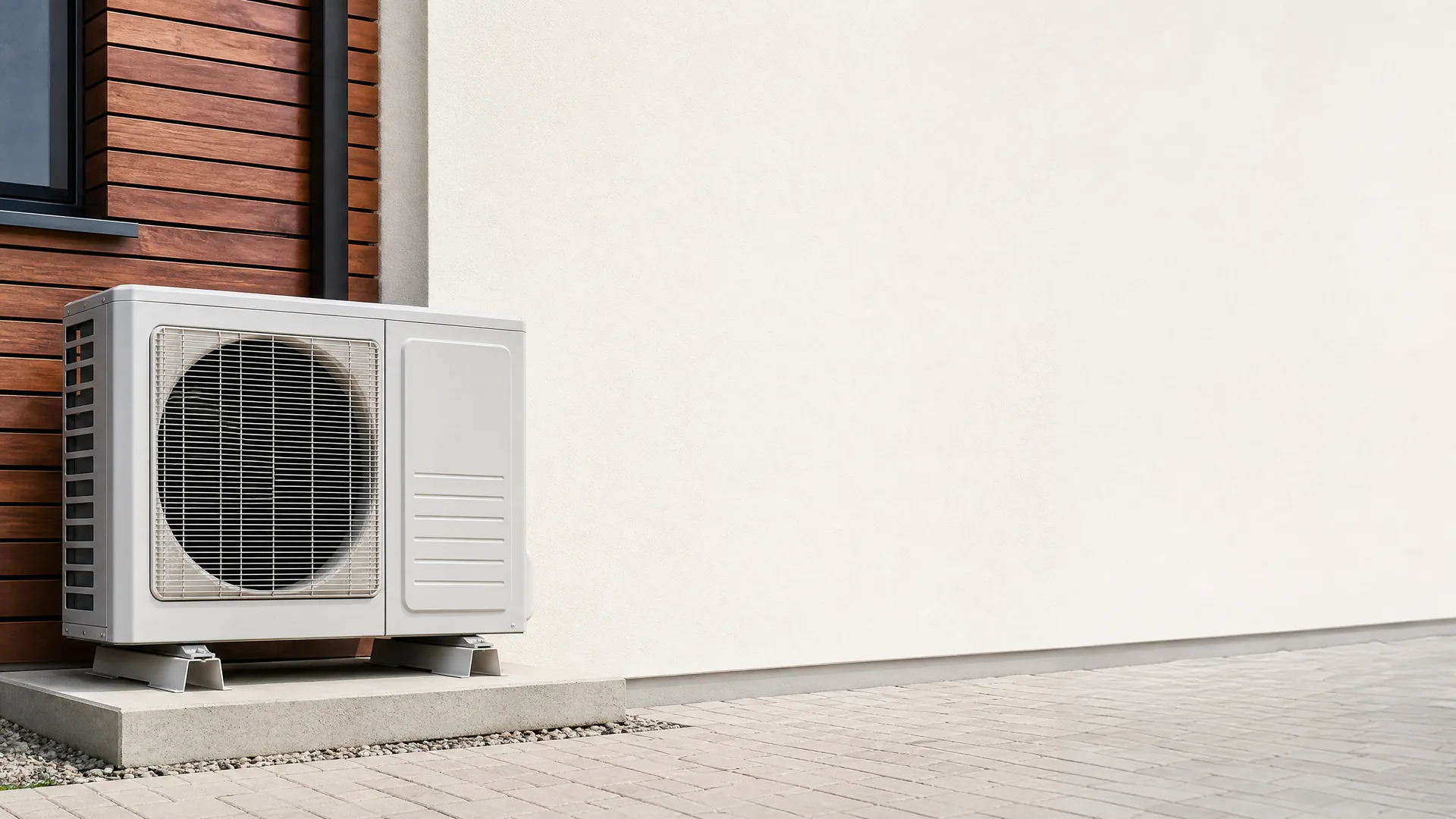
A white outdoor heat pump unit on a concrete pad beside a house with wood-slat siding and a large plain light-colored stucco wall, with paving stones in the foreground.

Paired with the gas furnace

Most houses here already have a gas furnace, and the heat pump gets sized to work alongside it, not replace it outright. The furnace takes over once the outdoor temperature drops past where the heat pump can still pull enough heat from the air. Sizing accounts for that handoff. A contractor sizing the heat pump without knowing the furnace is there risks oversizing it for the milder stretches of fall and spring, when the heat pump is doing all the work on its own.

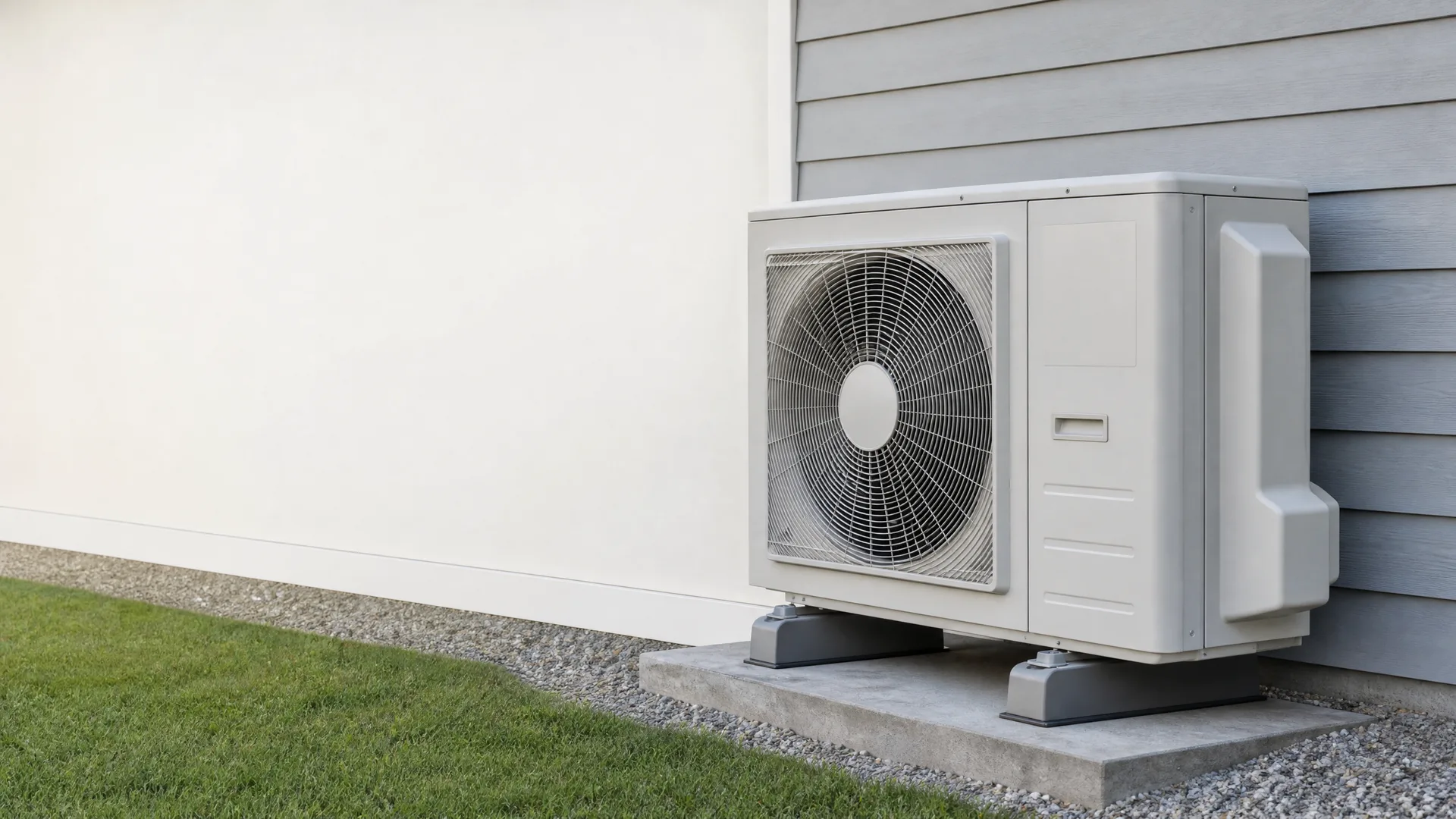
A white outdoor heat pump unit on rubber feet sits on a concrete pad beside a gray-sided house wall, next to a smooth light wall, gravel strip and lawn.

Sized for summer too

Summers in North Dakota are warm but the air isn't heavy, so the cooling side of the sizing doesn't carry the same humidity load it would further south. A unit sized right for winter heating usually has more cooling capacity than the house needs on a July afternoon here. That's fine. The coil still pulls out what little moisture is in the air, and the unit cycles on and off instead of running long and steady, which is the normal pattern for this climate.

The right size comes from a Manual J load calculation on your actual house, not a square footage chart, and in North Dakota it almost always means a heat pump paired with the gas furnace already in your basement. Get that pairing wrong and you either run the backup heat too much or ask the compressor to do a job it can't do once it's well below zero. You don't have to figure out which contractor in your area does this calculation correctly, call three or four of them to ask, explain your furnace setup and your ductwork over and over, then sit with a stack of quotes trying to tell a careful bid from a rushed one. Send the form once and that search is off your plate. Someone qualified to size this right for your house gets in touch, and from there it's a conversation about your home, not a round of cold calls you started from nothing.

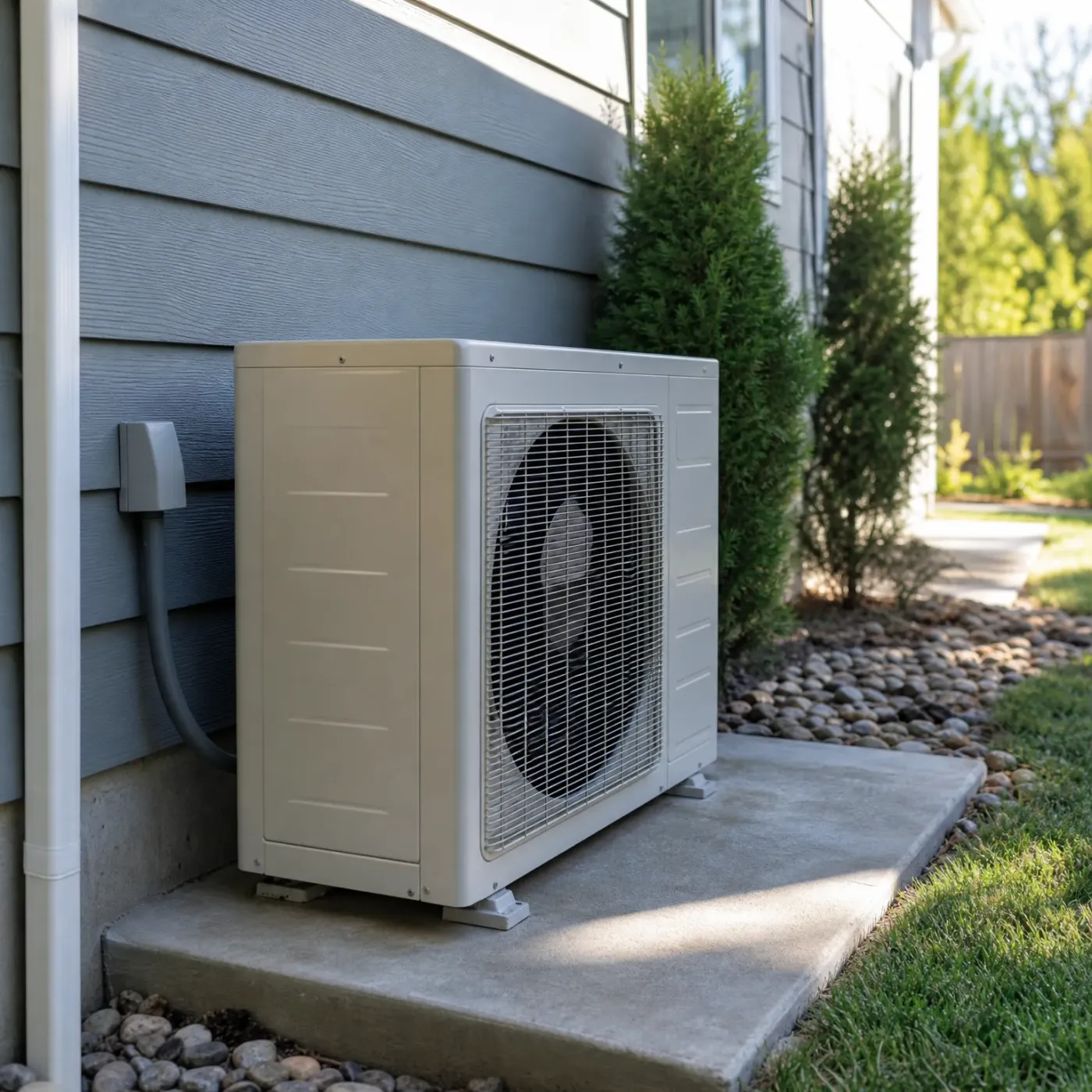
A beige outdoor heat pump or air conditioner condenser unit on a concrete pad beside a gray horizontal-siding house, with a disconnect box and conduit on the wall, shrubs, river rock and lawn nearby.

It's off your list after this

Skip the search

Skip the round of in-home estimates for a new heat pump.

Sending the form costs nothing.