






Why your heat pump has ice on it in a North Dakota winter

Step 1 of 3: Equipment

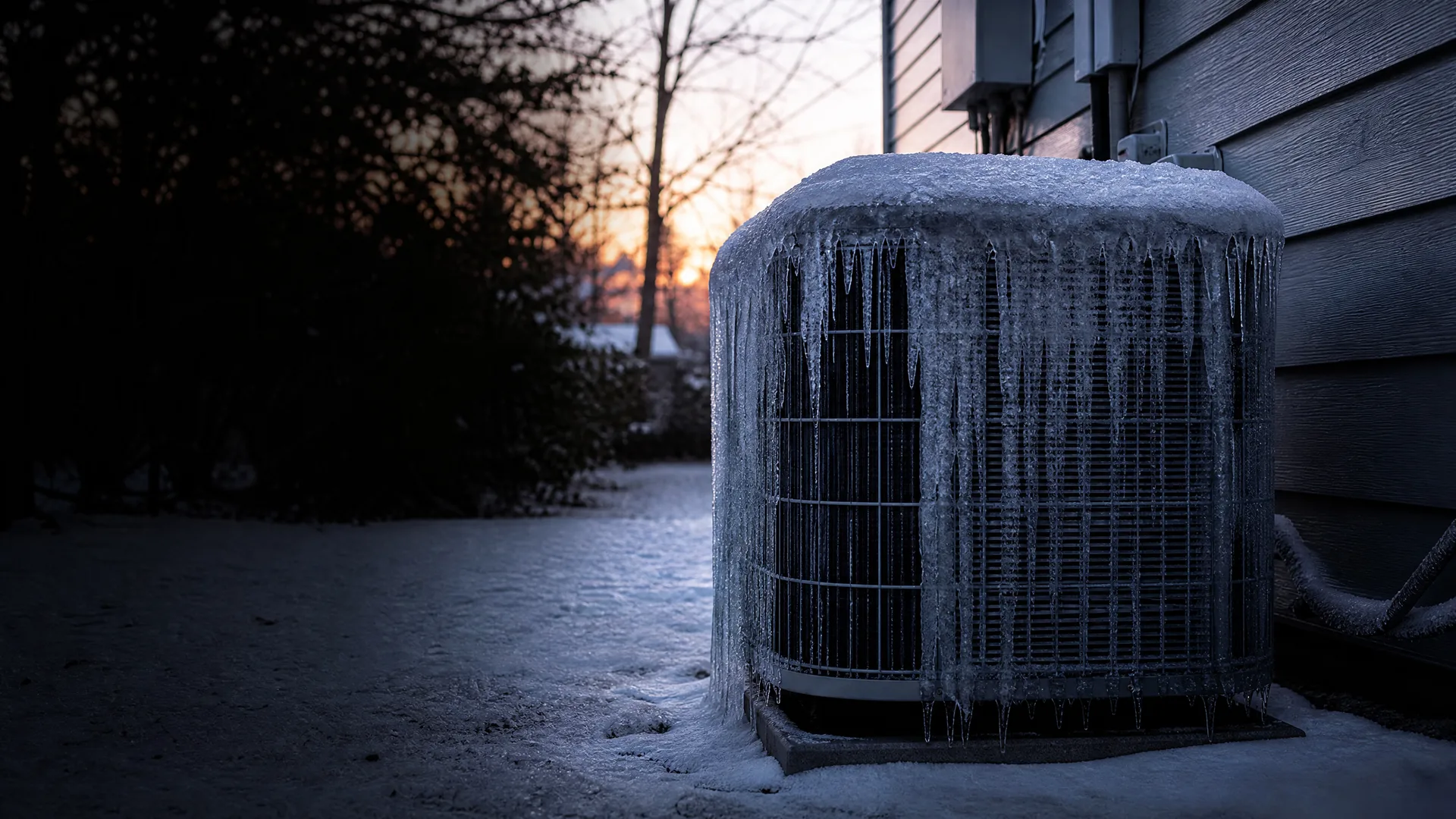
A little frost on the outdoor unit in winter is normal. Your heat pump pulls heat out of cold air, and moisture in that air lands on the cold coil and freezes, the same way frost forms on a windshield overnight. It's built to handle that. It runs a defrost cycle every so often, switching briefly to cooling mode to warm the coil and melt the ice, then switches back. The problem is when the ice doesn't go away, or when it builds up thick and solid instead of a thin layer. In a North Dakota winter, with the outdoor air often well below freezing for weeks at a time, that usually means the defrost cycle isn't kicking in on schedule, or the system isn't shedding enough heat to melt what's there. A unit that's iced over can't pull heat from the air efficiently, so your house runs colder and the system works harder trying to keep up.

An outdoor condenser unit beside a horizontally sided house, encased in thick ice with hanging icicles, on snow-covered ground at dusk with bare trees and a sunset behind.

You're out before the sun's up, boots crunching the snow in the side yard, headed to the car. The outdoor unit catches your eye because it isn't just frosted, it's crusted in ice, thick over the coil and climbing up the sides. The fan on top sits still. No hum, no hiss of air moving through it, just cold quiet and your breath fogging in front of you. Somewhere behind you the house is warming up for the morning, but this box isn't doing its part right now. You crouch down and touch the ice with one glove, and it doesn't give at all.

Is this normal frost, or is something wrong?

You'll know the difference by looking and listening. Normal frost is thin and even across the coil, and every so often you'll hear the unit shift, the fan pause, and steam rise off it as it melts itself clear. A problem looks different. The ice is thick, maybe an inch or more, and it's built up on the bottom of the unit or climbing the sides instead of sitting evenly on the coil. The fan on top isn't turning. You might hear the outdoor unit running constantly without ever pausing to defrost, or not running at all. Inside, the house feels harder to heat than it should, and the air coming from the vents feels cooler than usual. Left alone through a North Dakota cold snap, a heat pump that can't defrost itself will keep losing ground against the cold until it can't keep the house warm.

A woman with long blonde hair in a light blue shirt leans back on a beige sofa with her eyes closed, in a softly lit living room with cushions and a blurred plant and shelf in the background.
A woman with long dark hair in a gray knit sweater sits on a gray sofa with a cushion, looking toward a window in a living room with framed pictures and a lamp in the background.
A woman with long dark hair in a light grey knit sweater sits on a sofa indoors, looking to her right, with a framed landscape picture, a potted plant and a curtained window behind her.
A woman with long dark hair leans back against a gray sofa with her eyes closed, in a living room with a curtained window, a potted plant, and a dark screen in the background.
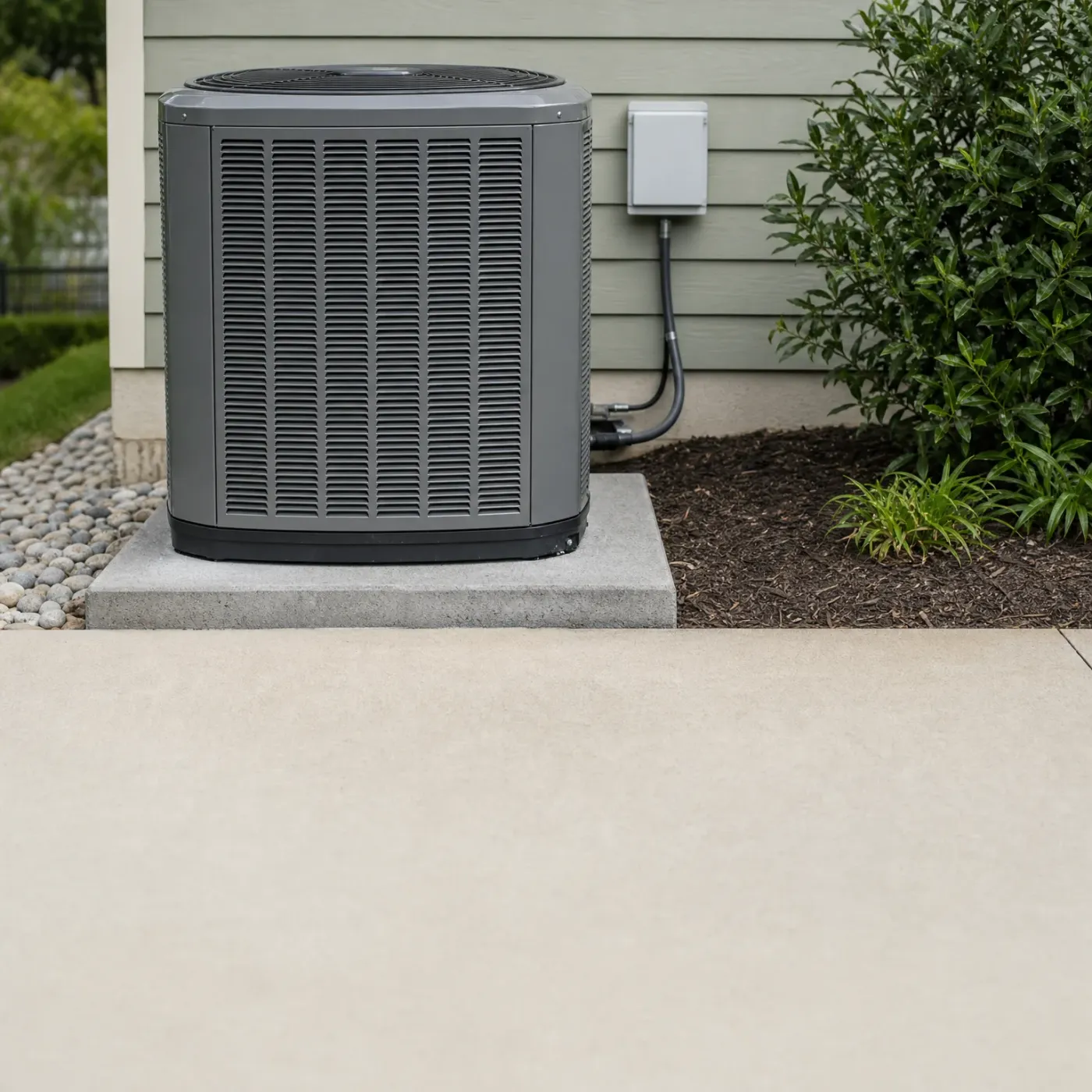
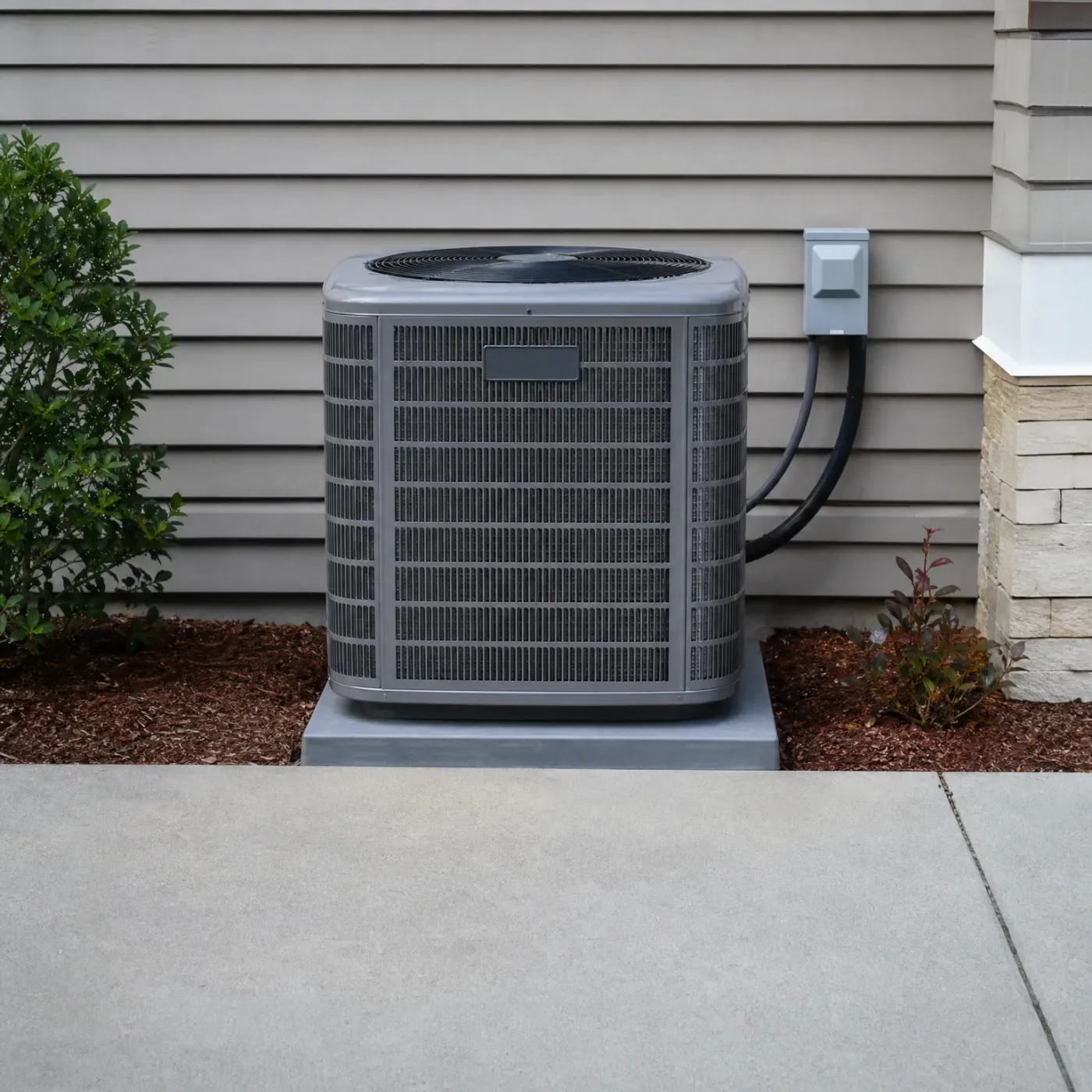
A gray outdoor condenser unit sits on a concrete pad beside a house with horizontal lap siding, with a wall-mounted disconnect box and refrigerant lines, mulched beds and a shrub nearby, and a concrete walkway in the foreground.
This is what a heat pump looks like doing its job, a thin, even coat of frost that clears on its own.
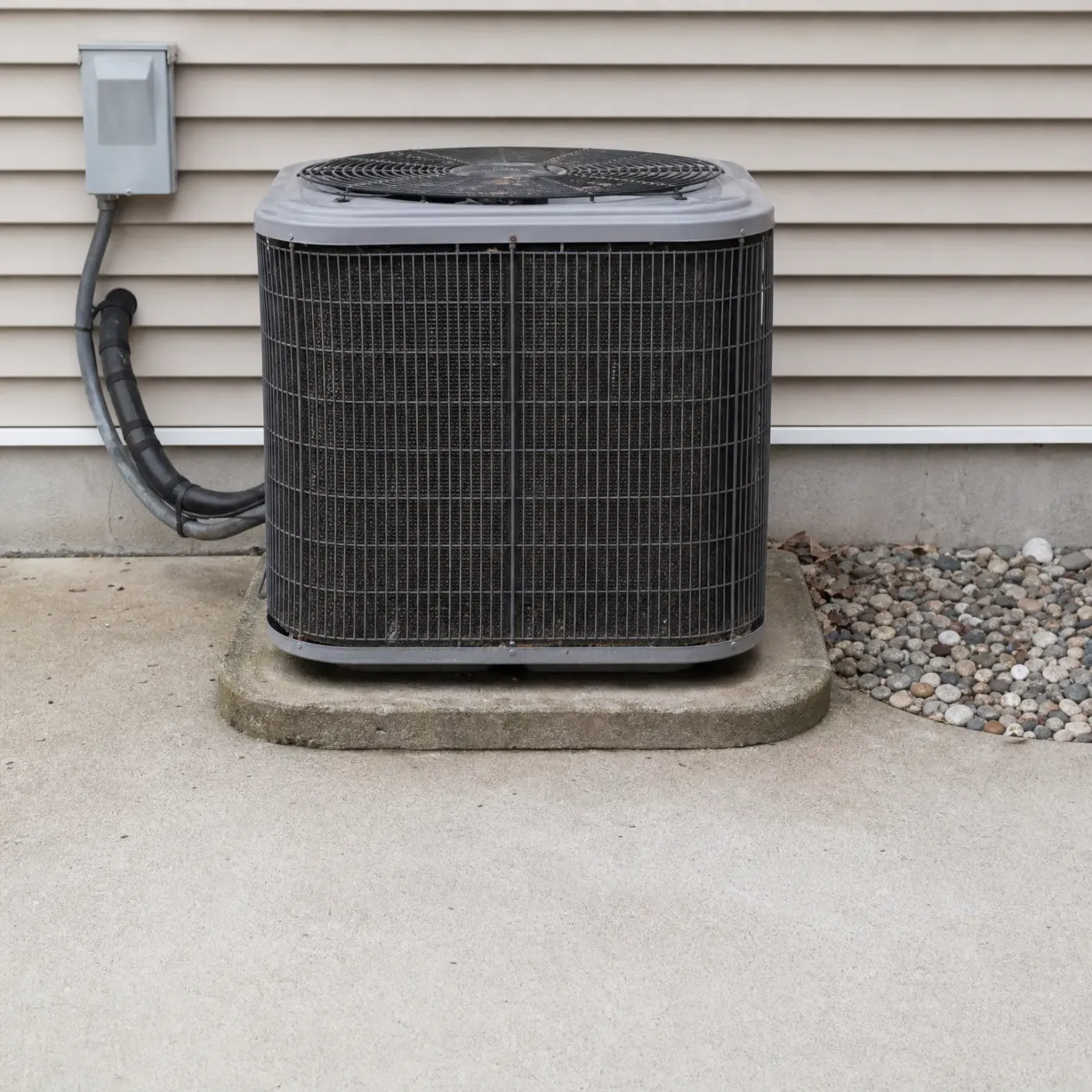
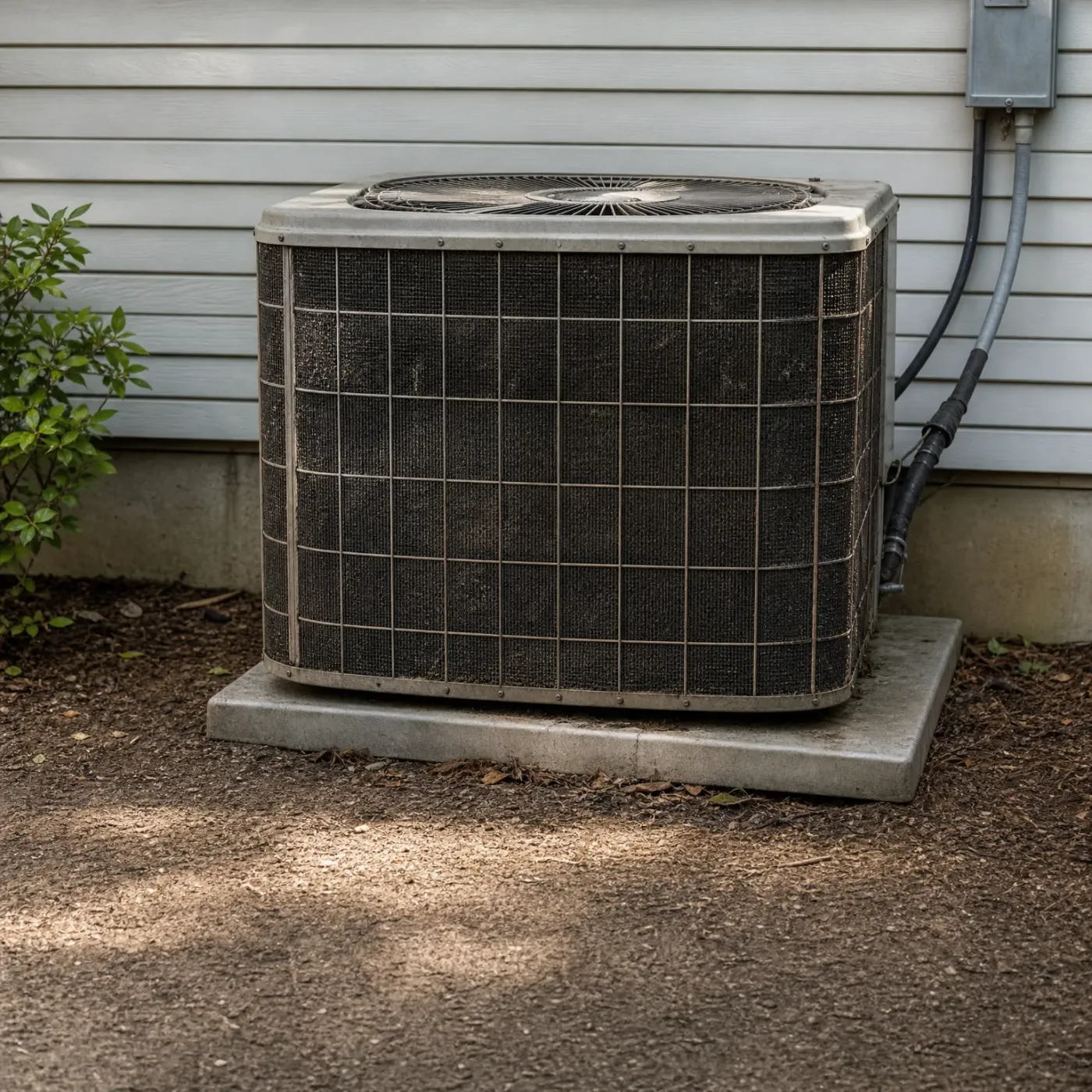
An outdoor air conditioning condenser unit with dusty coils sits on a concrete pad against light horizontal siding, with an electrical disconnect box and refrigerant lines on the wall and a shrub and mulch at left.
This is what calls for a repair: ice built up thick over the coil with no sign of a defrost cycle clearing it.
  1. Outdoor coil temperature drops low enough for frost to form

  2. A sensor reads the coil and triggers defrost mode

  3. The reversing valve switches so the system runs in cooling mode briefly

  4. Hot refrigerant flows outdoors and melts the ice off the coil

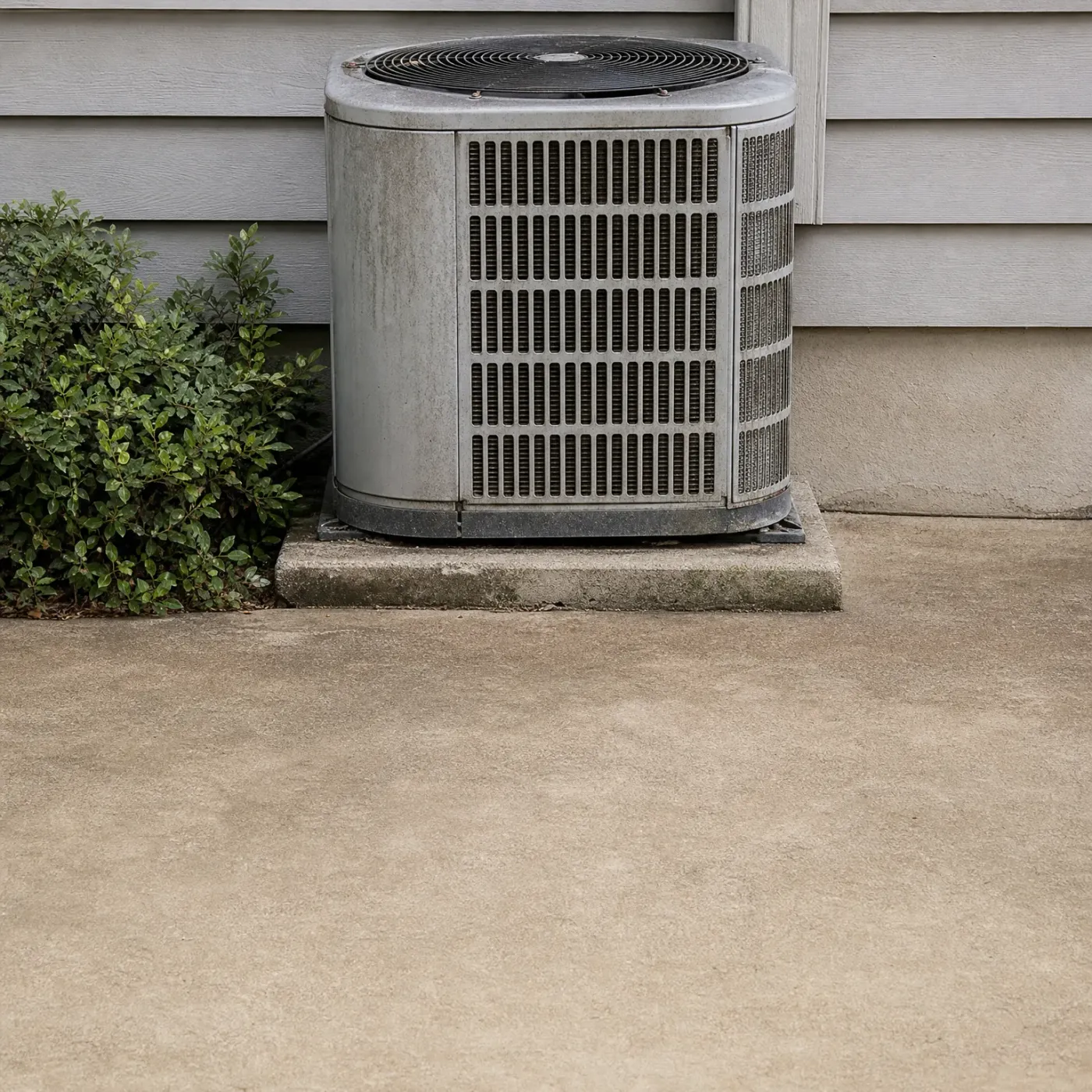
An outdoor air conditioning condenser unit on a concrete pad beside a house with horizontal lap siding, with a green shrub to the left and a wide concrete slab in the foreground.
Before you get your heat pump repair
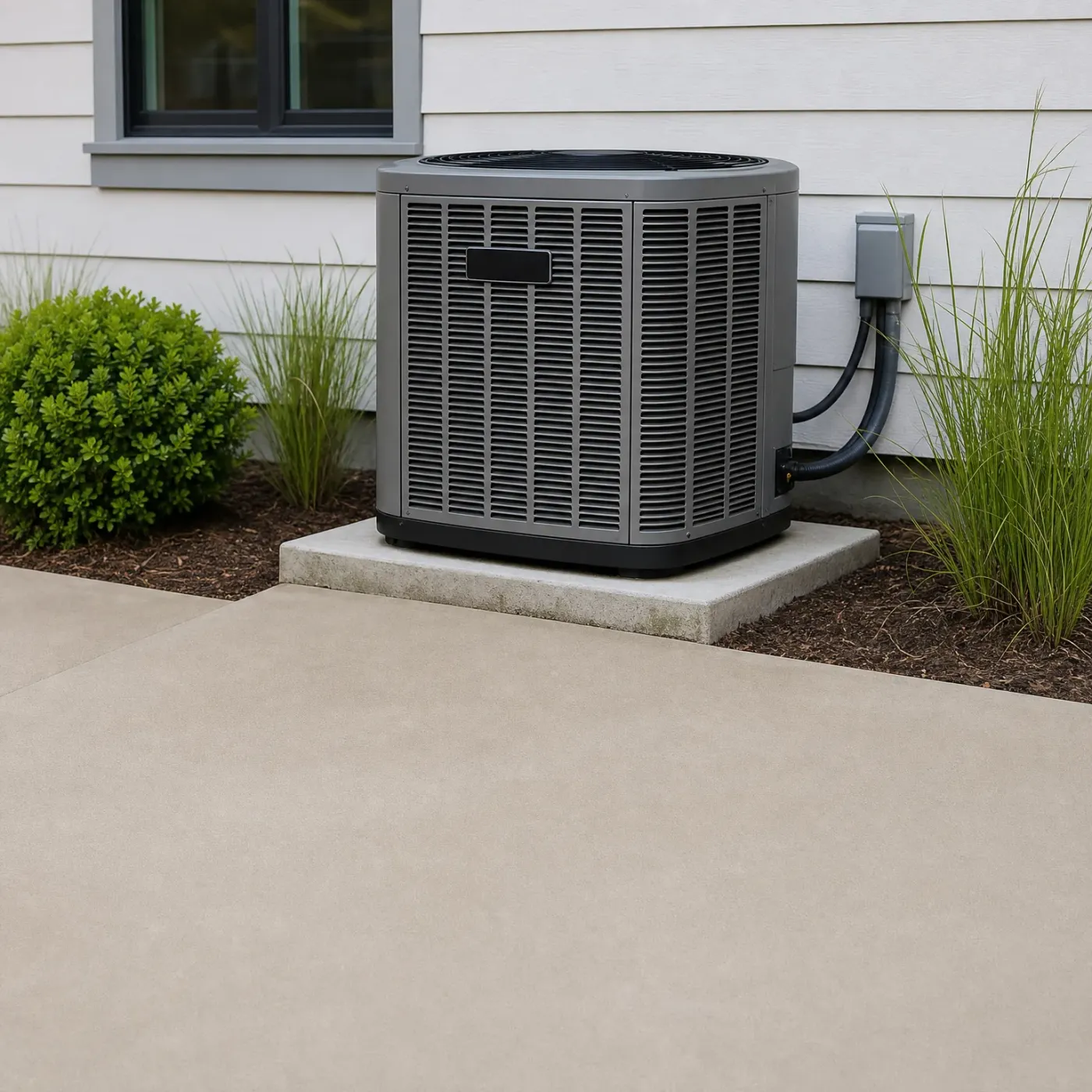
A gray outdoor condenser unit on a concrete pad beside a light-colored horizontal-siding house, with a disconnect box and refrigerant line on the wall, ornamental grasses and a shrub in mulch nearby, and a concrete patio in the foreground.
After you get your heat pump repair
A two-story house with tan horizontal siding and a dark shingled roof, fronted by a mowed lawn, trimmed shrubs, leafy trees on both sides, and a concrete walkway leading from a wet sidewalk to the white front door.

North Dakota summer air doesn't carry much moisture, a dew point of 53°F on average across June, July and August, based on weather data for where homes sit in the state. That's dry air by most standards. But your heat pump doesn't stop working once summer ends. It runs in reverse all winter, pulling what little moisture is in the cold outdoor air across its coil, and that's what turns to frost. Dry summers don't change what happens out there in January. If the ice on your unit looks heavier than a thin, even coat, or it's not clearing on its own, a contractor who knows these winters can take a look and tell you what it needs.

NASA POWER T2MDEW county cells weighted by homes

Get the right pro for your heat pump

Send the request today and stop worrying about who to call.

You're not committing to anything by asking.

Why the defrost cycle runs short

A heat pump defrosts by reversing itself and pushing hot refrigerant through the outdoor coil for a few minutes at a time. That's long enough to melt a thin, even layer of frost. It isn't meant to clear ice that's built up thick over hours or days. If a defrost cycle keeps running and the ice stays put, something is keeping the system from heating that coil enough to finish the job, a stuck reversing valve, a bad sensor, or a fan that won't shut off when it should.


Why the fan matters here

When a heat pump defrosts, the outdoor fan stops too. It has to, or the cold air it blows would undo the melting the hot refrigerant is doing. So a still fan during a short stretch is the system working correctly. A fan that never runs, even once the ice is gone and the unit should be back in heating mode, points to a different problem, one in the fan motor or its control, not the defrost cycle at all.

An older woman with gray hair in a bun and glasses, wearing a beige knit sweater, smiles while looking to the side in a warmly lit kitchen, with a loaf of bread on the counter in the foreground and a snowy scene outside the window.
A woman and a child wrapped together in a knitted gray blanket on a couch, with the child's head resting on her shoulder and a lit table lamp and houseplant in the background.

How the defrost cycle actually runs

  • The defrost board also watches outdoor temperature, since frost forms faster the colder the air gets.
  • Most units check for defrost conditions every 30 to 90 minutes rather than running on a fixed schedule.
  • When defrost ends, the reversing valve switches back and the outdoor fan kicks on again right away.
  • A backup heat strip or your furnace often kicks in briefly during defrost so indoor air doesn't feel cold.
  • Short defrost cycles in quick succession can mean the sensor or reversing valve isn't resetting the timer correctly.
  • A coil that stays iced through several of these cycles points to a part that isn't doing its job.

The outdoor unit isn't just sitting there collecting frost until something snaps. A defrost board is checking conditions on its own schedule, usually every 30 to 90 minutes, weighing how cold it is outside against how much frost has built on the coil. When it decides defrost is needed, it switches the reversing valve so hot refrigerant runs through the outdoor coil instead of the indoor one, which is what melts the ice off. While that's happening, the outdoor fan shuts off, since running it would just blow cold air across a coil that's trying to warm up. Indoors, you might notice a brief cool draft or hear the furnace or a heat strip kick on. That's the system covering for the few minutes the heat pump isn't actively heating your house. Once the coil is clear, the valve switches back, the fan comes back on, and the unit goes back to pulling heat from the outside air like normal.

That sequence is what should be happening every time. If it's not, you'll see it in how the ice behaves. Defrost cycles that fire off repeatedly in a short span usually mean the timer isn't resetting the way it should, often a sensor or the reversing valve itself not responding correctly. And if the coil stays iced through several defrost attempts instead of clearing, something in that chain isn't doing its job. Neither of those is something to wait out.

Power costs 11.82 cents per kilowatt-hour statewide

At 11.82 cents a kilowatt-hour, running the heat pump itself isn't what drives your bill up in a bad stretch of ice. It's the auxiliary heat kicking in behind it, trying to make up for a coil that can't move heat the way it should.

EIA-861 2025 statewide residential average

A gray outdoor condenser unit on a concrete pad beside a light green lap-sided house, with a wall-mounted electrical disconnect box, mulch bed with shrubs, river rock, and a paved walkway in the foreground.

Clean coil, doing its job

That's a heat pump that's free to breathe. Air moves straight through the fins, the coil sheds its frost on schedule, and the space around it stays open. Nothing about this setup gives ice a place to hang on.

An outdoor air conditioner condenser unit on a concrete pad beside a house with beige vinyl siding, with a gray electrical disconnect box and insulated refrigerant lines on the wall and river rock to the right.

Coil packed with dirt and debris

Those fins are clogged solid. Dirt and debris block airflow across the coil, so heat can't transfer the way it should, and the defrost cycle has less to work with. A coil that can't breathe is a coil that holds onto ice.

A woman in a gray sweater and jeans stands in an open wood front door of a white stucco house while a man in a dark jacket walks toward her on the entry path.

A thin coat of frost is fine. A block of ice is not.

That's the whole answer. Your heat pump is supposed to frost up in a North Dakota winter and melt itself clear a few times a day. If it's doing that, leave it alone. If the coil is buried under ice, the fan won't turn and the defrost cycle has stopped doing its job, and no amount of waiting fixes that on its own.

You don't have to figure out which one you're looking at by guesswork anymore. Send in what you're seeing and you'll be matched with a contractor who works on heat pumps in this kind of cold, and they'll reach out to you directly. You won't be the one calling around trying to find someone free in the middle of a cold snap. That part is off your plate now.

A gray upholstered sofa with a beige cushion and knit blanket beside a curtained window, with a white mug and a book on a dark wooden table in the foreground and a lit lamp in the background.
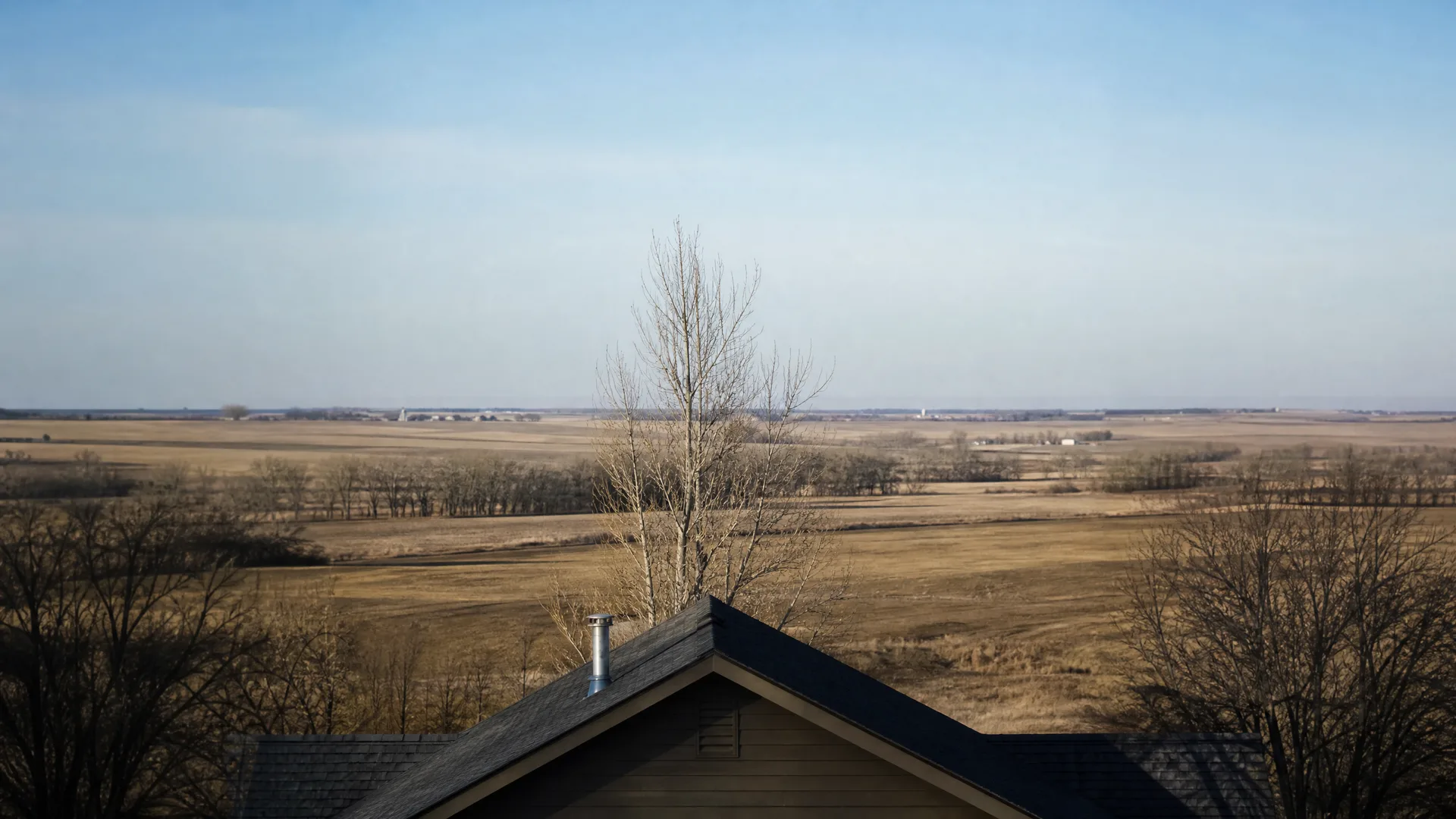
View over a dark shingled gable roof with a metal flue pipe toward flat brown fields, bare trees, and a hazy horizon under a pale blue sky.

A pro who works on heat pumps

Get a local pro

It costs nothing to send, and you don't have to hire anyone.

A heat pump buried in ice can't pull heat from the air, so your furnace backup or auxiliary heat carries more of the load than it should, and that shows up on your power bill before you ever notice comfort slipping. Send the request now and let someone qualified take a look.