
Why your heat pump makes noise in a North Dakota winter

Step 1 of 3: Equipment

That noise is probably the defrost cycle. A heat pump pulls heat from the outside air even when it's well below freezing, and through a North Dakota winter frost builds up fast on the outdoor coil. The unit reverses itself every so often to melt that frost off, and during that switch you'll hear a whoosh, a clicking of the reversing valve, or a loud hum as the fan slows or stops. That's normal. What's not normal is grinding, rattling, or a buzz that doesn't go away once defrost ends. That points to a worn fan motor, a loose panel, or ice that isn't clearing because the defrost control itself has failed. Left alone, a heat pump that can't defrost properly loses its grip on the cold air and leans harder on backup heat to keep up, which shows up on your bill before it shows up as a breakdown.

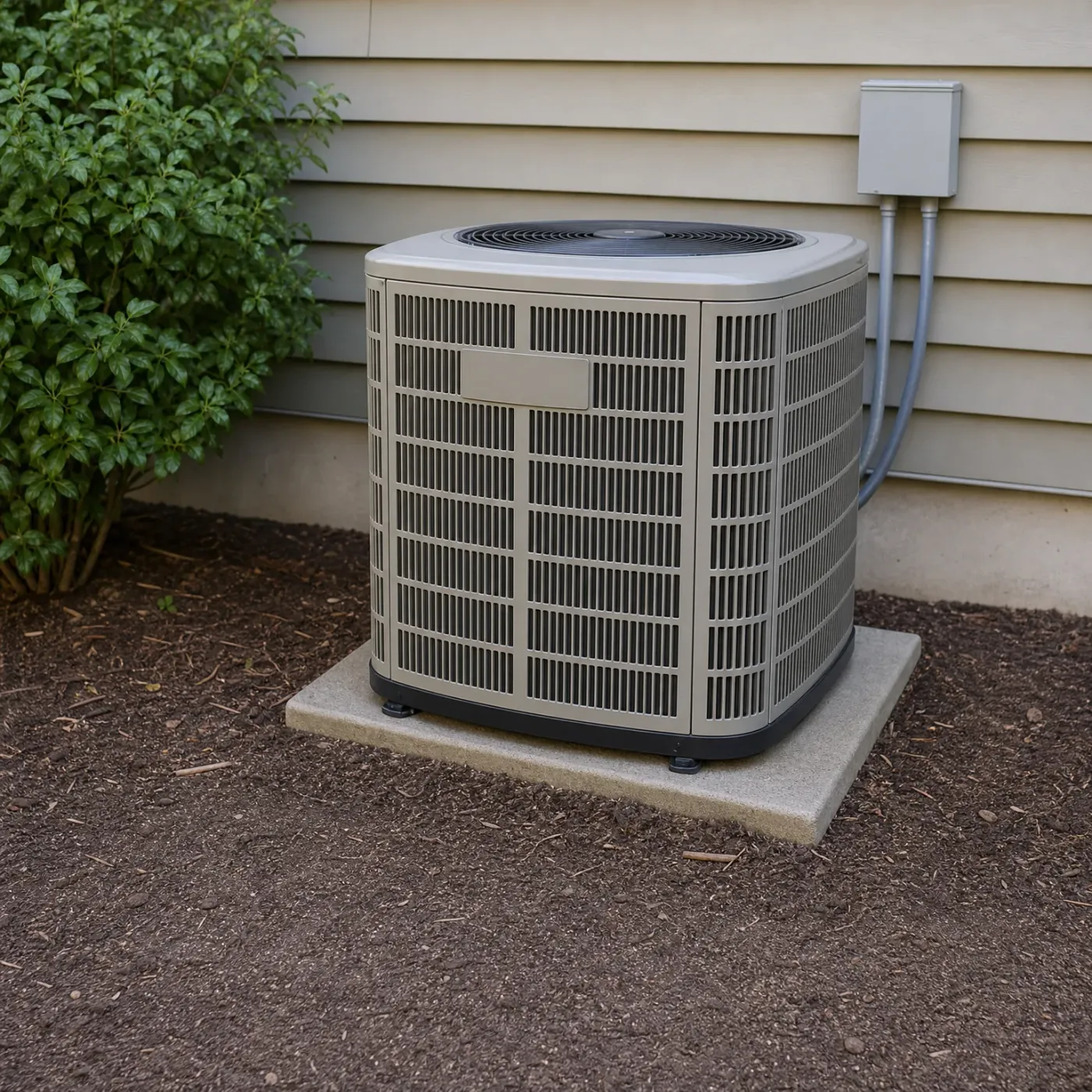
A gray outdoor air conditioning condenser unit on a concrete pad beside a house with horizontal siding, next to a green lawn and a plain light-colored wall.

The sounds defrost actually makes

When the unit switches into defrost, you'll hear a whoosh or a hiss as the reversing valve changes direction, sending hot refrigerant out to the coil instead of inside. Fan noise outside usually drops or stops while the coil clears. Some units let out a loud whoosh at the very end as they switch back to heating. None of that means something's wrong. It's the cycle working the way it's built to.

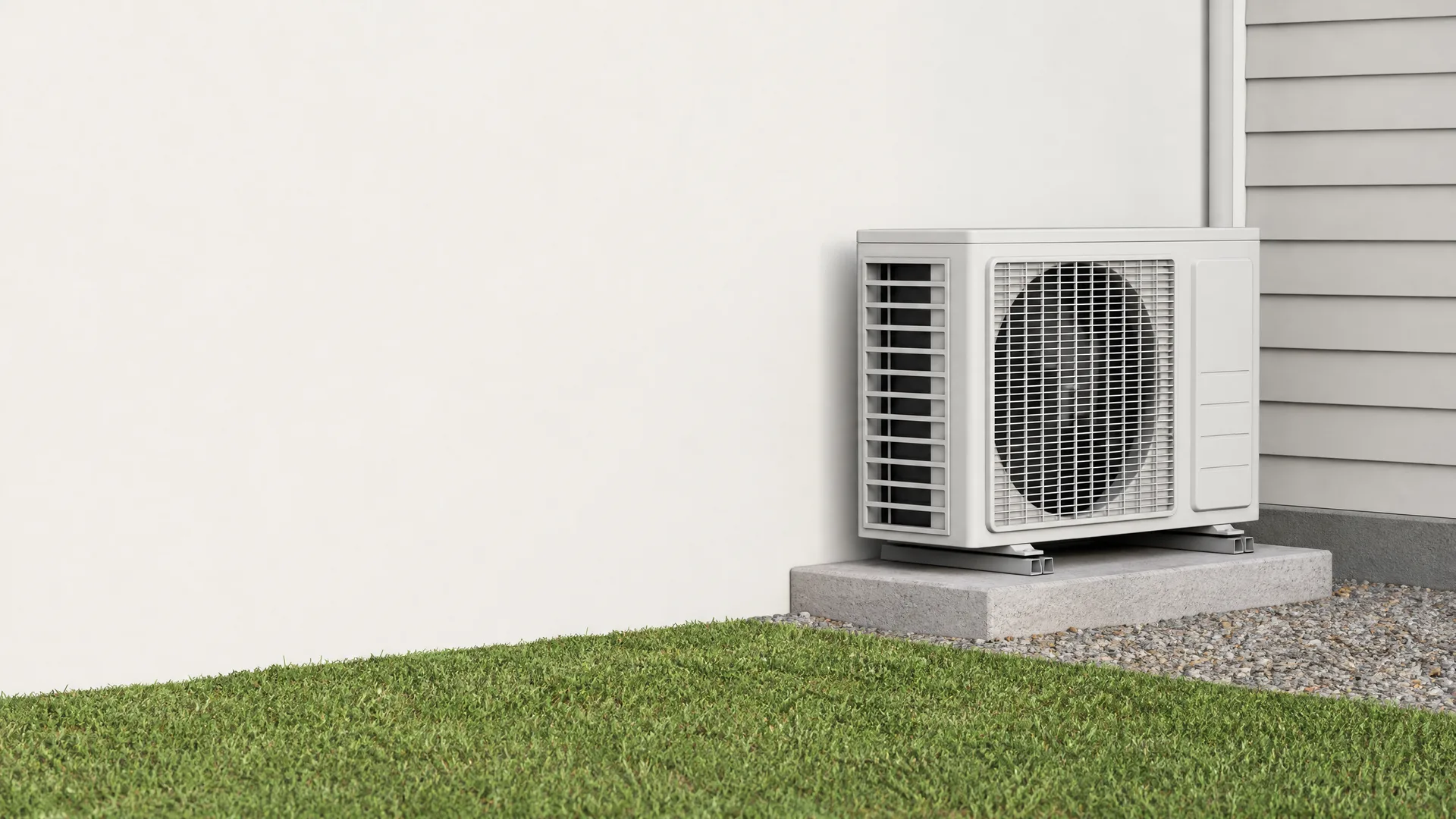
A white outdoor heat pump unit on a concrete pad beside a plain light wall, with gravel and mowed grass in front.

What a longer winter adds up to

Most homes here heat with gas, so the heat pump may only be carrying part of the load, or kicking in at milder temperatures before the furnace takes over. Even so, a North Dakota winter runs long, and that's a lot of defrost cycles stacking up over the season. Each one puts the reversing valve, the fan motor and the outdoor coil through a stop, switch and restart. Parts that run through that cycle hundreds of times a winter are the ones worth having checked.

Why does my heat pump make a loud bang when it switches modes?

That bang usually happens right when the system kicks into or out of defrost, and it's loud enough to make you check the thermostat. You already know the whoosh and the hiss are normal. A bang is a different sound, and it makes sense to want to know if it's the reversing valve failing or something that's supposed to happen in weather this cold.

It's the reversing valve seating, and a single bang is usually normal

The reversing valve has a slide inside it that moves to change which way refrigerant flows. In cold weather that slide can stick slightly before it lets go and snaps into place, and that's the bang. One sharp bang at the start or end of defrost is the valve doing its job in the cold. What's not normal is a bang on every single cycle, or one followed by a hiss that doesn't stop, or the outdoor fan not coming back on after. Those point to a reversing valve that's starting to fail or losing refrigerant charge, and that's worth having a contractor who works on heat pumps through North Dakota winters take a look at before it leaves you without heat.

A beige outdoor air conditioning condenser unit on a concrete pad beside a house with horizontal vinyl siding, with refrigerant lines and a disconnect box on the wall, surrounded by dark mulch and a green shrub at left.

Running a normal cycle

This is what a defrost cycle sounds like from outside. The fan slows or stops, you hear a whoosh as the valve switches, and steam may rise off the coil for a few minutes before the fan kicks back in and everything returns to a steady hum.
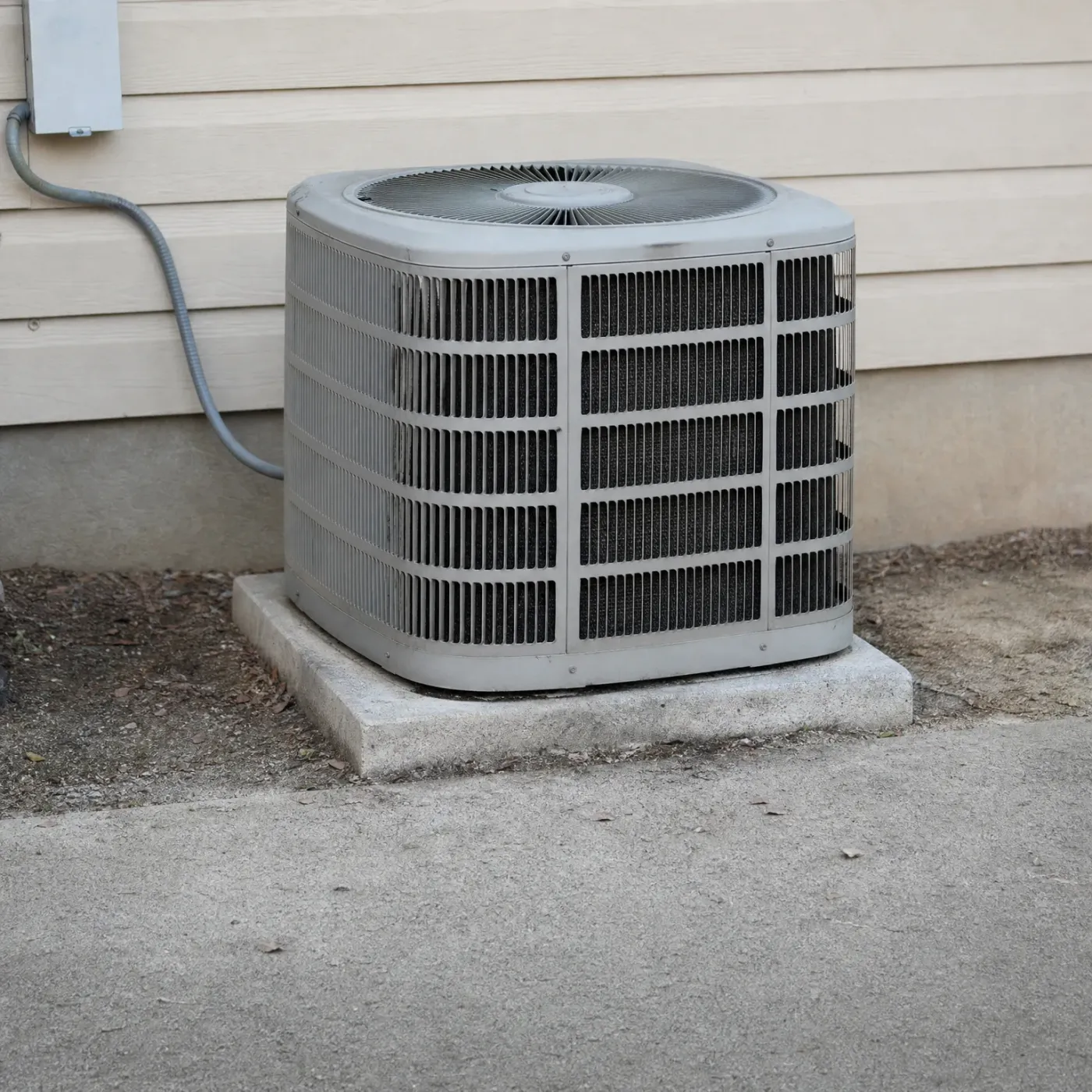

An outdoor air conditioner condenser unit on a concrete pad beside a house with beige horizontal siding, with conduit running from an electrical box on the wall.

Struggling in the cold

Here the noise doesn't settle. Banging continues after the cycle should have ended, or the fan runs rough and uneven instead of smoothing out. Ice stays built up along the coil instead of melting off, which points to a problem a defrost cycle alone won't fix.

Normal Defrost or a Problem

Normal defrost noise

  • The sound starts and stops on its own, usually lasting ten minutes or less before the fan kicks back in.
  • It shows up more often on the coldest nights, since frost builds faster the longer the temperature stays below freezing.
  • Steam or light fog rising off the outdoor unit right after is normal, not a sign the coil is damaged.
  • The noise pattern repeats the same way most times, whoosh or hiss, then quiet, then the fan again.
  • Nothing changes about how warm your house feels before, during, or after the cycle.

Sign something's wrong

  • A bang on its own, without the whoosh or hiss that normally comes with it, points to a part straining rather than the valve switching.
  • Grinding or a metallic scrape means something is contacting a part it shouldn't, usually inside the outdoor fan assembly.
  • The outdoor fan runs the whole time, during defrost and after, instead of slowing or stopping like it should.
  • Noise shows up at random, not tied to cold snaps or how long the system has been running.
  • The house feels cooler than usual afterward, or takes longer than normal to recover the setpoint.
  • Frost or ice stays on the coil instead of clearing once the cycle finishes.
  1. Outdoor coil loses heat to the air and frost forms on its surface.

  2. A sensor reads coil temperature and tells the control board frost is building.

  3. The reversing valve shifts and sends hot refrigerant backward to the outdoor coil.

  4. Outdoor fan slows or stops while the coil heats up and melts the frost.

A woman with dark hair in a bun reclines on a sofa with her eyes closed, wrapped in a cream fleece blanket, a closed blue hardcover book resting in front of her, with a lit lamp and a vase of dried flowers in the background.
A smiling bearded man in a navy sweater sits at a candlelit dinner table with a glass of red wine, a bowl of salad, and plates of food in the foreground.

Hand off the heat pump problem

A heat pump running through a North Dakota winter is working hard most nights, and a grinding, rattling, or continuous banging sound is its way of telling you something past the normal defrost cycle has gone wrong. A failing reversing valve, a motor bearing giving out, or ice that built up faster than the defrost cycle could clear it all sound different from the whoosh and click you already know to expect, and sorting out which one you're hearing isn't something to guess at with the temperature outside doing what it does here. The contractor who gets your request is local, licensed, and works on heat pumps all winter in this climate, so the sound you're describing is one they've heard before and likely traced to its cause more than once. Only one contractor gets your request, not several, so you're not stuck fielding calls while your system keeps making that sound. Send it in, and that part of the problem is no longer yours to carry.

What a bad sound costs you

A heat pump that's straining through defrost night after night without shutting off right is pulling more power than it should, and in a North Dakota winter that's a lot of nights. If the reversing valve is stuck or a motor bearing is going, the unit may skip defrost cycles entirely, letting frost pack onto the coil until it can't pull heat from the air at all. At that point the system leans harder on backup heat, or stops keeping up, and you feel it as a house that won't hold temperature.

What's actually at risk out there

The outdoor unit sits through months of freezing air, and a part that's already weak doesn't get a break to recover before the next cold night. A reversing valve that's failing partway can leave the system stuck between modes, and a fan motor with a bad bearing tends to get louder until it seizes. Left alone, a small problem in one part usually ends up pulling another part down with it, since the compressor keeps working even when the piece that's supposed to help it can't.

A smiling man in a dark navy sweater sits on a light sofa in a living room, with a glass bowl of popcorn on a wooden coffee table and bookshelves behind him.
A smiling man in a dark green sweater sits on a tan leather sofa in a dimly lit living room, with a bowl of popcorn in the foreground and a kitchen area blurred behind him.
A smiling middle-aged man in a dark shirt sits on a gray sofa in a living room, with a bowl of popcorn on a side table and shelves, a window and kitchen area behind him.
A smiling bearded man in a dark gray t-shirt sits on a gray couch in a living room, with a large glass bowl of popcorn on a wooden table in the foreground.

Leave it alone

Call about it when the noise is new, continuous, or getting worse. A short whoosh ten times a night is the defrost cycle working. A grind that wasn't there last week is something wearing out, and it won't fix itself before spring.

Power costs 11.82 cents per kilowatt-hour statewide

At 11.82 cents a kilowatt-hour, a heat pump straining through bad bearings or a stuck valve all winter adds up fast on your bill. A unit cycling right costs you less than one working overtime to fight itself.

EIA-861 2025 statewide residential average

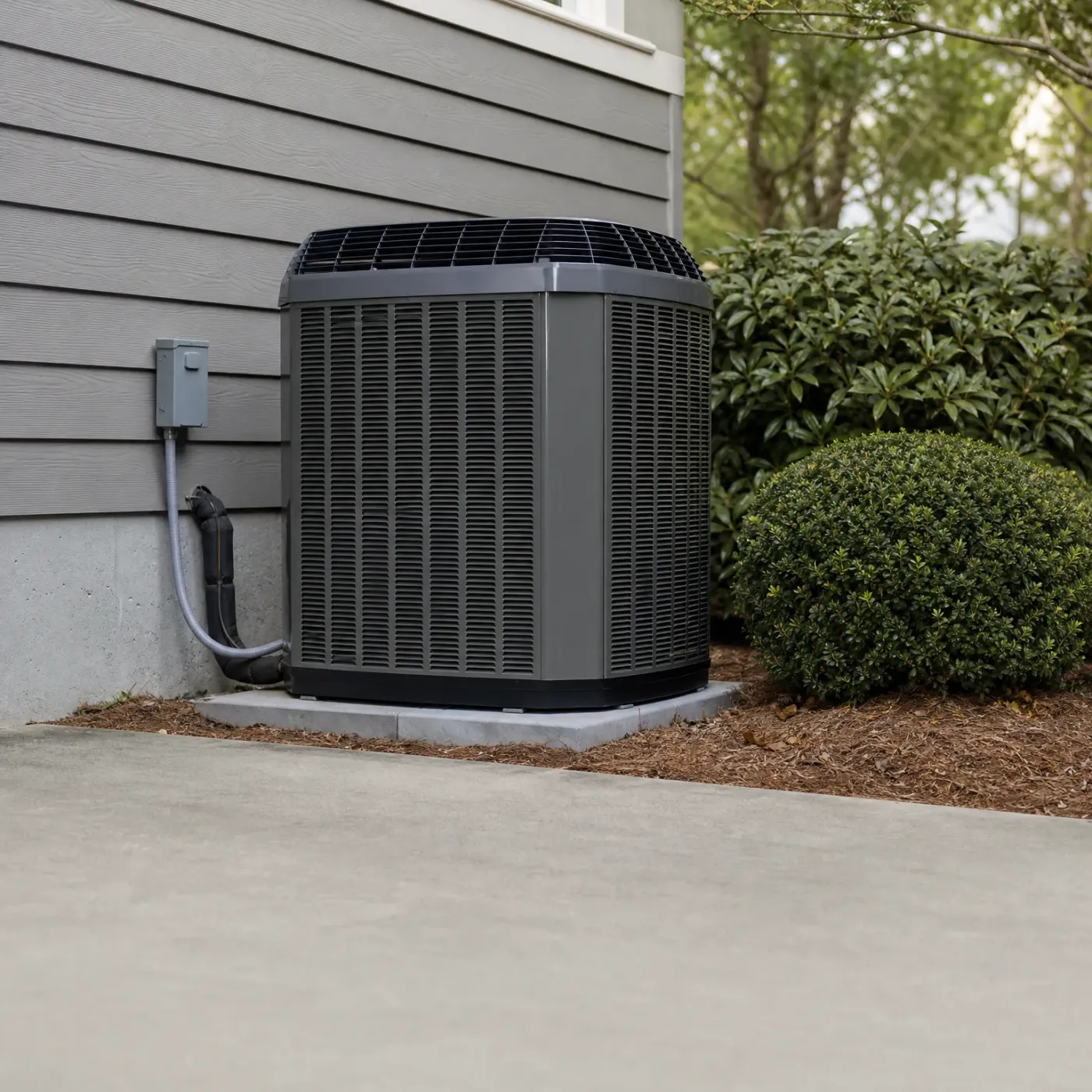
An outdoor condenser unit on a concrete pad beside a gray lap-sided house, with an electrical disconnect box and conduit on the wall and shrubs with mulch to the right.
A unit like this cycles through defrost and back to heating without a sound out of place, pad clear and coil doing its job.
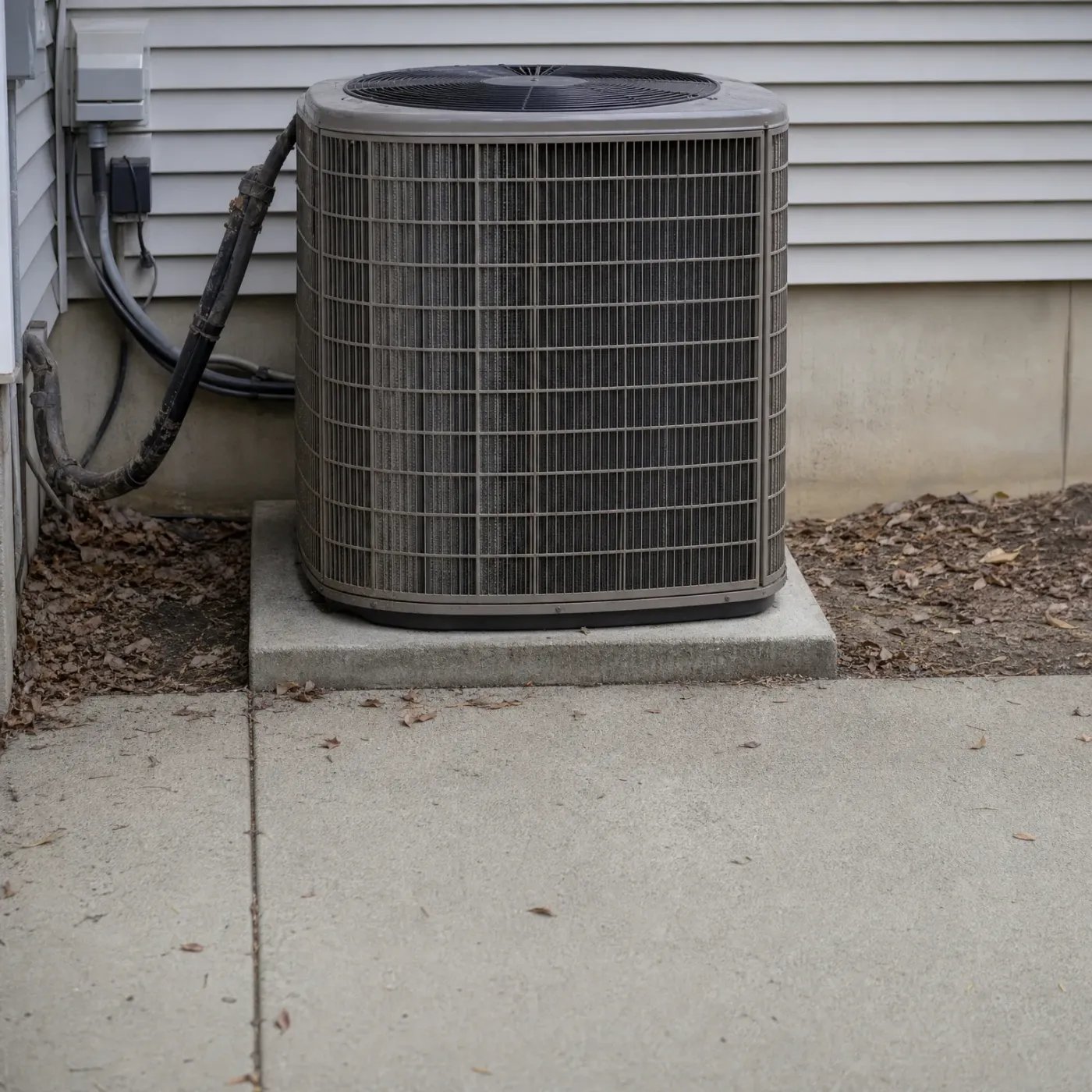
An outdoor air conditioner condenser unit on a concrete pad beside a house with horizontal vinyl siding, with refrigerant lines and an electrical disconnect box on the wall and dry leaves on the ground.
Dirty fins and leaves piled against the coil make it work harder to pull heat, and that strain is often where the new noise starts.
A two-story gray horizontal-siding house with multiple gables, a covered front porch with white columns and railing, and a dark front door, fronted by a patchy green and brown lawn under a clear blue sky.

Summers here don't carry the heavy, sticky air you'd get further south. The dew point averages 53°F across June, July and August, based on weather data for where homes sit in North Dakota, and that's dry enough that most nights feel comfortable without the AC running hard. That matters for the noise question because a heat pump here does most of its real work in winter, not summer. The coil, the valve, the motor bearings spend far more hours under the strain of cold-weather defrost cycles than they ever do cooling a mild August evening. So when something's wearing out, winter is where you'll hear it first.

NASA POWER T2MDEW county cells weighted by homes

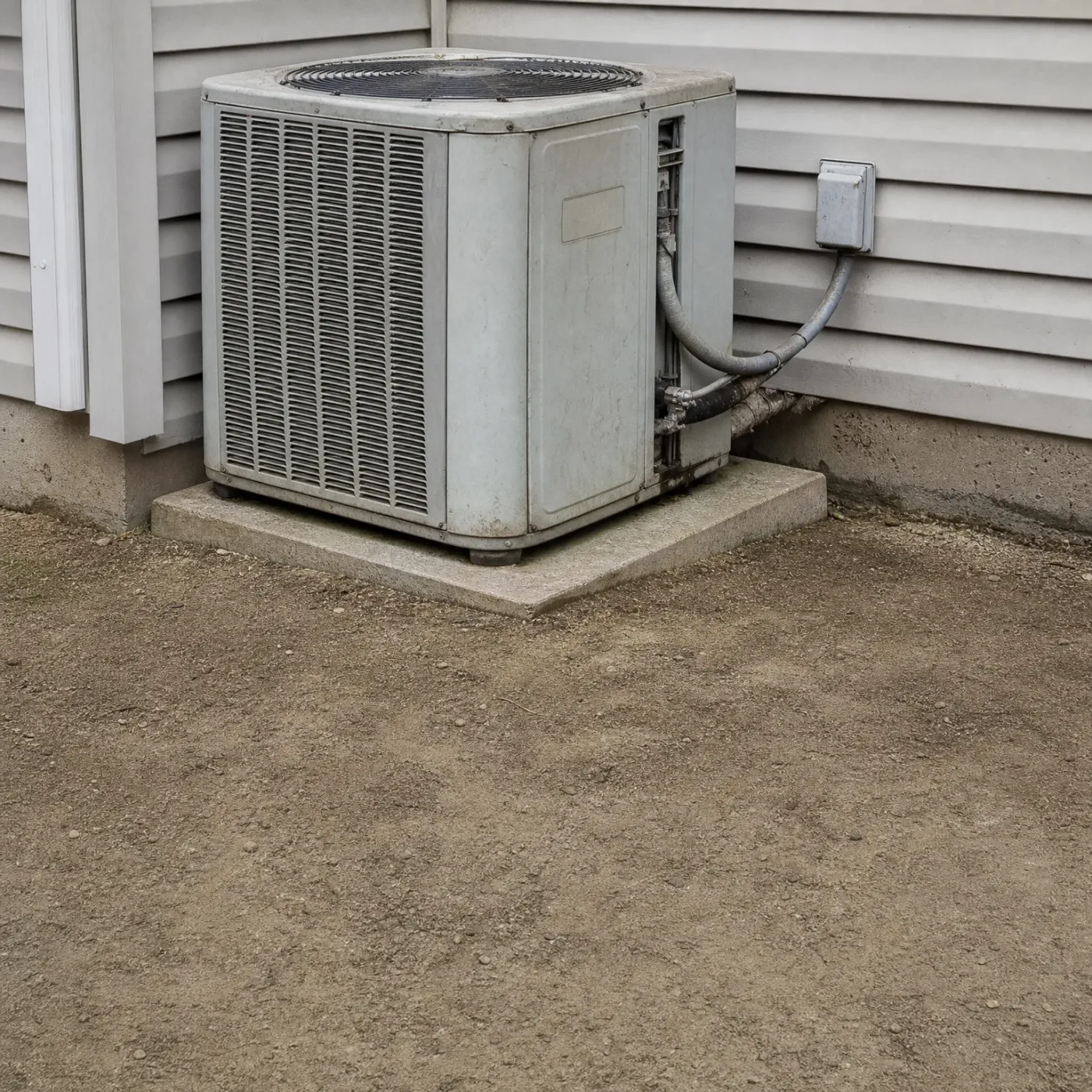
An outdoor condenser unit on a concrete pad beside a horizontal-sided house, with insulated refrigerant lines running to a wall-mounted box, surrounded by bare dirt.
Before you get your heat pump repair
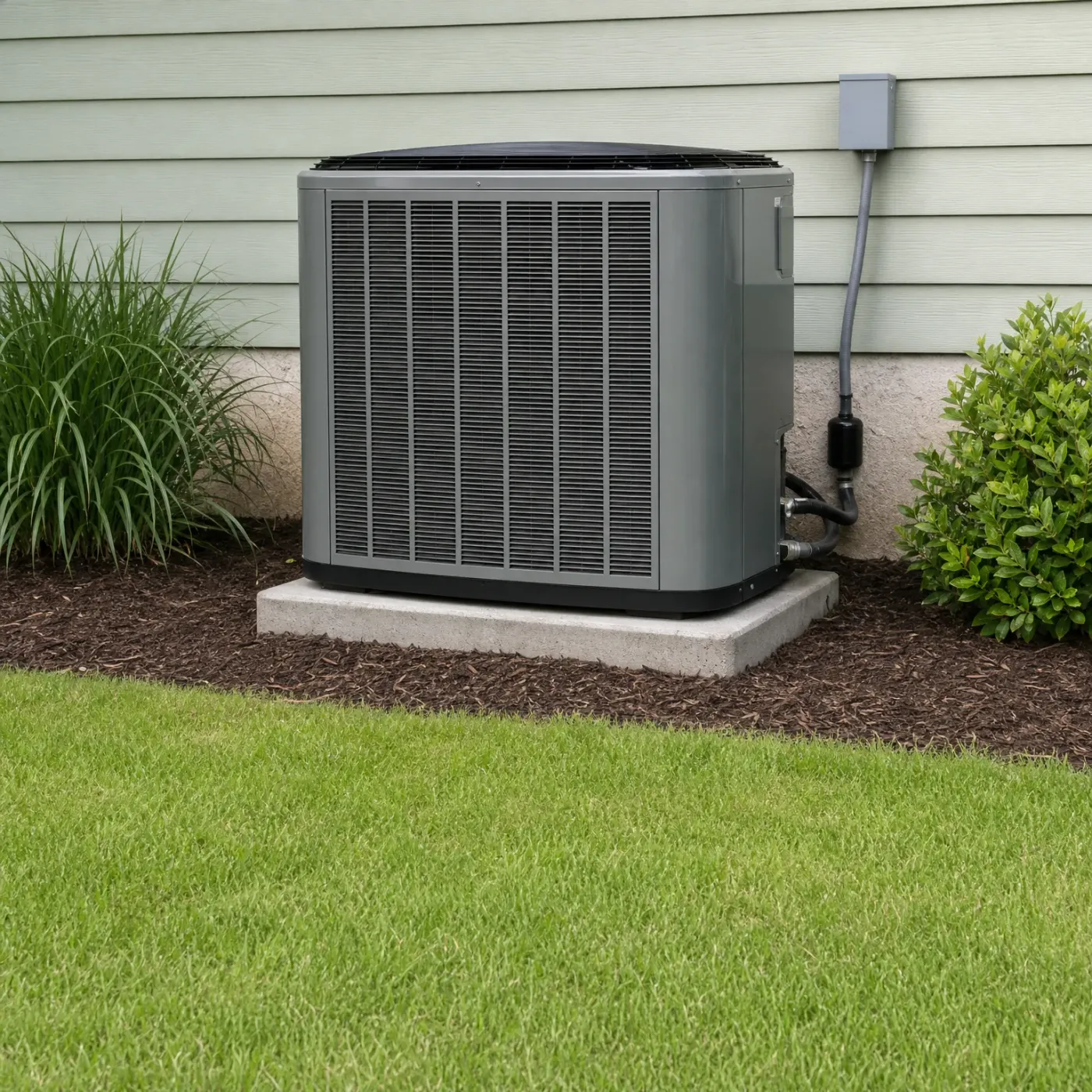
A gray outdoor condenser unit on a concrete pad beside a light-green sided house, surrounded by mulch, ornamental grasses and a shrub, with mowed lawn in the foreground.
After you get your heat pump repair

Know the sound, know who to call

  • A short whoosh or hiss ten times a night through a cold stretch is the defrost cycle doing its job, not a problem.
  • A grind, rattle, or bang that's new or getting worse points to a part wearing out, like a reversing valve or a motor bearing.
  • A heat pump straining through a bad part runs up your power bill even though electricity here is cheap.
  • A local contractor who works on heat pumps all winter has heard both sounds enough times to know which one you're describing.
  • Sending one request means one contractor calling you back, not a string of companies working the same lead.
  • Once that call comes, the job of finding someone who knows this equipment is off your plate.

By now you know what you're listening for. The whoosh and hiss ten times a night is your heat pump clearing frost so it keeps heating through a North Dakota cold snap. A grind, rattle, or bang that wasn't there last week is a part giving out, and it keeps getting worse until someone replaces it. That part doesn't fix itself, and a unit fighting through a bad bearing or a stuck valve all winter pulls more power than it should, even with electricity priced the way it is here.

What you do with that depends on which sound you're hearing. A normal defrost cycle needs nothing from you. The other kind needs someone who knows this equipment, and that's a narrower list than it sounds. A heat pump isn't the system most furnace-first homes have running, so the contractor who's right for the job is someone who services them every winter and has heard both sounds enough times to tell the difference over the phone before they even get to your driveway.

Sending one request puts you in touch with one local contractor, not a handful of companies all chasing the same lead. No bidding war, no juggling callbacks. Just someone local who knows what tends to fail in a heat pump running through nights this cold, and who can tell you straight whether what you're hearing is the system doing its job or the start of a repair. Once that call comes in, finding that person stops being something you have to do yourself.

A lit ceramic table lamp with a linen shade sits on a round wooden side table with a small vase of greenery and a dark shallow bowl, beside a beige upholstered sofa with a cushion and knit throw, below a framed artwork on a pale wall.
Corner of a beige linen sofa with a large woven cushion and a fringed knit throw, beside a potted leafy tree in a woven basket against a neutral wall.
Sunlit interior corner with a wood-framed armchair with beige cushions and a striped pillow, a leafy plant in a tall ceramic pot, a window with wood sill showing green foliage outside, and dark wood flooring.
A lit black path light beside a stone walkway leading to a dark front door of a white clapboard house, with shrubs and flowering plants in the bed at dusk.
A covered porch at dusk with a wooden front door, a lit lantern wall sconce on gray horizontal siding, a black rocking chair with a cream throw, a potted white flowering plant, a coir doormat, and a window showing a lit interior lamp.

Send one request and you're done looking

Only one pro gets your request, so you hear from one company.

I'm done searching

Sending the form costs nothing.